Here's one for Star Trek fans: this is the log of social enterprise, boldly going where few have gone before. According to the Plunkett Foundation, in its first review of rural social enterprise in England (also known as the Plunkett report), social enterprises are defined as "businesses that are set up to tackle social and environmental problems". This is an interesting conclusion in itself: the definition doesn't mention economic goals, and thereby fails to make a sustainable connection between delivering all three gains.
According to Co-operatives UK, there are 489 rural co-ops in England (11% of the total). These generate a staggering annual turnover of £2.98bn and, by conservative estimates, have some 90,000 members. Although these operate across virtually all areas of the co-operative economy, agriculture is the dominant sector – it has 241 co-operatives today. Other prominent co-operative services include country markets, housing developments and community-run shops. Rural social enterprises tend to trade as companies limited by guarantee, charities or community interest companies.
The report notes how "failure of the public or private sector to deliver a service is one of the main drivers for establishing a rural social enterprise". Using local knowledge about these markets, social enterprises are reportedly thriving in areas where other business models may struggle. In this respect they tie in closely with the vision for a 'big society' and also with the coalition's policies expressed in the Localism Act, including the community right to challenge which acknowledges the potential of social enterprises to provide quality services at good value.
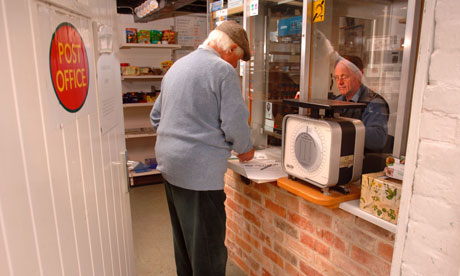
Perhaps unsurprisingly, Plunkett also notes how volunteers are essential for most rural social enterprises as they represent an engaged and supportive community. So, for example, residents can buy shares in their local community-run shop or pub, or volunteer to staff the premises. What is impressive is the acceleration in the growth of rural social enterprises across the country, and the fact that most are profitable and growing.
So what gets in the way of rural social enterprise? The first obstacle is the requirement to raise significant levels of finance for capital purchases at the outset. As Plunkett noted, this can prevent or delay rural social enterprises from starting up and, later, growing. Government regulations are also perceived as a significant barrier.
On the positive side the report asserts that these enterprises are having a positive impact on the behaviour of individuals and communities. "Social enterprises can emerge as trusted messengers able to influence positive behaviours," it says.
There is also a clear nod to the scale of unmet need: around 400 village shops are closing per year, not to mention loss of libraries, bus routes and other essential services. Furthermore, 65% of community-owned shops serve the smallest places, with populations of under 1,000. Thorncombe community shop in Dorset, for example, was founded in 2009; it has a yearly turnover of £170,000, two part-time employees, 30 volunteers and 150 members.
Meanwhile the North Harris Trust in the Western Isles has a turnover £217,000. It boasts seven staff, 436 members and 600 'friends' of the organisation. It manages one of the largest community owned estates in Scotland and aims to stem the tide of depopulation by addressing local housing need while protecting and enhancing its natural heritage: a vision for local sustainability.
James Derounian is principal lecturer in community development and local governance at the University of Gloucestershire
This content is brought to you by Guardian Professional. Join the local government network for more comment and analysis – and the latest jobs – direct to your inbox