If it’s at times of crisis that true leaders shine, then there could be no better moment to focus on the leadership that social care needs. For, with demand for services rising but resources shrinking, the social care system is under strain as never before. In the past five years, funding cuts, combined with the impact of the ageing population, have effectively wiped out 31% of the local authority social care budget across England.
It’s a situation, according to Adass (the Association of Directors of Adult Social Services), which is putting older and vulnerable people in jeopardy, at the very time when the Care Act has introduced new requirements for joined-up health and social care.
At a roundtable event, organised by the Guardian and sponsored by workforce development organisation Skills for Care, social care professionals discussed how best to secure the strong leadership social care will require as it faces these challenges.
At the table
-
David Brindle (Chair) Public services editor, the Guardian
-
Sharon Allen Chief executive, Skills for Care
-
Pete Calveley Chief executive, Barchester Healthcare
-
Michelle Dudderidge Director, Hand in Hands
-
Shaks Ghosh Chief executive, Clore Social Leadership Programme
-
Patrick Vernon Project coordinator, Health Partnership Project, National Housing Federation
-
Martin Green Chief executive, Care England
-
Ray James President, Association of Directors of Adult Social Services in England
-
Des Kelly Executive director, National Care Forum
-
John Kennedy Director of care services, Joseph Rowntree Foundation
-
Neil Matthewman Chief executive, Community Integrated Care
-
John Ransford Non-executive director, HC-One
-
Jon Glasby Professor of health and social care, University of Birmingham
-
Bridget Warr Chief executive, UK Home Care Association
There was a recognition from participants that there were some great leaders in social care – but that there was room for improvement, too.
As Pete Calveley, chief executive of Barchester Healthcare, put it, when only 40% of nursing homes with more than 50 beds inspected are considered to be good or outstanding, “that does reflect on the leadership of organisations”. He added: “It is very easy for us to lay the blame on the facility manager when actually we all need to take responsibility.”
Jon Glasby, professor of health and social care at the University of Birmingham, said the sector was well-led – but often in spite of the systems in place rather than because of them. He said:
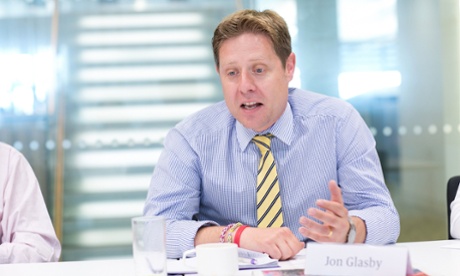
“One of the major successes is the way social care and local authorities in particular have managed in spite of the cuts they have had to face. Many other services would have been unable to function … I do think we could do more to support some of those leaders.”
John Ransford, non-executive director at care home provider HC-One, also paid tribute to “the sheer adaptability” of leaders in social care. “They have done incredible things with the resources they have,” he said. “My worry is that they will always be expected to do more – that in a sense the sector is a victim of its own success as it has become more efficient and adaptable.”
According to Neil Matthewman, chief executive of Community Integrated Care, a charity providing care services in England and Scotland, nurturing leaders at middle management level is a particular challenge. His experience since joining the social care sector from the NHS was that many managers were not “outward-looking” enough. On the other hand, he added, social care offered the chance for more creativity. “Entering this sector, I’ve found there’s been more opportunity to show genuine leadership,” he said.
Many participants at the event highlighted the need to focus on developing the registered manager role – a key post responsible for the management of care homes and services. Des Kelly, executive director of the National Care Forum, said:
“All the evidence we have is that the quality of the service is absolutely determined by the quality of that individual. But pay rates are nowhere near where they should be for people who are expected to have such a range of responsibilities. It’s a very difficult job.”
The event also heard concerns about developing leaders in smaller care providers, where both resources and time for training are often tight. Michelle Dudderidge, director of specialist provider Hand in Hands, said:
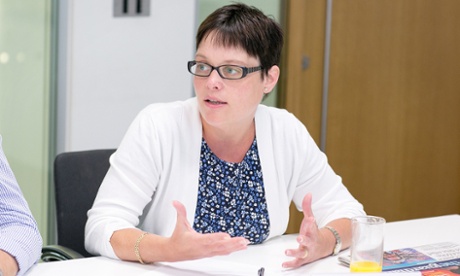
“It’s really important for us to adapt to the changes that happen daily in social care, but one of the biggest issues for us is the finances to be able to develop our staff into good leaders.”
So what are the ways forward for developing effective leaders for these challenging times? Participants had a range of ideas, from developing a professional route for registered managers, to working with the health service to develop leadership training for the new integrated way of working, but with a distinct focus on social care.
There was support for the new concept of the care practitioner to ease nursing shortages in the care sector, while Patrick Vernon, from the National Housing Federation, also flagged up the idea of more collaboration between health, social care and housing. He said:
“You might work in the NHS, you might work in care, you might work in a housing association. How do we make sure those roles are fluid so you can move from one to another?”
More widely, the event heard, efforts needed to be made to encourage new recruits into the social care sector so that it could develop a new generation of leaders. As Kelly put it, only 12% of the care workforce is under 25, with that proportion falling, while 50% of the workforce is over 45, a proportion that’s rising. He said:
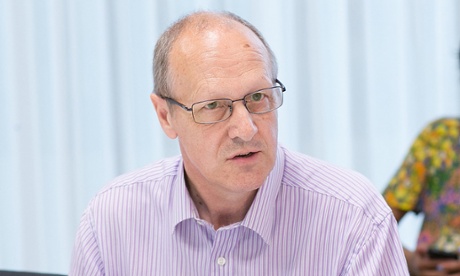
“We’ve got to get better at attracting younger people – I don’t think we do the services justice in terms of the opportunities there are to get trained and move up the ladder … Yes they start poorly paid, but there are opportunities.”
Martin Green, chief executive of Care England, an umbrella group for care providers, advocated a civil service style, fast-track scheme for new entrants. But he said a more open culture was also crucial. “One of our challenges is to have a culture that allows people to be experimental,” he said.
“That won’t work if it’s about blame when you get it wrong. The way you are monitored is very much about whether you did it right or did it wrong when we should be saying: ‘You might have got it wrong, but you didn’t divert from the values and culture’, which are the original values of social care.”
The importance of values was stressed, too, by Sharon Allen, chief executive of Skills for Care. The idea of a person-centred approach should apply to the people who work in the sector as well as those it supports, she said.
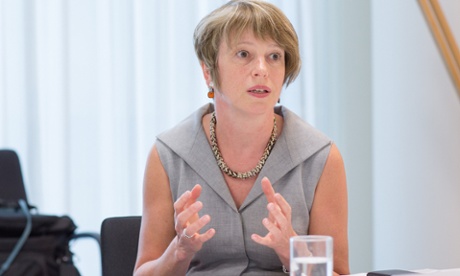
“We need to ensure what we do is inspiring people with clarity and purpose about how to improve social care. We need to address the problems we face – but also to celebrate the great people who are going to make a difference.”
Bridget Warr, chief executive of the UK Homecare Association, agreed. She said an open culture would help promote the innovation that is now so desperately needed across social care.
“What we know for sure is that we need to do things differently because we can’t go on the way were before,” she said. “We can’t just keep squeezing and still give people a decent service.”
John Kennedy, director of care services at the Joseph Rowntree Foundation, said social care itself did not lack leadership, rather there was a “distinct lack of political leadership”. “Other industries have a voice at the top table when policy is being decided, but with social care that doesn’t happen,” he said.
Perhaps a more unified voice for the social care sector would increase the status of working – and leading – in the sector. But so too would a more profound shift in the mindset of society as a whole.
As Kennedy put it: “We can all imagine ourselves getting ill but we don’t seem to want to put ourselves in that frail place. The recipients of healthcare are seen as ‘us’ and the recipients of social care are ‘them’. We need to get over that.”
That kind of culture change might help tap into some of the potential that participants saw in social care. For Shaks Ghosh, chief executive of the Clore Social Leadership Programme, a key role for leaders was to identify and unleash the innovators of the future. She said:
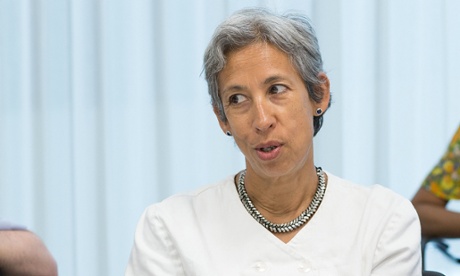
“There is a real need for innovation, when you look at the many parts of the community which are not getting the services we know they need, with fewer resources.”
Ray James, director of health, housing and adult social care at Enfield council and president of Adass, said although social care faced huge challenges, he saw more examples of values-based leadership in the sector than in any other sphere. He concluded: “It’s in that authentic, values-based leadership that the success of the sector in the future lies.”
This content has been sponsored by Skills for Care (whose brand it displays). All content is editorially independent. Contact: Stacey-Rebekka Karlsson. For information on debates visit theguardian.com/sponsored-content