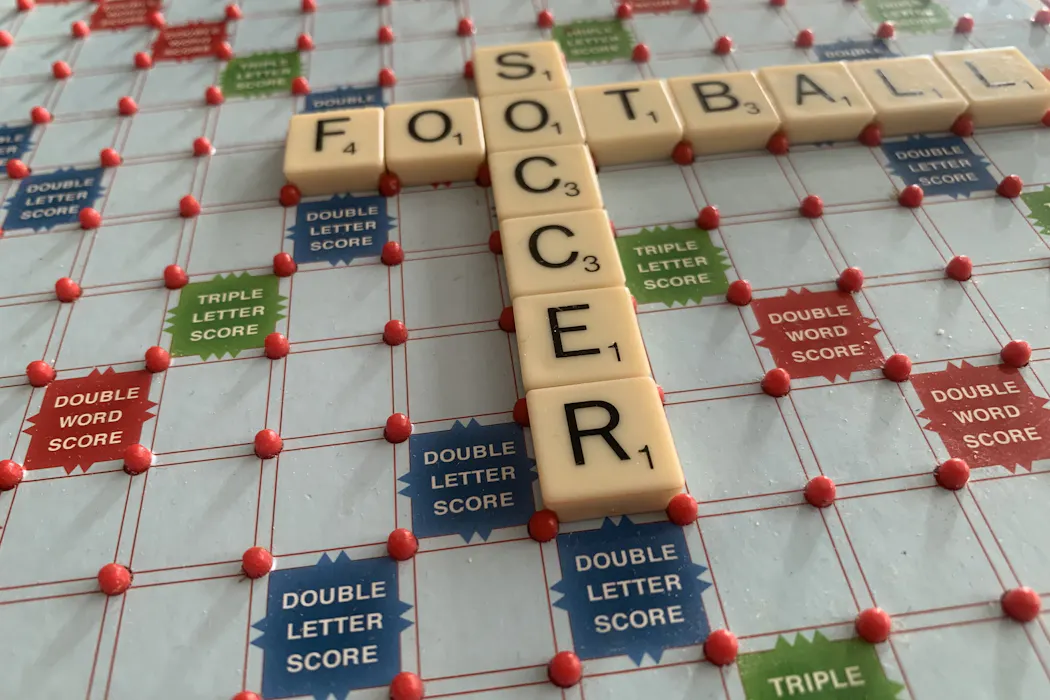
At the 2026 World Cup draw, FIFA Peace Prize recipient and U.S. President Donald Trump announced that the game should really be called “football.”
“There’s no question about it. We have to come up with another name for the NFL. It really doesn’t make any sense,” said Trump, an apparently new convert to the round-ball game.
He isn’t alone. The word “soccer” is, in some parts of the world, shunned by some fans.
Indeed, as a scholar of the sport who teaches a course called Soccer and Global Politics, I am bombarded with comments that the word “soccer” does not make any sense, and that people who use that term obviously know nothing about the beautiful game.
To me, this disparagement of the word “soccer” is not only petty and tiresome – it is also incorrect. It ignores the roots of the sport and the development of the language of the game.
Rather than making the word taboo, the football ecosystem should embrace it. To understand why, let’s go back to the beginning.
Associated to ‘assoc’ and then ‘soccer’
The game has been around in various forms for centuries, but it began to be codified in the mid-19th century.
“Association Football” was coined in 1863 to distinguish the game from rugby football, which, somewhat ironically, is played largely with the ball in hand.
British university students created their own slang at the time by abbreviating words and adding “-er” to them. Thus, “rugby” became “rugger” and “association football” was shortened to “assoc” and slanged to “soccer.”
And this term “soccer” was freely and proudly used in the British press and in public for nearly a century, until the 1980s.
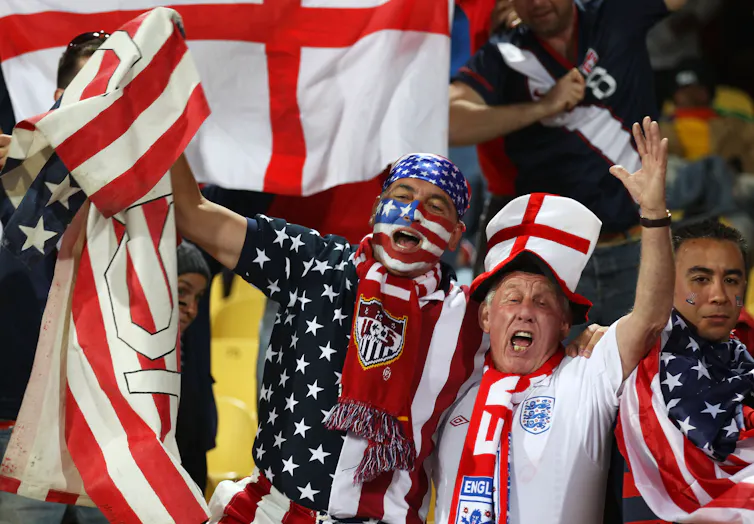
In countries with other established codes of football – American football, Australian rules football and Gaelic football in Ireland – “soccer” became the dominant term. But British fans began abandoning the word in the 1980s, largely as a response to the embrace of the term in the States. And now, in the U.K. especially – but also among fans in the U.S. and Canada who present as “true” fans of the game – there are attempts to shame those who use the very term that the British invented and proudly used.
And that’s a pity. After all, using the word “soccer” has benefits. The British press continues to use “soccer” and “football” interchangeably to avoid repetitive writing. The shorter word is useful for tabloid editors when creating tight headlines. And using both words does not reveal that a person is ignorant but rather cosmopolitan.
The widespread use of “soccer” in Britain is still evident in the ongoing success of authoritative magazine World Soccer, founded in London in 1960; the TV show “Soccer AM,” which ran every Saturday from 1994 to 2023; the annual British charity match Soccer Aid; and Sky Sports’ “Soccer Saturday.” All document the enduring legacy of the term in Britain, despite the naysayers.
A shared vernacular
The beautiful game is also a universal one with a language shared by some 4 billion people.
Language evolves, and fans today equally understand “football,” “soccer,” “calcio,” “futebol” or “fútbol.”
Embracing all the variations of the beautiful game enriches the conversation. It illustrates the sport’s globalization and universal language, a shared vernacular that cuts across identities.
And besides, nobody wants the war that would ensue if American football fans were forced to find another name!
This article was originally published on The Conversation. Read the original article.