On Tuesday the last Dateline for 2014 went to air, and, as some people suggest, it could mean the end of the SBS flagship program as we know it. That would mark the end of an era for Australia’s oldest international current affairs program. For 30 years Dateline has been at the forefront of distinguished, high-quality, hard-hitting journalism. And I was lucky enough – and indeed honoured – to have spent my formative years in journalism on the program.
So it saddens me to read Allan Hogan’s bold Crikey report outlining its dramatic change in direction and predicting its eventual demise.
I have little reason to doubt his facts. In the industry Allan is known as a person of high integrity and one of a group of Australian broadcasters – among them, George Negus – who have successfully straddled the commercial and public service divide of Australian television journalism. Allan paid a high price for speaking out. On Monday he was apparently sacked from Dateline.
I cannot say I am surprised by what is reported to be happening to Australia’s oldest international current affairs program. How people consume and disseminate news is changing rapidly. I recently read a transcript of a speech made by the former SBS news director Paul Cutler – now a global consultant – to journalists in China. He began by saying: “I have been in the journalism business for 45 years and there have been more changes in the past five than the previous 40!”
There is no doubt that news organisations around the world are coming to terms with the new demands of attracting and, more importantly, retaining viewers, readers and listeners. Audiences now demand more flexibility with delivery. There seems to be a need to serve a shorter attention span and at times a multiple personality of the user.
The chief executive of the latest multimedia empire,Vice News, Shane Smith says young people are disenfranchised from many mainstream media outlets. For generation Y it certainly isn’t about appointment viewing.
But does that mean news providers have to abandon thoughtful and serious journalism for the lighter stuff, which, as Allan Hogan, alleges “makes for happy viewing”, especially providers such as Dateline which have a proud and distinctive history of daring to be different? Vice News is now being hailed as a ground-breaking and innovative outlet where video journalists are dispatched to far-flung places to file gritty, edgy reports. But in many ways Dateline pioneered video journalism and has been at the forefront of this type of storytelling for more than a decade. The BBC, too, has done much in this area.
There is of course an argument that because the commercial media are struggling to find a workable business model in this tumultuous environment, the onus will be placed on the public broadcasters to do more of the serious stuff, especially the investigative journalism.
The fact remains, the world is not a happy place. The threat from Isis in the Middle East; innocent passengers are being blown out of the sky in eastern Europe and Russian warships are seemingly cruising off Australia’s north-east coast.
These were just the sort of stories to which Dateline would dispatch its brave and enterprising video journalists to cover. Departing executive producer Peter Charley and his chief of staff, Geoff Parish, knew they had a tried and trusted group of journos who had specific areas of expertise – whether it was Mark Davis in the unfashionable Pacific, Nick Lazaredes in eastern Europe or the fearless Sophie McNeill in wherever took her fancy.
My own portfolio of stories in my last three years on the show serves as a perfect example; whether it was crossing a minefield in southern Afghanistan or extensive coverage of the Arab spring – none of these constituted happy viewing.
I can remember the many hours Peter and Geoff would stand in front of a whiteboard choreographing and juggling the mix of stories to make the program as appealing as possible. Paul Cutler would then have his say, as would the likes of George Negus. And then everyone would wait nervously for Wednesday morning’s ratings.
Of course, the management had inherited Dateline. It was long a journalistic institution before either man arrived. But they probably provided stewardship for the most demanding period for SBS news and current affairs, when government funding was at its lowest and pressure was placed on commercial revenue and therefore ratings.
In those days Paul would constantly refer to “light and shade” in the program. So isn’t that what the new SBS news and current affairs boss, Jim Carroll, is seeking in his quest for “brighter” stories? I think the point that Allan is trying to make is that with the budget cuts so dramatic and only 10 new stories seemingly in the wind over six months, there just isn’t that scope for the light and the shade. So does the “happy viewing” win out?
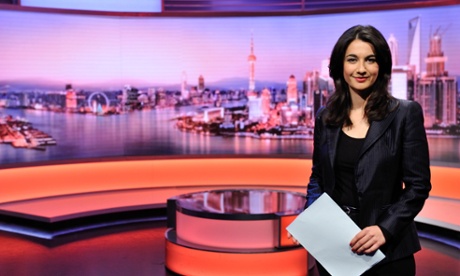
In my current role as a BBC World News correspondent and presenter, we often debate and discuss the mix of light and shade when covering stories. As the world’s most trusted broadcaster, we have a strong sense of responsibility to inform and educate. Even now I am writing this in a hotel room in Karachi where I am working on a story about women fighting for justice in Pakistan – something that would have been standard fare for Dateline at its peak.