The French railway operator, SNCF, last night backed a British-led scheme to introduce a high speed rail service between Heathrow and Charles de Gaulle airport in Paris.
The company's financial director, Claire Dreyfus-Cloarec, said the scheme, in which National Express and British Airways have a joint interest, would cut the journey time between London and Paris and would relieve considerable airways congestion between the two cities.
Ms Dreyfus-Cloarec, who was in London to head SNCF's investment in eurobonds, said that the scheme had "great potential". There was no reason why it should not be introduced as soon as details have been finalised. It would free up much needed slots at the two airports and provide a reliable service for passengers.
The Heathrow deal is an ex tension of the Eurostar rail service between Waterloo and Paris and Brussels. BA says it would expect to make a profit of around £200m in the first few years of operation.
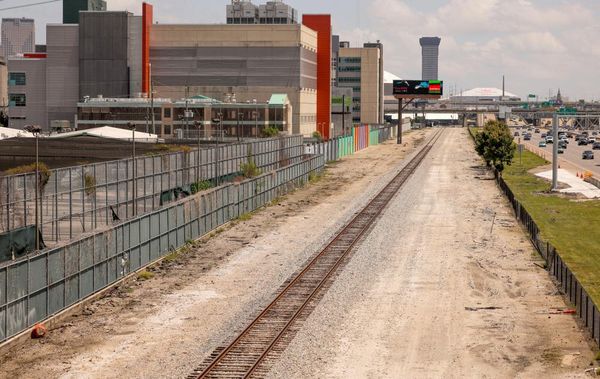
Railtrack is currently drawing up plans for the line to be developed from Heathrow. Most of it already exists, but a mile-long loop in west London needs expensive updating. The service would eventually join the Channel tunnel route.
Ms Dreyfus-Cloarec said Paris was the rail centre for many European cities which can now be reached in less than three hours by rail. In November, French and Belgian Railways are opening a 75-minute rail service direct from Charles de Gaulle to Brussels, cutting journey times by half.
SNCF, which has a minority share in the Heathrow project, was the first rail operator to develop the concept of 180mph, high speed intercity journeys. SNCF has broken even this year for the first time in many years, but Ms Dreyfus-Cloarec said France had no intention of following Britain's lead in privatising its railway system.
She said that in France the liberalisation of rail had made little progress compared with other public services, such as telecommunications and post. She thought it would be difficult to envisage privatisation without the state injecting considerable fresh capital, but there was no political will to do it.
Passenger complaints in Britain have doubled in two years to reach the highest point ever recorded, according to figures issued yesterday by the passenger watchdog, the central rail users' consultative committee. Its eight British regions received 18,771 complaints, up from 14,735 last year.
The committee's chairman, David Bertram, said: "Train performance figures are still patchy, and show how far some operators still have to go."