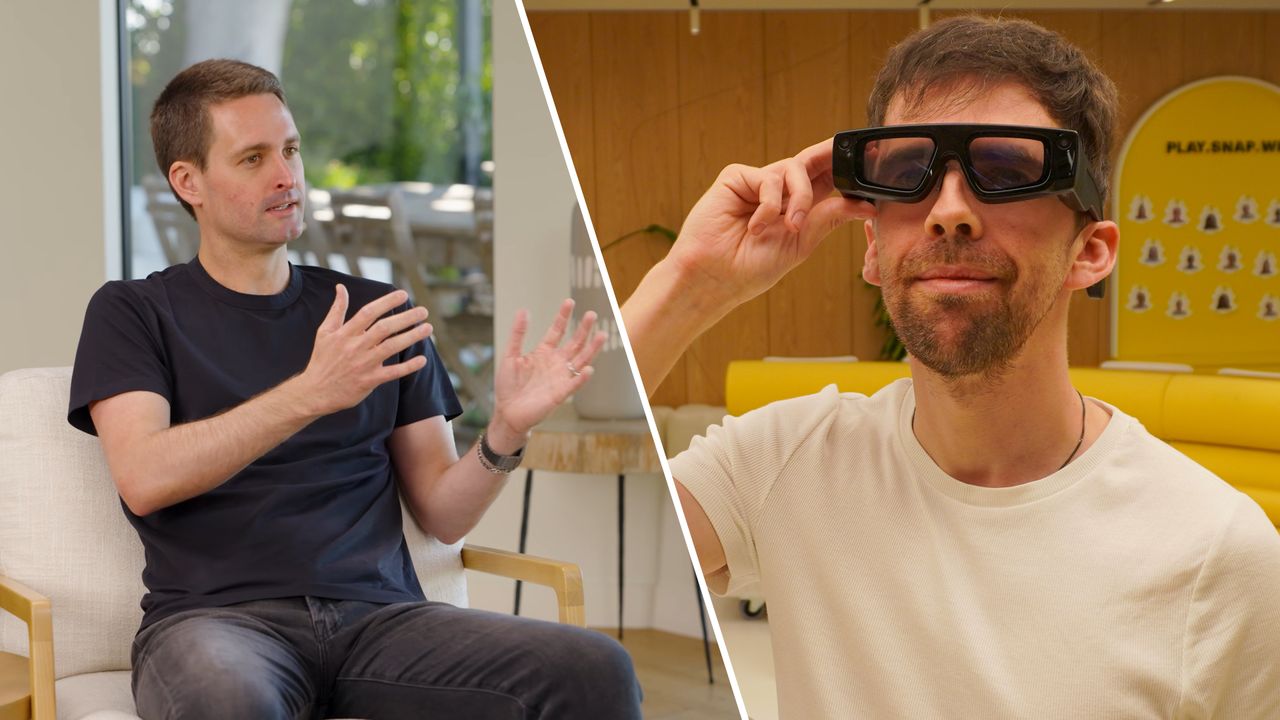
In a sit-down interview with David Senra, Snap CEO Evan Spiegel shared some more details about the vision of Snap Specs ahead of their consumer release later this year. Besides taking a swing at Meta in the chat, it’s fair to say the conversation got weird…in an interesting way.
"What if aliens are…sending these glasses to save people from their lives that I think have become so oriented around screens,” Spiegel posed. My immediate thought was to email Snap and ask for whatever Spiegel’s smoking, because it sounds awesome.
But as someone who is already high on the idea of smart glasses being the next generation of portable computing, it started to click as he defined the smartphone as a “biological disaster” and talked about computers pulling us all “away from one another” and into a “single player experience.” Let’s go into what he said and map that with my time testing Specs.
Not just a gadget, but a rescue mission
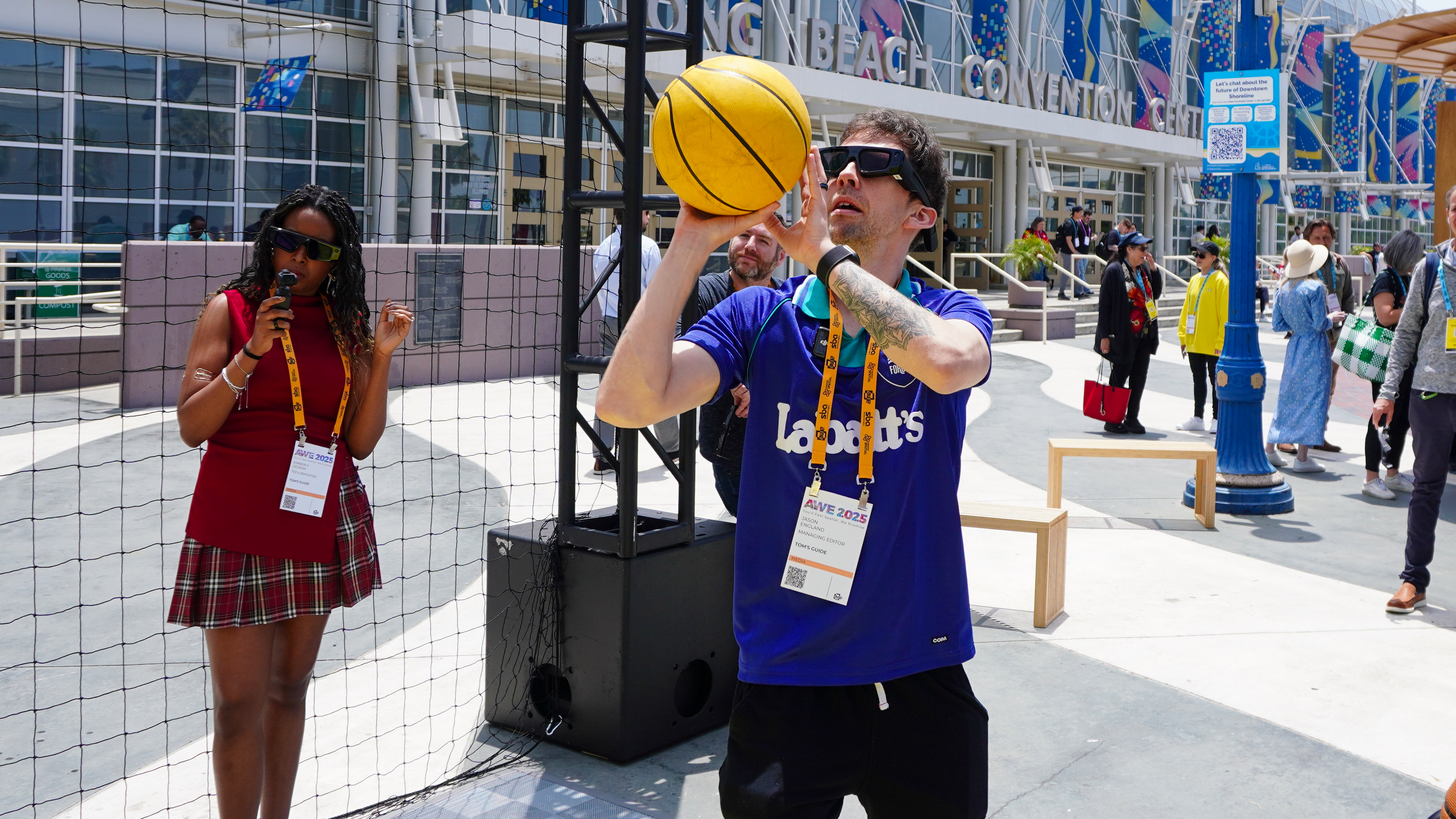
It’s fair to say that the devices we use around us disconnect us from our surroundings, so Spiegel sees Specs as a “prison break” from the 7-hour-a-day screen habit that has been over 12 years in the making.
“The biggest problem I see today is that people are spending seven or eight hours a day on their computer. We have to change that,” Spiegel commented. He calls it a “single player” experience that is a “disaster for our society” in pulling us away from one another.
And it’s this that drove the philosophy that AR is the only human path. “Holding this tiny little screen in your hands was not the future of computers,” Spiegel proclaimed. Neither does he think it’s VR, as he bluntly critiqued this as “insane” and like “wearing a TV on your face.”
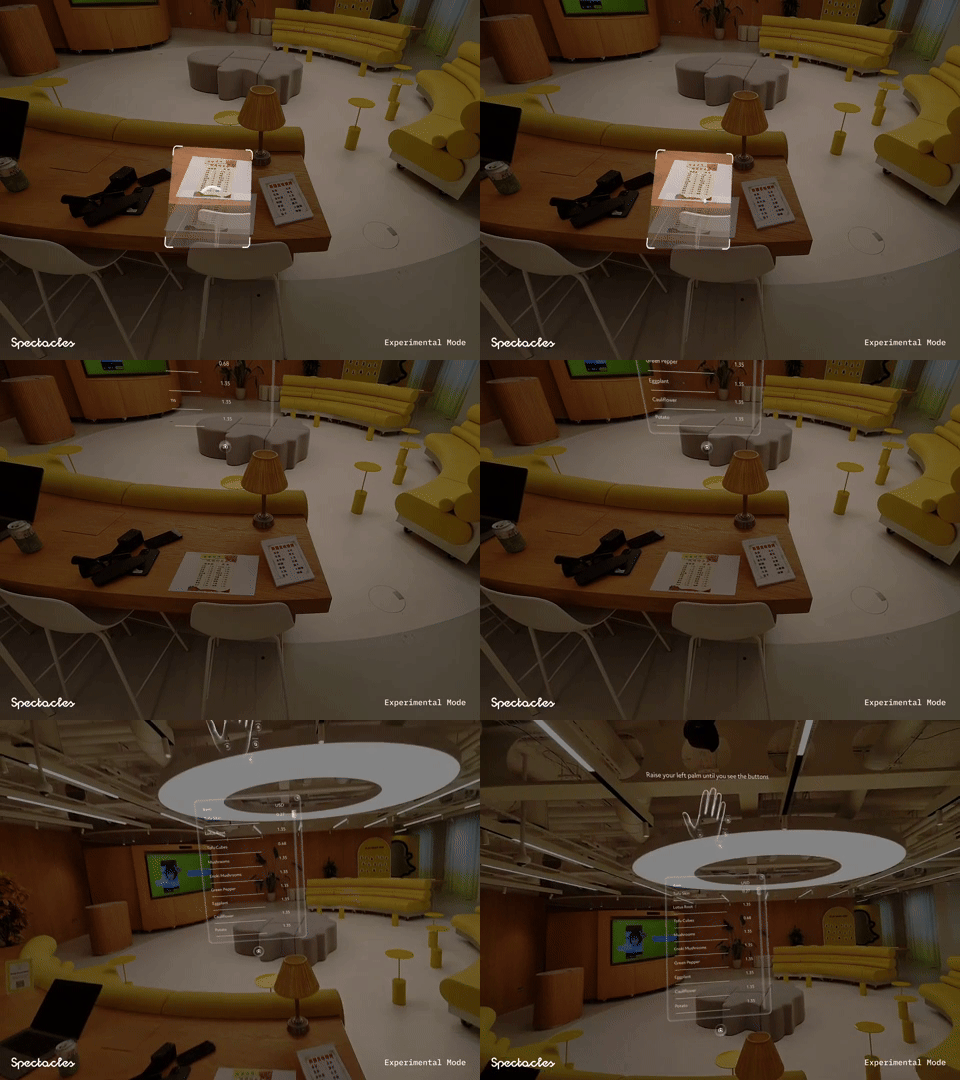
In my time testing the developer versions of Specs, you can start to see this vision of taking that isolating layer of computing out and allowing us to reconnect. The Waveguide displays overlay your world with information and AI-driven context in ways that are actually useful, such as recipes and cooking steps, labeling items in front of you, or live subtitling people speaking around you.
But how much are we actually reconnecting? This is something I found while testing the Even Realities G2 — finding that I may have looked physically present in the moment, but not really at the same time. My abilities to think critically and listen actively were being replaced by AI features like Conversate.
Don’t get me wrong. This hands-off and eyes-on approach is definitely a step forward from always looking down at a screen, but real attention needs to be paid to software and app design to ensure that this isn’t all just for show.
Meta’s “camouflage” critique
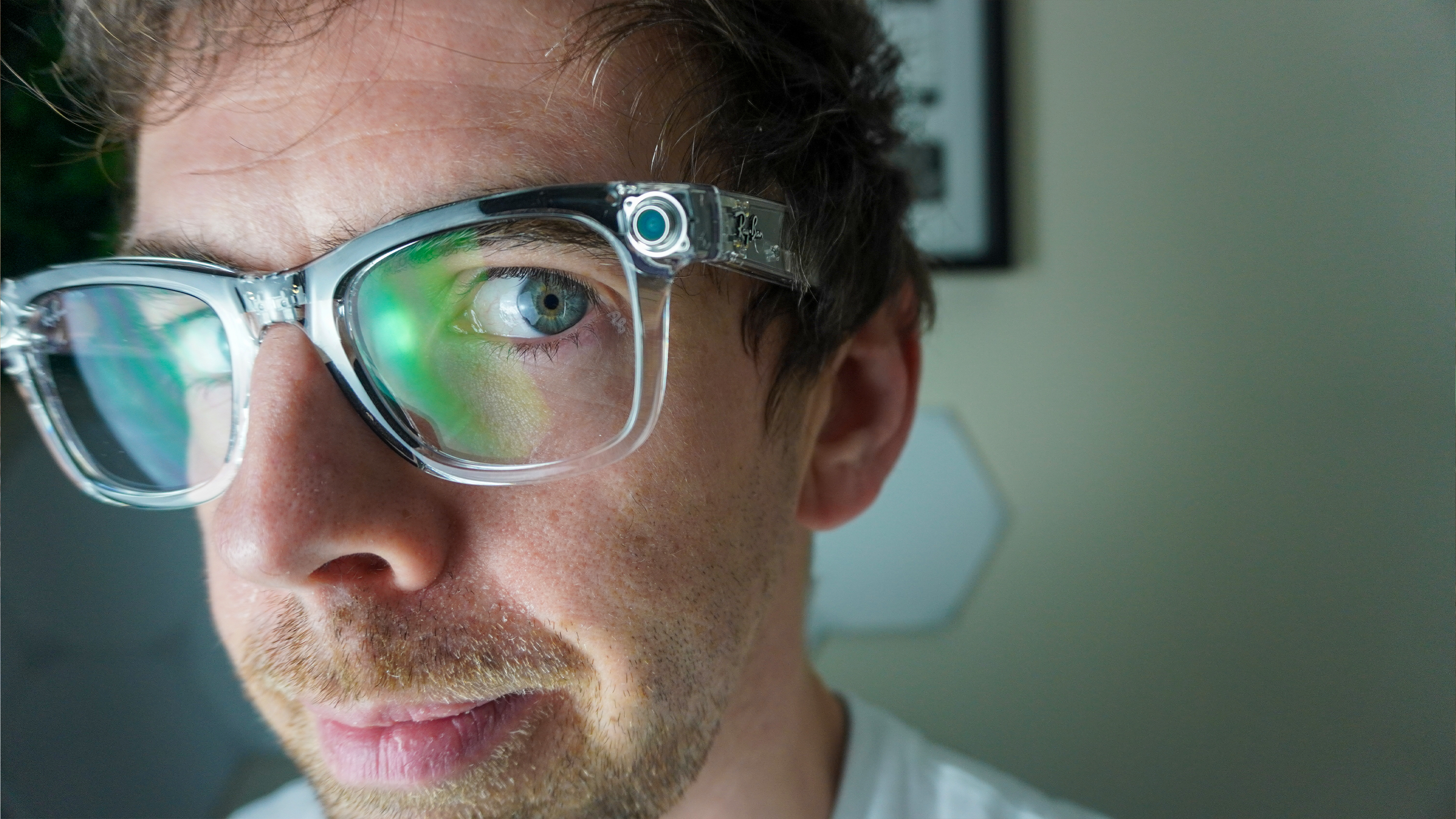
Spiegel also offered a sharp take on Meta’s partnership with Luxottica (the company behind Ray-Ban) — saying that Meta had to partner with a fashion brand to remove the liability of its own brand name.
"I think Meta really needed to partner with Luxottica because the Meta brand I think is not something that people want to put anywhere near their face,” Spiegel commented. “"What's challenging for Luxottica is they took like the most iconic, crazy high-margin product and they destroyed the margin and then they associated it with Meta.”
It’s an interesting point, and one that after seeing Meta filing a patent to digitally resurrect its users, and getting warned by organizations to not turn on facial recognition in smart glasses, I can kind of see the sense in. A lot of my friends and family have a love/hate relationship with Meta in its connected platforms vs invasion of privacy, so to put Luxottica names on its camera-equipped hardware is a smart move.
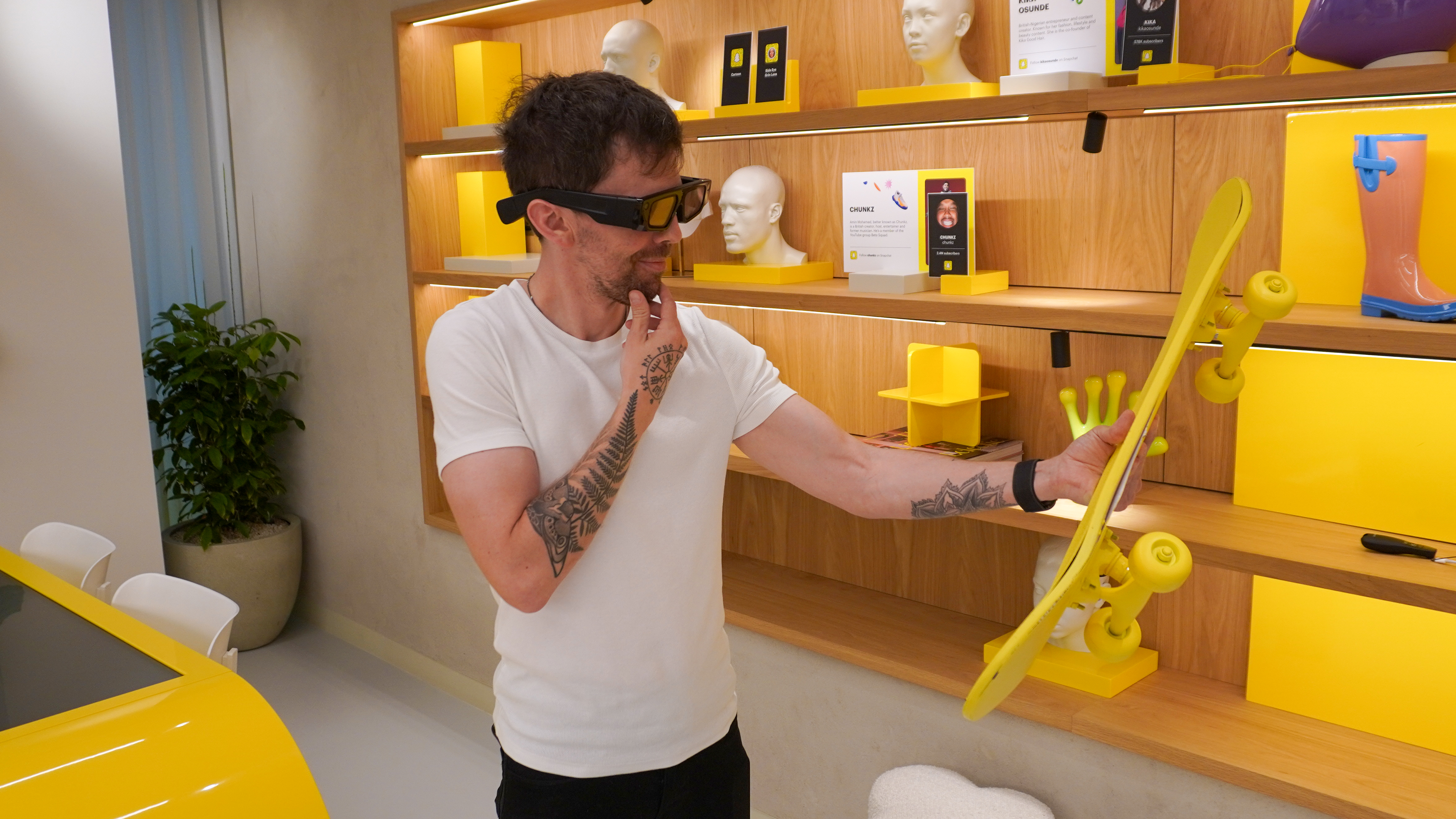
But the Snap Specs will be in a different direction — built and designed in house. “Control of the hardware is necessary to deliver an extraordinary customer experience,” Spiegel added.
When speaking to the former VP of hardware, Scott Myers, it’s clear that form factor is a priority for the company, as he emphasized that “the social acceptability element is so critically important.”
Quite how the company manages to pull this off with the vast amounts of compute and sensor tech required to pull off the Specs without a puck is going to be a monumental challenge. But I’m curious to see!
More from Tom's Guide
- I’ve worn smart glasses for over 5 years — here’s the best AR and AI glasses
- Apple's AI smart glasses strategy revealed: How the iPhone maker plans to outshine Meta's Ray-Bans
- Snap and Qualcomm team up for 'the future of Specs' — aiming to make smart glasses 'more human and grounded in the real world'