Nowadays people rely mostly on stoves fuelled by liquefied petroleum gas (LPG) when they cook. But more traditional methods like charcoal shouldn't be overlooked. For certain dishes, charcoal remains the best option.
In the past, charcoal was sort of an indicator of how Thais used natural resources, as in, how to burn it, how to distinguish and use different types, how to tell if it was good quality and so forth.
Charcoal derives from wood but making it was not considered a waste of natural resources. Farmers often had to get rid of old trees to make way for their farmland, so cutting dead or dried trees and turning them into charcoal was common.
Preparing charcoal is not difficult. The wood is cut to size, put into a pit and burnt. The pit must be covered with a steel sheet topped with a mixture of clay and rice straw. Air cannot be allowed to flow into the pit. After an appropriate burning period, the charcoal is ready for use.
Those who use charcoal for cooking usually have an earthenware container by the stove. To start the fire, they will first light a torch made of gum and sawdust wrapped in thin bark (this is cheap and widely available), then put the charcoal on top. If there are charcoal pieces left over, they put them in the earthenware container and cover it with a lid. For the next round of cooking, they use old charcoal first.
Ash has several important uses. If the fire is too strong while cooking, sprinkling ash on the burning charcoal reduces the heat. People in the old days had food cupboards to store cooked food and leftovers. This attracted ants. To counteract this, each of the four cupboard legs were placed inside a ceramic bowl filled with ash.
There are various types of charcoal, depending on the wood used. Bamboo makes good quality charcoal that can create plenty of heat but is short-lived. The best charcoal comes from mangrove trees.
Around 60 years ago, Krabi, Phangnga, Trang and Satun were dense with mangrove forests. At that time, state concessions were given to people to make charcoal for customers in Malaysia and Singapore. Before long, however, the government came to believe the practice destroyed natural resources so they revoked the concessions.
But mangrove charcoal remained the most wanted. Land owners in Bangtabun in Samut Songkhram grew mangrove trees on their own plots in order to make charcoal, which was shipped to Bangkok. The ship travelled along the Mae Klong river in Samut Songkhram, before joining the Chao Phraya River. The charcoal disembarked at Talad Noi market in Bangrak, where it was held in storage. These days charcoal is transported by road.
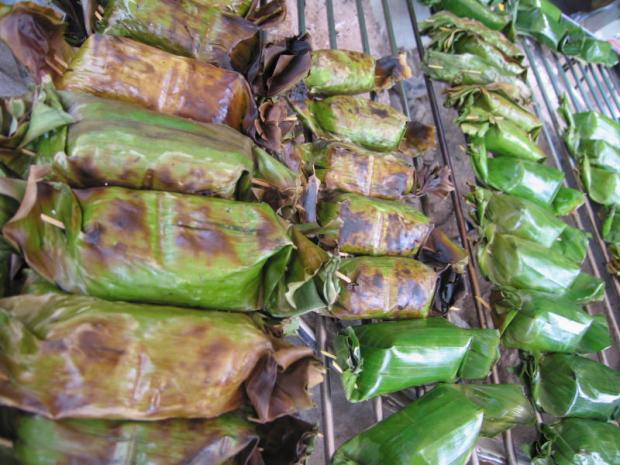
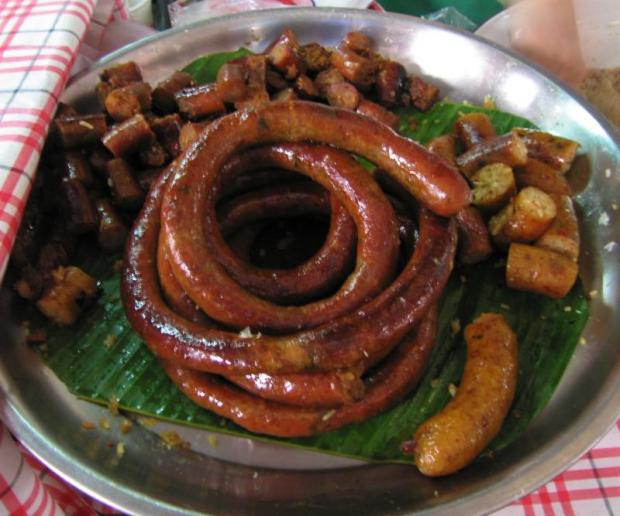
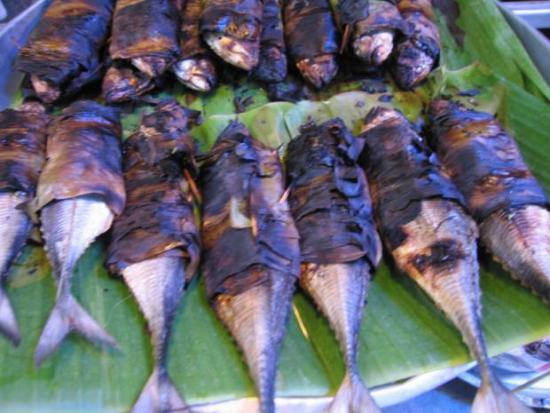
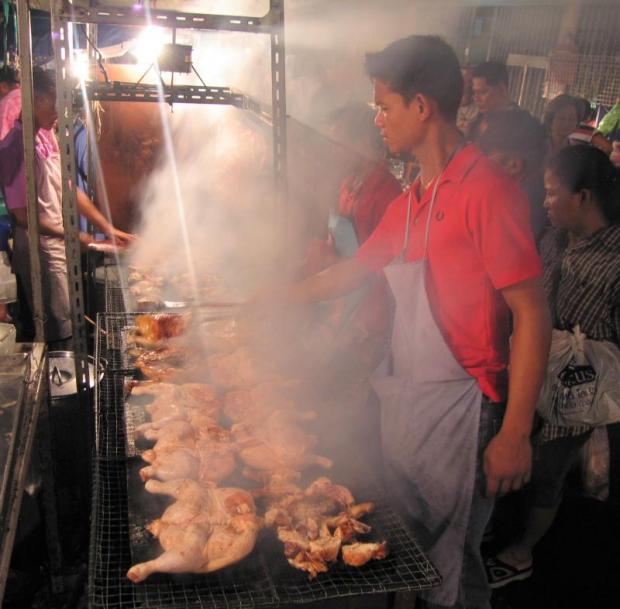
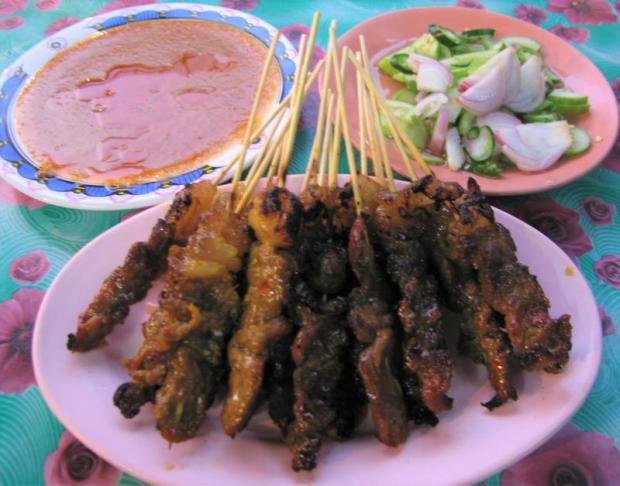
Mangrove charcoal remains widely popular. Some is exported to Japan, albeit in limited amounts. Various cooking styles require the use of mangrove charcoal. Seafood grill houses usually have charcoal grills outside in order to draw in customers. Certain types of Isan food, such as grilled chicken, pork and beef, as well as satay still use charcoal. If LPG is used, the food will be less enticing.
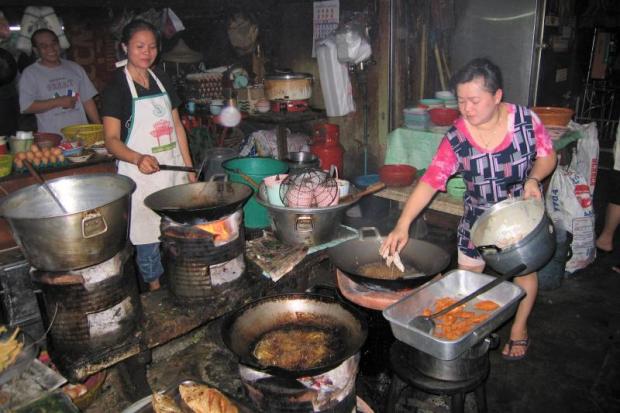
In some home kitchens, charcoal stoves are a must-have, seen as necessary when it comes to grilling chilli, red onion and garlic for making chilli paste or for grilling fish.
Contemporary restaurants recognise the importance of cooking with charcoal. Michelin-starred street food joint Jay Fai is a notable example. Chef Jay Fai herself can always be seen cooking on charcoal stoves.