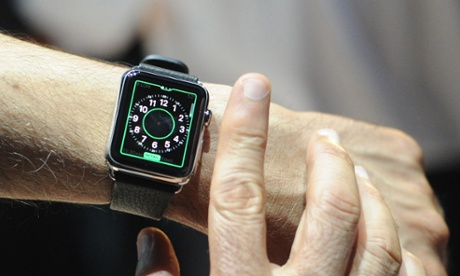
The imminent release date of the Apple Watch has finally been announced – a mere 50 years after the Thunderbirds’ watch-phones first appeared on TV screens. As with smartphones a decade ago, it is thought that Apple’s long-anticipated entrant signals the coming-of-age to this burgeoning market.
What do smart watches mean for advertisers?
Smartwatch advertising will be a whole new ball game for advertisers and agencies. Marketing strategies for TV and online – and even on smartphones – have been able to stick to the central tenet that ‘content is king’. While content will remain important, it is the method of delivery that will come to the fore in this new space.
Smartwatches are physically attached to their users, and therefore more intimate than any personal communications device seen before. This new tech bridges the gap between utility and fashion, connecting everyday communications with the wearable tech market. This intimacy will need to be respected by advertisers. A sure-fire way to irritate, rather than intrigue, an audience is to attach to them a device that is constantly pushing ads. Smartwatch marketing will need to be subtle to be effective.
New opportunities with data
The technology offers plenty of scope for soft, but incredibly accurate, advertising. It is understood that the Apple Watch will be able to track users’ movements, record workouts, and even assess how often and for how long wearers sit or stand. Apple promises a true marriage of technology, achieving these results by combining the latest in GPS and WiFi tech with heart rate sensors and even an accelerometer. Other smart watches on the market boast the ability to monitor (and, over time, even interpret) a user’s pattern and tone of speech, heart rate and respiration patterns. Data will no longer be just keywords and demographics – it will quite literally be hearts and minds.
The data that these watches can potentially collect represents a new opportunity for advertisers; those in the programmatic space should be particularly excited. This data, provided always that its collection and use is in accordance with the law, could dramatically improve audience targeting. A health drinks company might, for example, currently target its campaigns at 18-40 year old professionals living in major cities; it could now push notifications to smart watches when the wearer’s heart rate is coming down after a workout. A bedding company could track when users are having trouble sleeping and suggest that they might need a new mattress or pillow. The first sector already looking to exploit the smart watch is the fitness industry – given the ease of access to heart rate and movement information it is easy to see why. But it won’t end there. This is a brave new world for adtech with as-yet unknown possibilities.
Apple hasn’t yet given any indication of its smart watch privacy policy; it will be interesting to see how it proposes to manage the inevitable data issues. While data protection attitudes in the USA tend to be more relaxed than in Europe, US regulators are very careful around personal data related to the data subject’s health. There can be no doubt advertisers will push the boundaries, and serious questions are already be asked around privacy - see, for example, recent CBS and Sci-Tech Today articles on this point.
The watch-space race
At this early stage, however, advertisers will likely be more concerned with exploiting new opportunities than with regulation. The temptation will be to transfer existing content and campaigns to people’s wrists; this will be ineffective. The winners in the watch-space race will be those who use the new technology to subtly target their audience more intelligently than ever before.
Louis Huglin regularly contributes to ADTEKR.com, where this article was originally posted, and is an associate in the technology and media team at Olswang. Follow on Twitter @adtekr.
This advertisement feature is provided by Olswang, sponsors of the Guardian Media Network’s Changing business hub