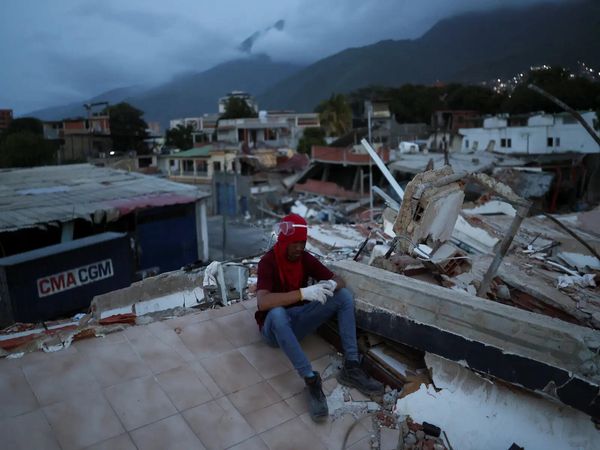
Farmers today are producing food under pressures that would have been unimaginable to previous generations. Input costs are rising, supply chains are increasingly unreliable, water is becoming scarcer, and weather patterns are less predictable. For a growing number of farmers -- in Sudan, Ukraine, Myanmar and Gaza -- the challenge is simply producing food amid active conflict.
These are no longer isolated circumstances. They reflect the reality facing hundreds of millions of farmers who grow the food on which the world depends.
Smart farming -- the use of data, digital tools and precision technologies to improve decision-making, reduce inputs and boost productivity -- is not a luxury. It is becoming an essential response to mounting pressures on global agriculture.
The approach helps farmers decide when to plant, where fertiliser will deliver the greatest return, how much water crops actually need, where pests are likely to emerge and which risks could develop into crises.
Agriculture has already undergone three major revolutions. The first enabled settled farming communities. The second transformed productivity through improved methods and mechanisation. The third, the Green Revolution, combined improved seed varieties, fertilisers and modern farming techniques to feed a rapidly growing global population.
Each revolution addressed the defining challenge of its era: producing enough food.
The fourth agricultural revolution faces a different task. The challenge is no longer simply to increase production. It is to grow more food with fewer and less reliable inputs, under increasing uncertainty, on land facing greater environmental stress, while reducing agriculture's ecological footprint.
The technologies that powered the Green Revolution delivered enormous gains, but their expansion has limits. Synthetic fertilisers depend on energy-intensive production and vulnerable supply chains. Aquifers in many key farming regions are being depleted faster than they can recover. Meanwhile, productivity gains from conventional intensification are slowing.
There is no unlimited supply of inexpensive water, fertiliser or fuel to sustain food production as it has operated over the past half-century.
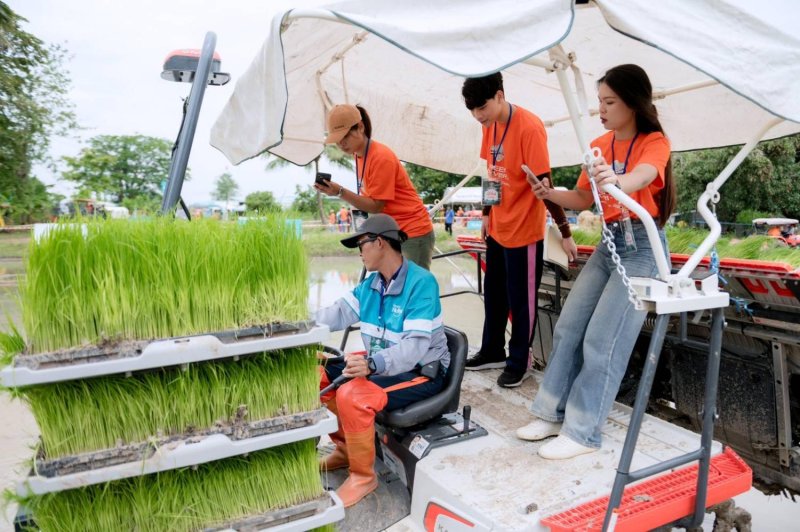
Smart farming offers a way forward. It enables producers to use resources more efficiently, make better decisions and reduce environmental impacts. More importantly, it is already being adopted in many parts of the world.
The UN Food and Agriculture Organization's (FAO) operational programmes provide examples of what is possible. Its Desert Locust early-warning system combines satellite imagery, weather data and field intelligence to predict outbreaks before they devastate crops, allowing governments to act proactively rather than reactively.
The SoilFER programme is improving soil mapping and turning data into practical fertiliser recommendations for farmers in Central America and sub-Saharan Africa. The Hand-in-Hand Initiative integrates geospatial, market and socioeconomic data to help governments and investors target agricultural investments more effectively.
These are not pilot projects. They are operational programmes delivering measurable results, including AI-driven tools that forecast pest and disease risks, assess crop stress and support faster, better-informed decision-making.
The benefits are evident at the farm level as well. Modern grain farms, for example, increasingly use GPS-guided machinery, variable-rate fertiliser application, yield mapping and real-time weather monitoring to improve planting and harvesting decisions.
The technology works. The more pressing question is who can access it.
That remains the sector's greatest challenge. The benefits of smart farming are concentrated among producers who already have the resources, connectivity and institutional support needed to adopt new technologies.
Smallholder farmers, who produce about one-third of the world's food, are frequently left behind. Women and young farmers often face additional barriers to technology and finance, reducing both productivity and opportunity across the agricultural sector.
Addressing these disparities requires coordinated action. Governments must modernise regulations and invest in the digital infrastructure that modern agriculture increasingly depends on. Development banks should treat data systems and precision agriculture as essential infrastructure rather than optional innovations.
The fourth agricultural revolution is already under way. The question is whether its benefits will reach the farmers who need them most, or whether the gap between what is technologically possible and what is practically accessible will continue to widen.
Beth Bechdol is Deputy Director-General, Food and Agriculture Organization of the UN.