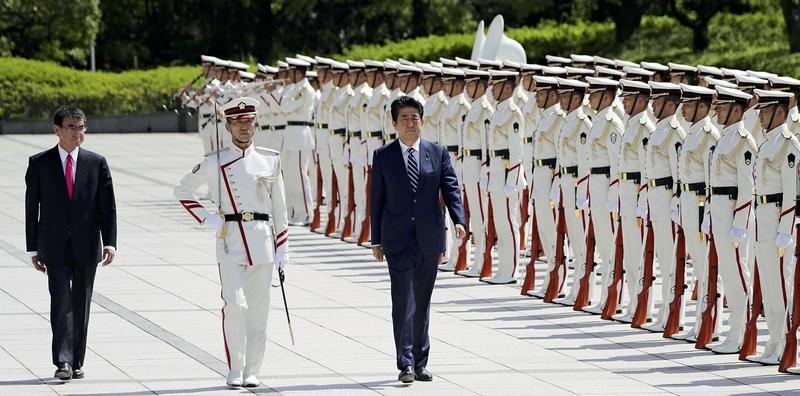
The government recently decided to halt the process to deploy the Aegis Ashore land-based missile interception system. Explaining why he made this choice to his aides, Prime Minister Shinzo Abe said: "If the rocket boosters are modified, the only area that can be defended will be Kyushu. That doesn't make any sense."
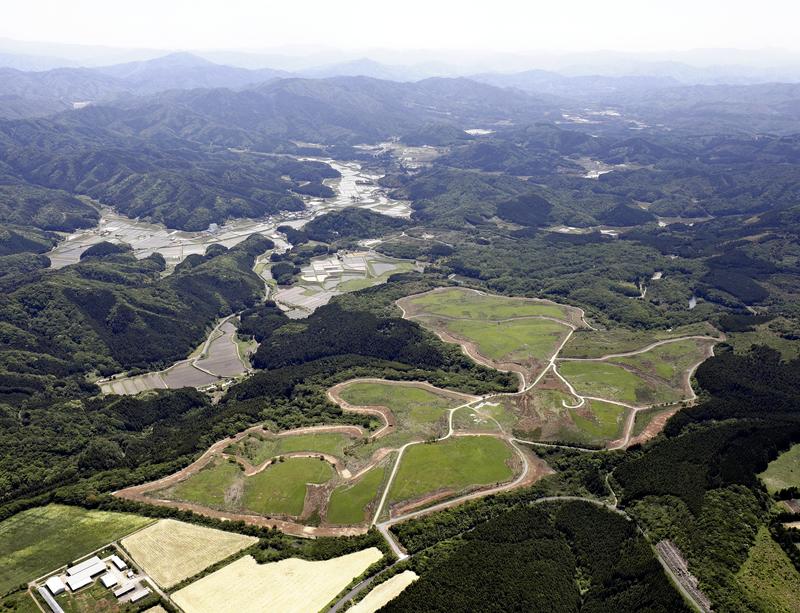
Defense Minister Taro Kono said at a news conference and elsewhere that the process was halted due to the high cost and long duration of modifications that would be needed to prevent rocket boosters from falling outside the Ground Self-Defense Force training area in Yamaguchi Prefecture, one of the candidate sites for the Aegis Ashore deployment. The possibility of rocket boosters falling outside the area was a new problem.
Another decisive factor was that the area in which the system could intercept enemy missiles would be reduced to one-third. The western part of Honshu, which is the main island of Japan, and other places would be excluded from the original protection area of western Honshu, the Kyushu region and Okinawa Prefecture.
At first, Abe was cautious about reviewing the deployment plan, and did not approve it in talks with Kono on June 4. But on the evening of June 12, Abe approved Kono's plan to suspend the procedure.
After that, Abe announced at a press conference on Thursday that the government would review its security strategy. A source close to Abe said, "On the occasion of reviewing the Aegis Ashore deployment process, [Abe is] trying to acquire the capability to attack enemy bases, which is one of his mantras."
--Optimistic outlook
The Defense Ministry was informed by the United States in February of the need to drastically upgrade its interceptor missiles. Washington had previously said it would be possible to drop a rocket booster into the Mutsumi training area of the Ground Self-Defense Force by modifying the software.
Hirofumi Takeda, commissioner of the Acquisition, Technology and Logistics Agency, held repeated online talks with John Hill, director of the U.S. Missile Defense Agency from February, but in late May they concluded that a major overhaul of the missile itself was inevitable.
Hill reportedly told Takeda that the modifications would cost 200 billion yen and take about 10 years. Meanwhile, the scope of protection would be reduced to one-third.
"We feel we were deceived. We took the United States at its word regarding its initial statements," a senior Defense Ministry official said.
--Kono's reform
After taking office in September last year, Kono reportedly told his aides, "It's hard for the defense budget to grow steadily these days. The SDF must limit conspicuous equipment," indicating his willingness to increase the budget for such fields as space and cyberspace.
His budget cuts targeted the Aegis Ashore and the Global Hawk, a large unmanned surveillance aircraft. As Kono began exploring the possibility of scrapping the deployment of the Aegis Ashore before early May, many Defense Ministry officials were shocked. One of them said, "Kono, known as the standard-bearer of administrative reform, went on a rampage."
Kono discussed the possibility of halting the deployment of the Aegis Ashore only with some senior Defense Ministry officials. He did not lay the groundwork behind the scenes with ruling party executives for fear of information leaks, and reportedly made the announcement without fully coordinating with members of the National Security Council (NSC).
"It probably stems from [Kono's] political motives. He may have thought he would take care of this issue by himself," a senior government official said.
--Abe's intentions
Why did the prime minister, who prioritizes relations with the United States, decide to suspend the deployment process?
In fact, Abe has long questioned the cost-effectiveness of Aegis Ashore. The deployment plan has been stalled due to opposition from local residents, and he reportedly told his aides: "With the advent of new missiles, there's a limit to what can be done with a shield. We have to have a halberd."
The prime minister apparently wanted to use the suspension of the deployment procedure, which Kono took the lead in, as an opportunity to thoroughly review the way Japan deals with missiles and discuss whether Japan should possess the capability to attack enemy bases.
The only remaining concern was how the United States would react. The decision to introduce Aegis Ashore was partly in response to U.S. concerns over North Korea's missile development.
The prime minister ordered his aides to secretly ascertain the U.S. position. As a result, Abe recognized that if Japan buys radar and interceptor missiles as planned, U.S. opposition could be contained.
"President [Donald] Trump won't be interested in this issue because we'll buy radar," Abe is said to have told his aides.
Read more from The Japan News at https://japannews.yomiuri.co.jp/