It is difficult to imagine that anything much could grow in the desert surrounding Hazoua, the last town in western Tunisia before you reach the Algerian border. In July and August, temperatures climb as high as 50C. While maps suggest there is a large body of water nearby, the Chott el Jerid is in fact a vast salt lake, often largely dry except for a small area of shallow, reddish water.
Yet, against the odds and despite the growing impact of climate change, a group of 60 small-scale farmers who live in this small town are working together to grow export-quality, Fairtrade certified dates for Swiss, German, Austrian and UK markets, and are slowly restoring the fertility to their soil by adopting organic and biodynamic farming practices.
Switching to organic
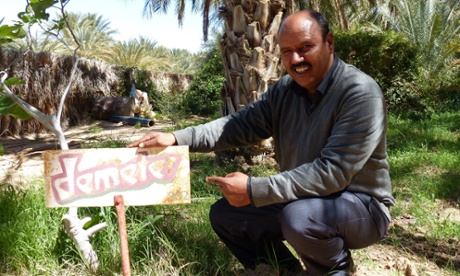
Saidi Sadok, one of the founders and former president of the Groupement de Developpement de L’Agriculture Biodynamic (GBABD) farmers’ association, explains that from the 1930s to 1950s, small natural rivers fed oasis zones, where vegetables, fruit trees and date palms could grow. “After the independence [in 1956] however, there was a lot of drilling for subterranean water, in order to create large agricultural plantations. Slowly, this exploitation of ground water sources meant that by the 1980s, the water table had started to diminish.”
Farmers could not always irrigate their land and were facing increased desertification, which they believe is an impact of climate change. “In the old days, we would usually be able to count on around 100mm of rainfall per year, but we have not had anything like that for the past five years now.”
As the quality of their produce declined, prices fell and farmers began to seek alternative work in the cities. In desperation, many young people migrated to Europe, often illegally. “We started to reflect on how we could adopt a new system to help improve the quality of the dates, to preserve our soil and achieve a better price,” says Sadok. They decided to switch to organic farming, to distinguish their produce from conventionally produced dates. But while this improved their agricultural practices, it also increased costs and because other farmers also identified the benefits of switching to organic production, there was increased competition. “So we started to look for other systems to protect our farmers.”
Fairtrade farming
In 2004, GBABD became Fairtrade certified as a means of earning better prices and becoming more sustainable. The farmers earn at least the Fairtrade Minimum Price of €0.89 per kg for harvested and boxed dates, which provides them with a vital safety net should market prices fall, as they have been doing in recent months. They also earn a Fairtrade Premium, currently €0.15 per kg, which they can invest in their businesses and their communities. To date, most of the premium they have earned has been put towards the cost of buying and installing moustiquaires, the lightweight plastic bags they use to cover bunches of dates in order to protect them from insects and ensure they remain export quality. About one in 10 farmers have also benefitted from drip irrigation, a programme that has been in part supported by the premium.
The demand for dates
But achieving organic, Fairtrade and biodynamic standards has required a significant investment from the farmers, and challenges remain. They only sell a small proportion of their output on Fairtrade terms, and to extend the irrigation system to more farmers, or to innovate further by installing solar power, they need more Fairtrade sales. “We have had to make a lot of sacrifices, some of us had to sell some of our animals to invest in the changes we needed to make,” explains the group’s president, Abdullah Mosbah. Saidi Bobaker, one of the group’s farmers, adds: “I would like to sell a lot more because dates are a good, nutritious product. I’d like to see the amounts sold as Fairtrade grow to a level where we can deliver a lot more impact, the impact that we dream of.”
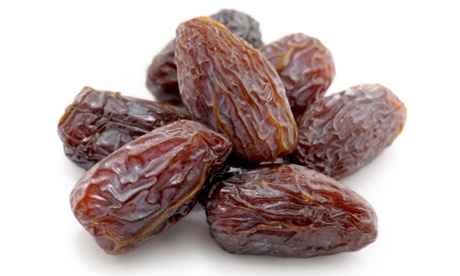
Globally, demand for dates peaks during the holy month of Ramadan, when they are traditionally the first food to be eaten to break the daily fast, but in Europe sales of dates are at their highest around Christmas and New Year, and for many of us they are considered a seasonal treat. Yet there’s no reason we shouldn’t enjoy dates all year-round. A regular feature in Middle Eastern cuisine, they can be used in both sweet and savoury dishes; eaten fresh, dried or frozen; and a recent review of research published in the International Journal of Clinical and Experimental Medicine found that as well as being nutritious, they may also deliver a host of health benefits by boosting our immune system and possibly even protecting us against cancer.
Dates are an important source of export income for several Middle Eastern countries, including Tunisia, which like many of its neighbouring nations experienced a significant downturn in tourism following the so-called Arab spring. In addition to economic benefits, farmers in Tunisia are also discovering environmental benefits of growing dates. At the Al Itkan groupement in Barghoutia, south-west Tunisia, Mohammed Saidi is now growing a range of trees and fruits, including almonds and chilli peppers, around his mature date palms. Although still sandy, the surrounding soil has become richer and more fertile as a result of pipeline irrigation and the application of organic fertiliser, and his palms are now producing fruit after five years, when it used to take eight years.
Investing for the future
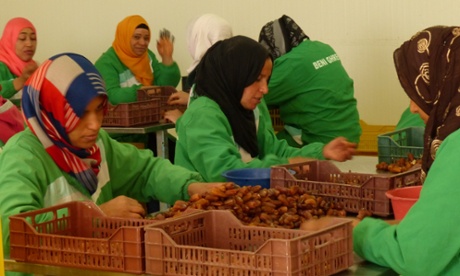
The farmers here have invested their Fairtrade Premium in a range of projects, including fences around each plot to keep out animals that will eat smaller bushes; organic fertiliser and moustiquaires for all 48 farmer members; a small educational grant for each farmer to purchase school materials for their children; and a cultivator machine, which is used to clean and turn over the land around the palm tree, and provides a job for a formerly unemployed young adult. For the future, they hope to buy a small plot of land to build an office and storage facility, for sorting and grading the dates during the harvest season. They would also like to start producing their own compost, roll out the drip irrigation system, and create a place for their children to go when they return from school in the neighbouring village.
While their needs are different, they have much in common with the date farmers in Hazoua. Both groups need to grow their Fairtrade sales to generate the premium they need to invest in their future. “We would love to be able to go to Europe and visit or find new clients directly,” says Saidi Sadok. “There are only very small quantities we sell, and we would love to come and find some new buyers ourselves.”
Stockists of Fairtrade dates from Tunisia include Traidcraft, Suma Wholefoods , Essential Trading and independent wholefood shops
Content on this page is paid for and provided by Fairtrade Foundation, sponsor of the spotlight on commodities series