With masks in short supply due to the spread of the new coronavirus, many small and midsize companies are making unique models featuring attractive designs or soft, smooth textures.
Orders are pouring in for the masks, which reflect the characteristics of each company.
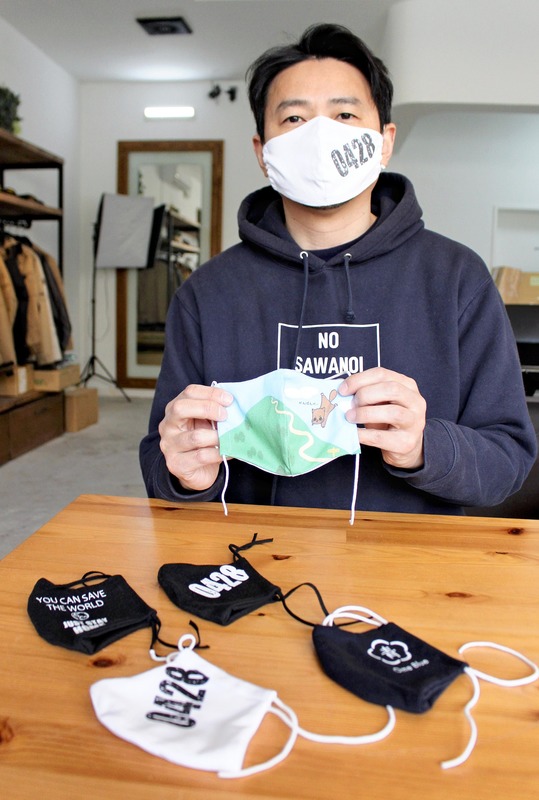
T-shirt maker and sales company Samurai T-Shirts. in Ome, Tokyo, began selling masks made out of blank T-shirt fabric in the middle of this month. Many of their masks are distinctive -- one bears the message "Just Stay Home" on a black background while another features a flying squirrel.
The company's flagship products are original T-shirts printed with patterns and designs chosen by the customers. The firm was preparing to sell T-shirts at festivals and other events in Tokyo, but many remained unsold after many events were canceled due to the virus.
Also because of production adjustments, the company's sales decreased by 60% in March and April compared to an average year.
President Yoshihisa Sawada came up with the idea of making cloth masks with the T-shirts after he saw company Vice President Ritsuko Iguchi making one with fabric for a friend.
The masks are made by cutting a T-shirt into the shape of a mask and sewing it, then attaching elastic cords. The company received more than 500 orders as soon as it announced it would be selling masks.
Supply has not been able to keep up with demand, as there are only two sewing machines in the factory and it takes 20 to 30 minutes to make a mask.
"We custom-make masks, just like our T-shirts," Sawada said. "I think you can help foster the spirit of 'Let's do our best together' at home or in the workplace by wearing the same masks."
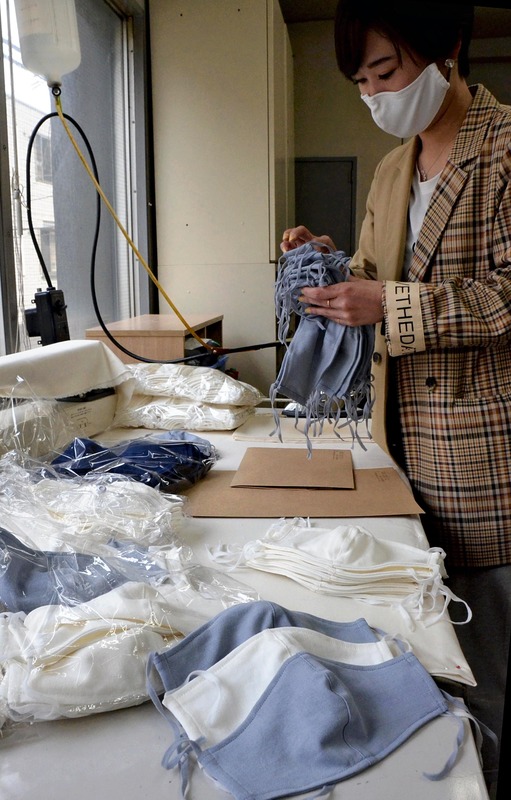
Masks made by the well-established sewing company Wakoh Co. in Tokyo's Sumida Ward use a unique fabric created from Japanese washi paper. The company has been making about 1,000 masks a week since late March, but they sell out as soon as they go on sale.
Last autumn, Wakoh developed a technique for knitting fabrics using thread spun from washi. Long T-shirts made out of the smooth, comfortable fabric were shown at exhibitions in Italy and Tokyo from the beginning of this year.
The firm was about to sell them to the general public, but this plan was suspended due to the virus, leaving the fabric unused. After receiving a request from a customer to make masks, however, the company began producing them with the fabric, believing the soft texture would work well.
"The mask is environmentally friendly, too, since they can be hand-washed and used repeatedly," said Hiroshi Kokubun, senior managing director of the company.
Yuzawaya., a Tokyo-based chain of stores specializing in handicraft materials, shows how to make a mask on its homepage, for people who cannot buy them. The pattern can be downloaded for free.
The company's sales of gauze and elastic cord for mask-making have increased to 40 times that of an average year. Dramatically more people have also bought or rented sewing machines from Yuzawaya.
Yuzawaya produced videos after receiving numerous phone calls to stores asking how to make masks. The videos also introduce masks made with double-sided tape to eliminate the need to sew and 3D masks that entirely cover the nose and mouth.
Read more from The Japan News at https://japannews.yomiuri.co.jp/