Small-holder farmers in Kenya dig for survival - in pictures
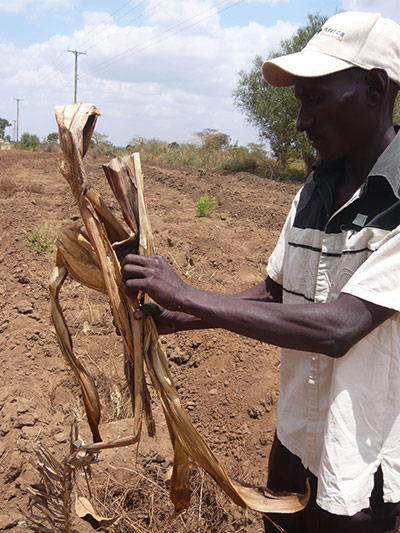
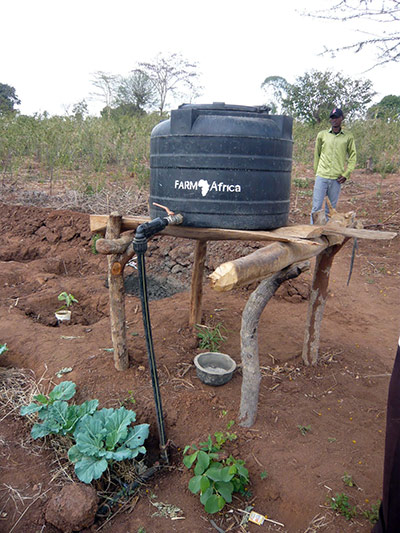
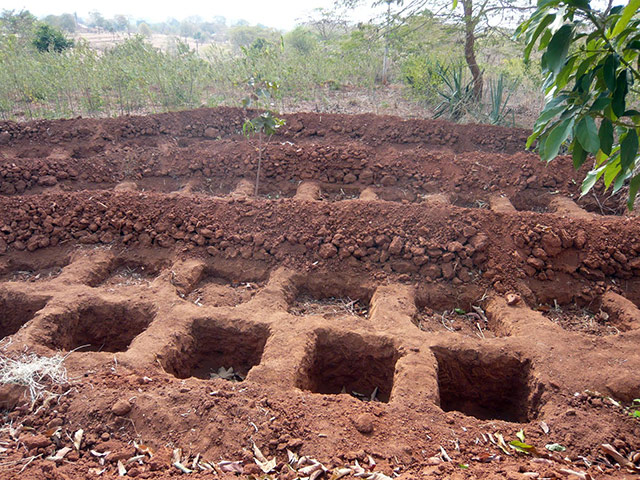
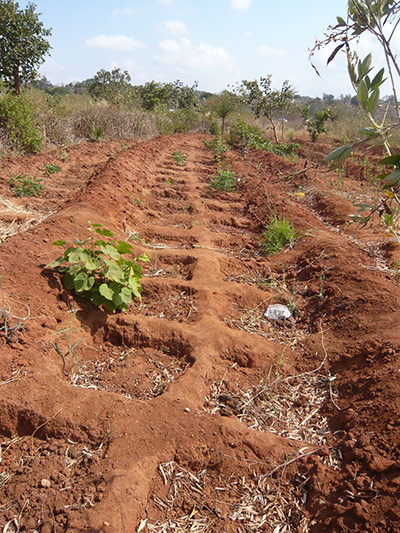
Ngunzi teaches farmers about zai pits and other methods to conserve water. Zai pits are filled with leaves, stems and other crop residue, which act as fertiliser, and when combined with trapped rainwater helps crops, planted on top, to grow. He also teaches how to grow drought-resistant crops, such as pigeon peas, green grams, sorghum and milletPhotograph: Mark Tran/GuardianNgunzi holds parched crop leaves to show how dry it has been. The last rains fell in April, and the next are due in OctoberPhotograph: Mark Tran/GuardianDrip irrigation saves water by delivering it directly to the base of the plant through a system of tubesPhotograph: Mark Tran/Guardian
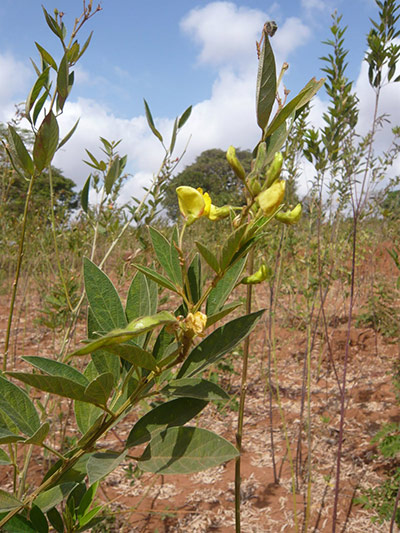
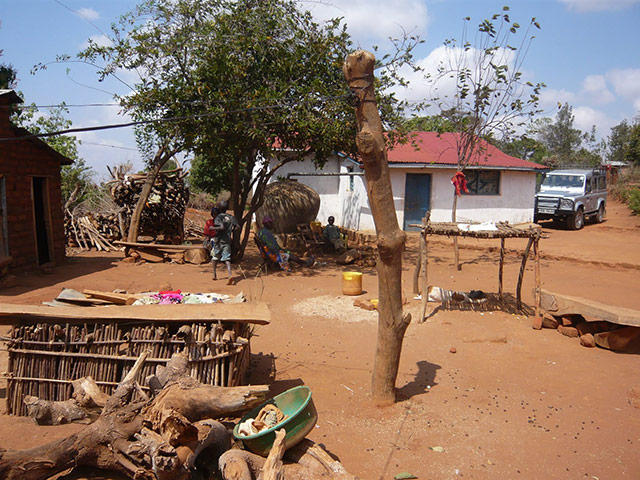
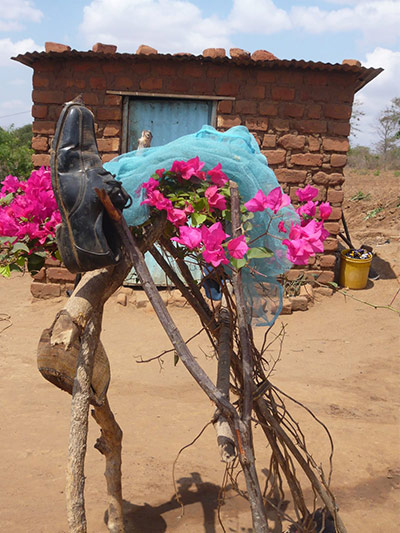
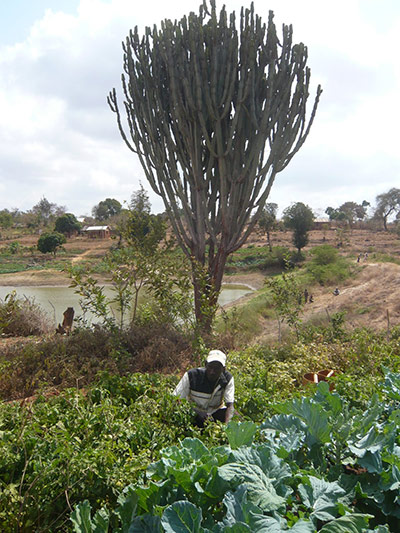
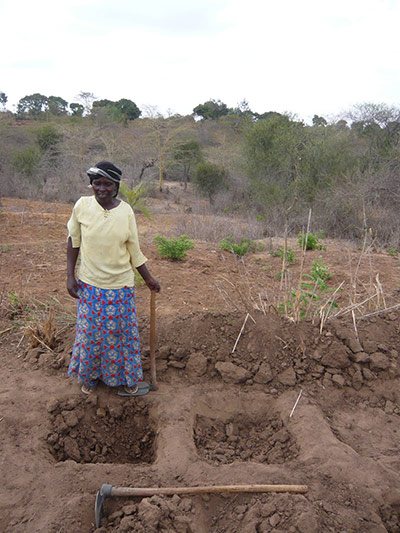
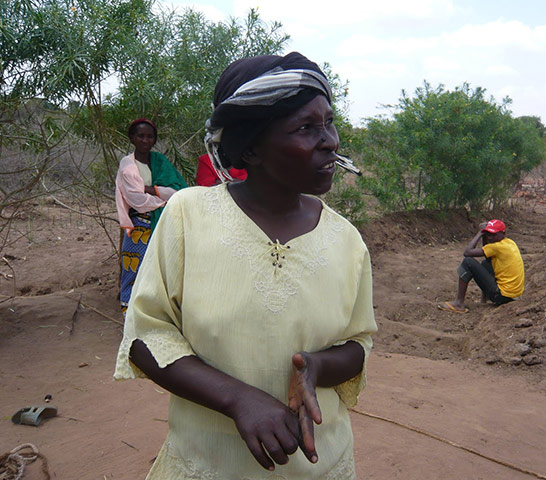
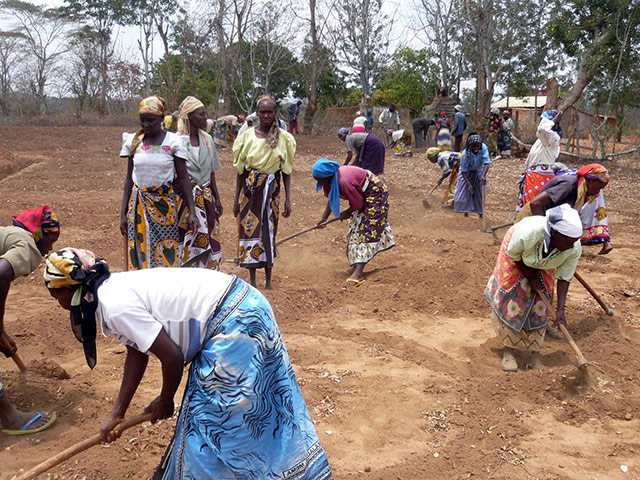
Pigeon peas, a drought-resistant crop, growing over a zai pitPhotograph: Mark Tran/GuardianNgunzi's farm, where he lives with his wife, children, father and mother. He keeps a few animals, including a goat for breedingPhotograph: Mark Tran/GuardianShoe drying on Ngunzi's farm. Photograph: Mark Tran/GuardianNgunzi among crops that he has managed to grow despite the lack of rainPhotograph: Mark Tran/GuardianZai pits waiting to be filled with crop residue. Farmers are digging as many as they can in anticipation of the next rains in October. The April rains didn't provide enough water for the cropsPhotograph: Mark Tran/GuardianFilled zai pits awaiting crop plantingPhotograph: Mark Tran/GuardianWayua Mwanza, a farmer with two acres of land, stands by a fresh zai pitPhotograph: Mark Tran/GuardianMwanza has dug 110 zai pits with the help of her sons and other farmers. She wants another 400 pits. Her husband works in town, an hour away, writing and painting signs. Most farmers are women Photograph: Mark Tran/GuardianWomen farmers at farmer field school practise digging and sculpting negarims. These semi-circular ridges of earth, along with terraces and zai pits, are methods of conserving water in dryland farmingPhotograph: Mark Tran/GuardianWomen farmers at farmer field school take a breakPhotograph: Mark Tran/GuardianMwanza wants more hoes but can't afford any more. They cost £45 each. She wants to be a rich farmer in five years' timePhotograph: Guardian
Sign up to read this article
Read news from 100’s of titles, curated specifically for you.