Businesses don’t exist in isolation; every SME is part of a wider industry and economy. However, it is all too easy as business owners to become blinkered and inward looking as we face the daily tasks and challenges that running a business presents. In doing so, it is possible that we are inadvertently stifling our own potential and missing opportunities, so it is important to remind ourselves that that we all have the opportunity to look outwards and seek collaboration.
Friends will tell you that I am positively evangelical about embracing innovation, cultivating an open mind and working with other businesses. It is a way to invest, both in our own individual business interests, and in those of the people in our networks that we’re all part of. Together we are stronger.
Fifteen years ago, when I took the helm of my family business Holts – a specialist in precious, bespoke jewellery – it became clear to me that there was a distinct absence of new talent and it wasn’t an issue affecting only Holts. That influx of fresh, young, capable and energetic people had dried up. My instinct told me that we needed to look beyond our own business needs and simply act for the greater good of our flailing industry. That was the beginning of Holts Academy. We began to nurture raw talent to become the jewellery designers and craftspeople of the future, not just for Holts but for the UK’s broader jewellery market. For my business, apprenticeships were my instinctive, pragmatic response to a very real threat.
I am glad I trusted my instinct. The wisdom of training people who would become the competitors’ employees was queried, but by investing in the sector as a whole we secured Holts’s future. For SME employers, establishing apprenticeships (whether in response to a skills shortage or an ageing workforce, or to build stronger foundations in local communities) should always be an instinctive choice. Nick Boles, the Minister for business, innovation and skills, is fond of challenging people to point out an employer who has taken on an apprentice and subsequently regretted it. I am yet to meet such an employer, or to point one out!
Many successful SMEs are fuelled by excellent instinct, and that innate ability to see the best way to get things done is a trait that born entrepreneurs share. However, I don’t see this as a reason for each business leader to plough on alone doggedly following his or her gut. Running a business, whether as an owner, manager or both, is a lonely pursuit – surely it should be intuitive for us to turn to one another, share ideas, and collaborate and communicate whenever we can.
Being part of the Goldman Sachs 10,000 Small Businesses initiative, I have sometimes found myself in a room with 30 other business owners. These are people who may initially appear to perform on completely different stages from myself and from one another. However, the common ground quickly emerges. We soon find that our anxieties, aspirations and experiences correspond. Trust is forged fast when you’re with a group of people who understand the things that keep you awake at night. There’s no agenda except to provide support. I have found the advice, insight and feedback of my peers to be the most valid and valuable I could access.
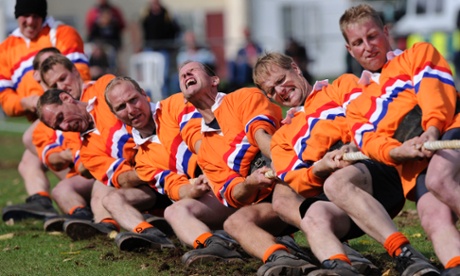
There is something gratifyingly neat and circular about the mentoring process. You are mentored, then you mentor. You accumulate knowledge, then share it, pass it on for the good of your business, someone else’s business and, ultimately, the economy as a whole. In the same way that my business used the apprenticeship model to invest in an entire industry, by pooling our resources in formal and informal ways, we can make things better for everyone. Competition doesn’t need to be our only driver. Sometimes cooperation and collaboration are far more effective tools.
We don’t need the government to problem-solve for us but to create policies that best support our solutions. We know what we’re doing and where there is uncertainty, we can turn to each other as mentors and advisors. I believe businesses can simultaneously shape their own destinies and create broad, fertile landscapes of opportunity across entire industries. Whether you’re operating as an individual, business owner, collective or even as an entire sector, there’s something incredibly empowering about taking the initiative and exercising control of your own future. Let’s do this!
Jason Holt is the Government apprenticeship ambassador for SMEs and CEO at the Holts Group
Content on this page is paid for and provided by Goldman Sachs, sponsor of the Entrepreneur Stories hub.