Describe your business
It is a footwear business, we make really cool, fashionable, massively comfortable ballerina pumps.
It all started off as a folding shoe business, although that’s far from what we do at the moment. We used the folding aspect as a point of difference at the very beginning.
Where did the inspiration for the business come from?
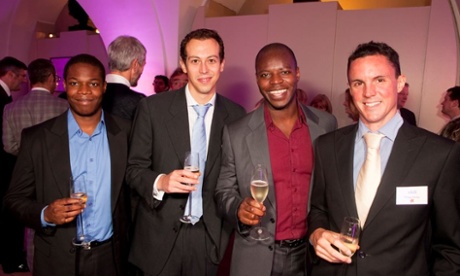
[Myself and co-founders Frank Eribo, Mark Quaradeghini and Philippe Homsy] were at a party where one of us lost a bet and had to go dressed as a woman. The person, who shall remain anonymous, had to do the whole shebang with a wig, lipstick, dress and shoes. The rest of us asked what was so bad about it and he said “the shoes were killing me”. This started a conversation and we were like: “Hang on a minute, there’s lots of footwear out there but it doesn’t really give women what they need.”
What were your first steps?
We read about 50 Mintel reports on women’s footwear. The business was a bit of a hobby at the start, it took us a year and a half to two years to get our first prototype ready. No-one can think this stuff is easy, the amount of research that went into it was phenomenal.
How have you grown your brand?
We have found the most important thing about growing a business is branding. The product is completely integral, don’t get me wrong, but the next most important thing is knowing your customer. We ask ourselves three simple questions: Who is the lady we are talking to? What do we want to say to her? How do we want her to feel?
We have targeted bloggers, and the thing we like is they are a bit more real. I would rather bite the bullet and say: “Here are some shoes, write whatever you want to write about them.” Sometimes we get some honest truths and sometimes we get some dedicated followers off the back of it. And there are things we can learn from it.
At the moment we are focusing on brand marketing, getting ourselves out there. The UK is our smallest market so we have a long way to go.
How have you funded the business?
I was very anxious to use the advantage I had, which was free lodgings from my folks, to save up. We saved up our salaries, but by the point it became a real working company we had only invested £20,000–£25,000 in total. This was in the middle of the recession and we took advantage of the fact that the economy was down. Then Pentland came on board as an investor in 2012.
What’s the best thing about running your own business?
Our team was never about making money, it was about building something. I think the best thing is the pride we have in what we have achieved, we are all pretty humble people. It’s an amazing thing to build something that didn’t exist before. Last year we sold one million pairs of shoes, and growth has been 80% over the last three years.
And the hardest?
We find it’s a very difficult thing to deliver on time and in full. As a smaller brand you have to be flexible and try and work around any problems. You have to get your orders in a bit earlier than the others so that you can be ahead of the curve.
What advice would you give to budding fashion entrepreneurs?
If at the beginning we had known how hard it would be to get where we are now, we would have said “nah”. We arrived thinking every time we jumped over a hurdle it was the last one and that has kept us going. Try not to think about it too much, do your research and get stuck in.
Emmanuel Eribo is the co-founder of Butterfly Twists
Sign up to become a member of the Guardian Small Business Network here for more advice, insight and best practice direct to your inbox.