In 2024, Tharinee Ratanasatien and Nawarat Welployngam joined an artist residency programme in the UK. Unlike their counterparts in Thailand, the creative professionals had access to structural support.
In the aftermath of Brexit, however, cuts in project funding revealed that over-reliance on external aid could backfire.
"Rather than learning from them, we ended up learning from each other. If there is not A or B, there should be C," said Tharinee.
Sponsored by the British Council's Connections Through Culture, a grant that supports artistic collaboration between the UK and participating countries around the world, Tharinee and Nawarat enjoyed an opportunity to experience community art in the UK, where they met Kate Yedigaroff from Bristol-based art organisation Mayk.
A year later, unfortunately, financial problems forced its closure.
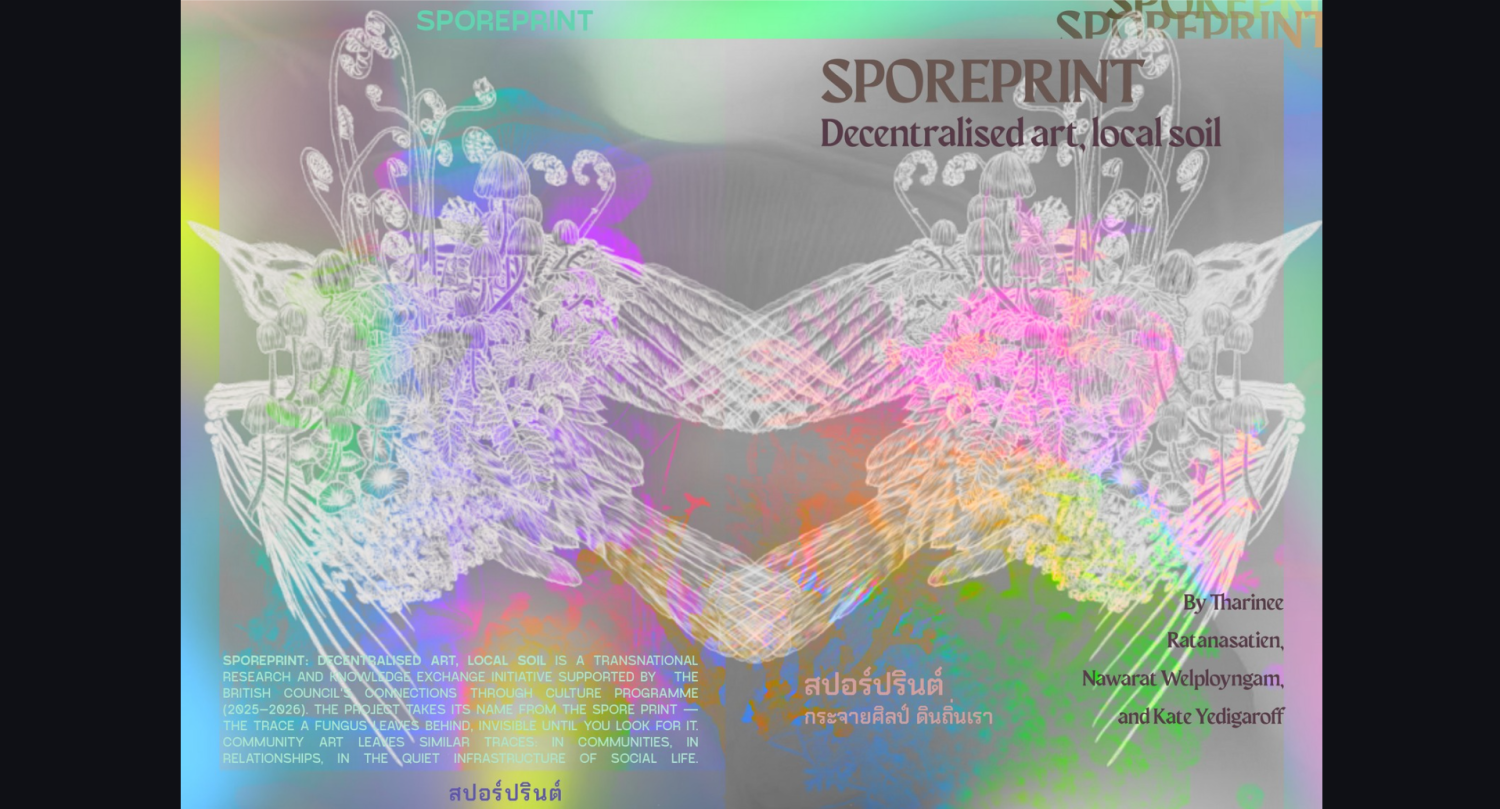
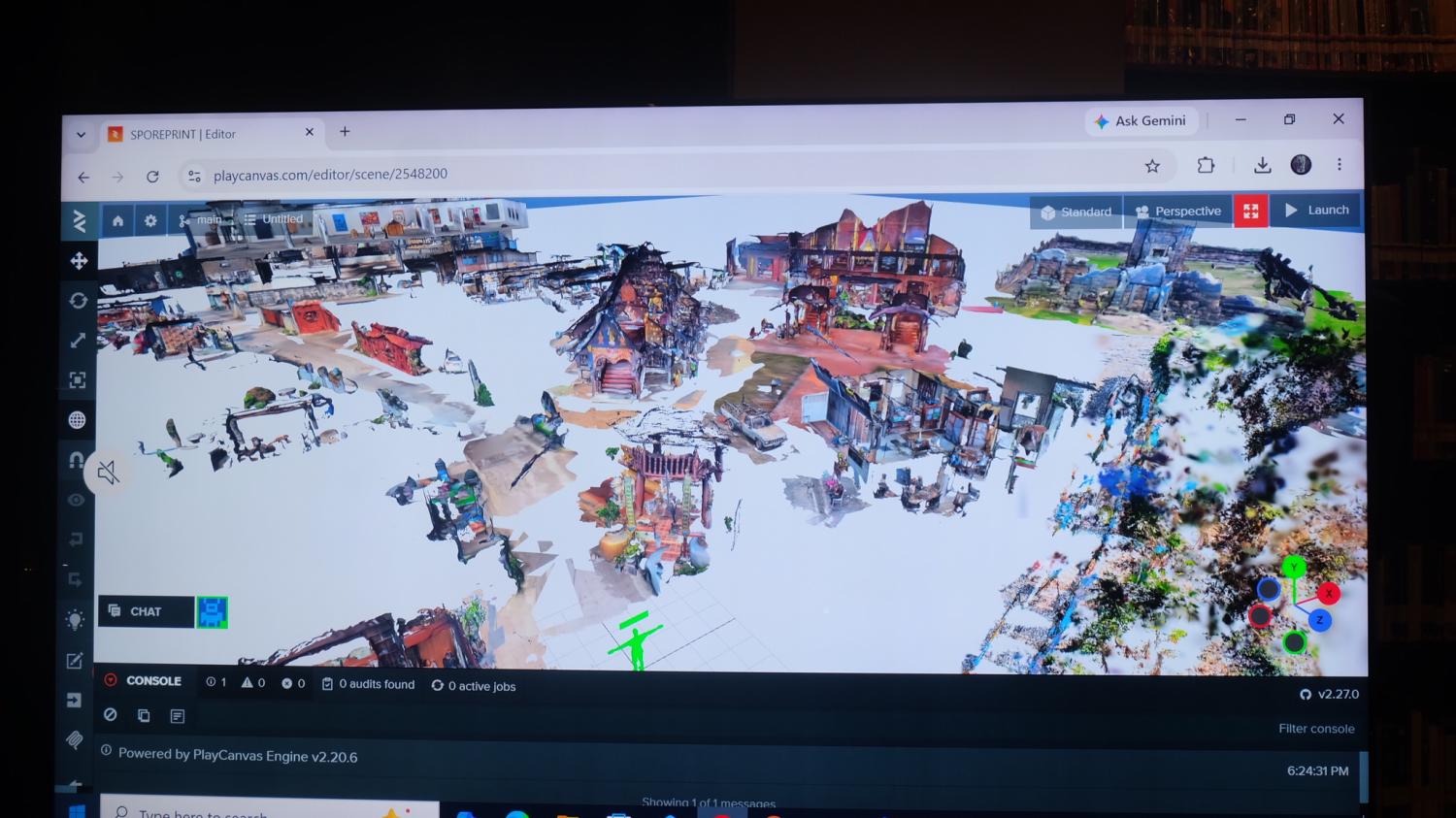
A string of these events inspired three of them to undertake a project, titled "Sporeprint: Decentralised Art, Local Soil", to explore what sustains community art in 10 communities, nine in five Thai provinces and one in Bristol, England, early this year.
A result of their study was unveiled at William Warren Library on July 18.
"Community art is everywhere, whether in the air or underground, but invisible like spores," said Nawarat.
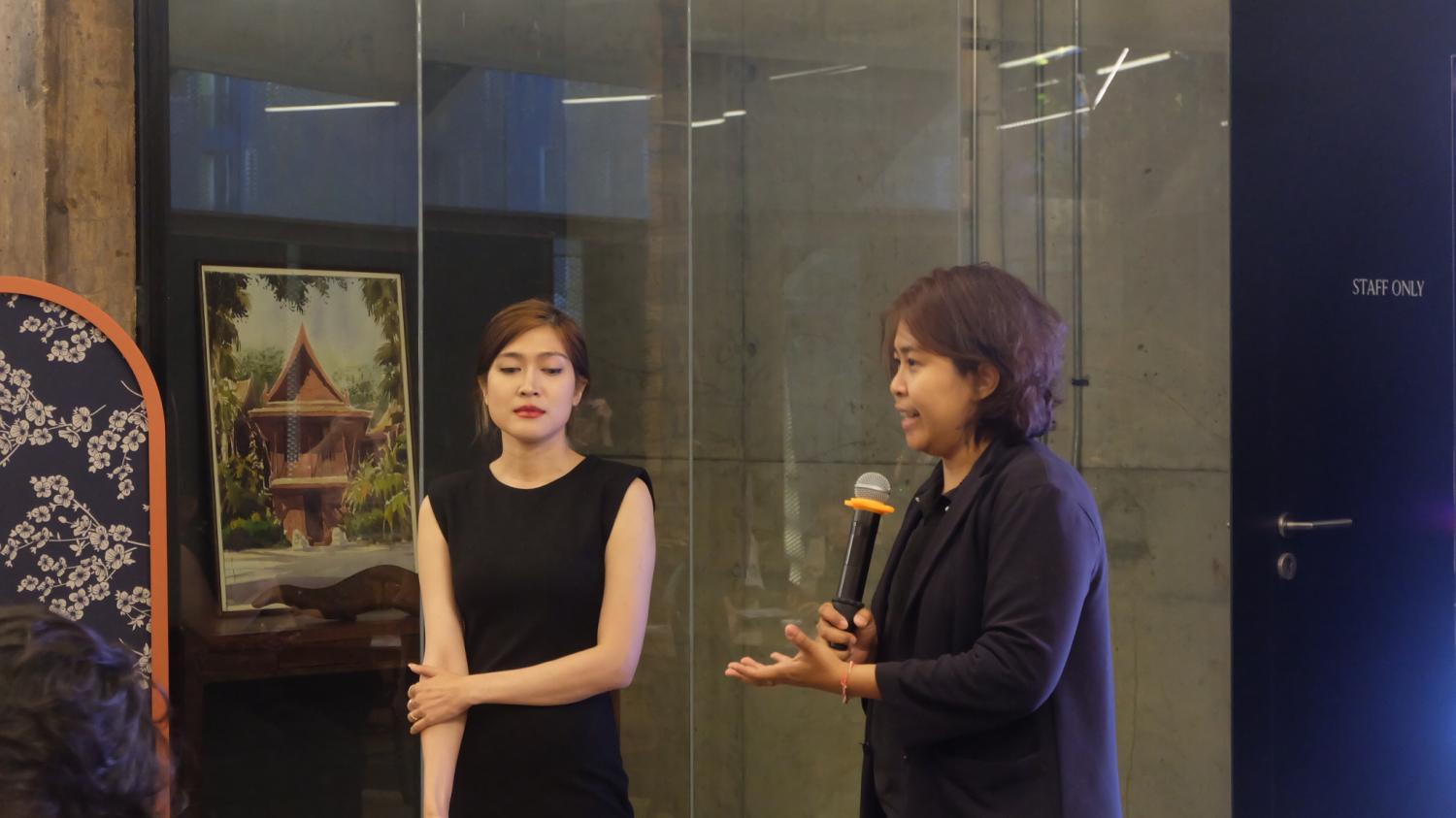
Tharinee explained that community art is "conceptually homeless" -- it does not fit any existing categories, whether art, social welfare, or NGO. Instead, it is more of "decentralised social infrastructure" -- "the hidden architecture that holds communities together when official systems fail, fray, or never arrive". It hovers in the background, but materialises in crises.
"During Covid-19, artists in Nang Loeng put on hold their festival to deliver daily essentials to slum dwellers who were forced to stay at home without income for two weeks. Community art can help people get back on their feet. If we can replicate this model in other places, it will make them strong from the inside without need for external support," she said.
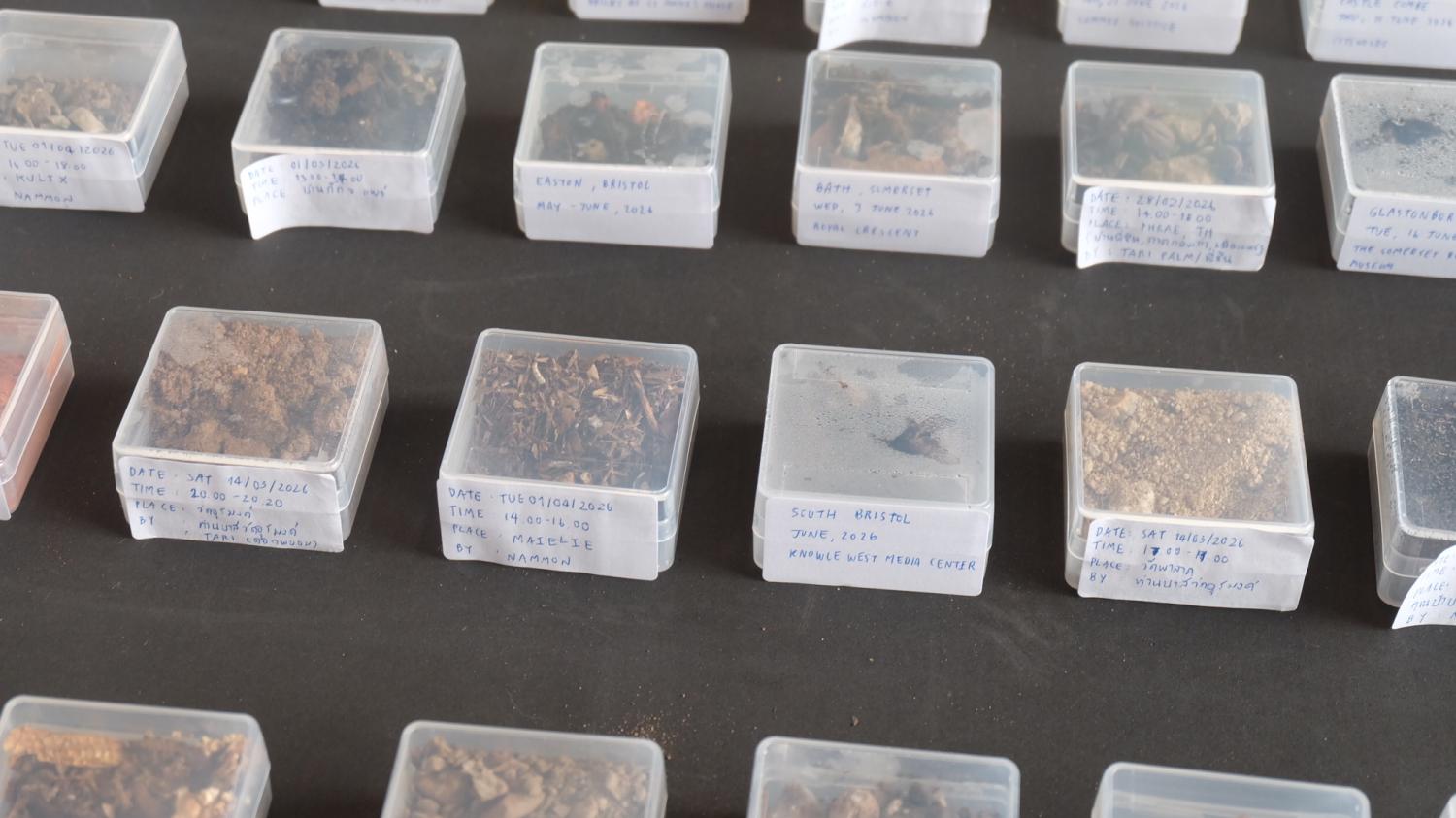
They compared community art to a sporeprint -- a mark that is left when a mushroom discharges spores on paper or glass.
In the same way, each neighbourhood leaves its own trace of something that lives or once lived. As fungi have mycelium running underground, none of their footprints are the same because they grow in specific soil.
"For this project, we travelled across Thailand and to the UK. Like spores, we disperse and embed ourselves in communities to connect, not the other way round," said Tharinee.
In Thailand, survival urgency brings forth community art. Nang Loeng is one of Bangkok's oldest surviving neighbourhoods under threat of erasure.
Founded in 2008 by Tharinee and Nawarat, the E-Lerng Artists Collective addresses a wide range of community issues from the loss of a tamarind tree to the lack of status of a stateless person to a dying performing art.
Like Nang Loeng, three neighbourhoods in Chiang Mai are under pressure of losing original character or vanishing. Built by Luang Anusarnsunthorn, Anusarn Building in San Pa Khoi provides commercial space for generations to come.
During Covid-19, Arisa Nimmanahaeminda, a fifth-generation heir, returned home and converted her family's property into a community space to revive the neighbourhood.
Forced to relocate from Myanmar, ancestors settled in the outskirts of Chiang Mai to make pottery for local rulers. Two centuries later, villagers in Baan Mhueang Kung are still producing ceramics.
However, gruelling work, minimal income, and legal protection of teakwood make it difficult for them to continue the trade.
As Chiang Mai expanded outwards, Chang Moi, once the city's commercial hub, went into decline. The Creative Economy Agency subsequently designated it as a creative district pilot.
Despite its measurable economic success, a member of the Chiang Mai Community Network noted that an inrush of nightlife venues changes the neighbourhood's character. It reveals tension between urban regeneration and a local way of life.
Three hours from Chiang Mai, Phrae does not have an art scene. Moreover, locals refuse to work together to avoid exploitation and political opportunism. However, younger generations who return home connect and take the initiative.
While a network of creative citizens Khai Luk Lan Mueang Phrae revives life-prolonging rituals, a group of artisans Hom Come Home organises annual gatherings, for example, a market.
Meanwhile, art in Khon Kaen does not enjoy public recognition. Founded in 2018 by the late art critic Thanom Chapakdee, Khon Kaen Manifesto used community art to give voice to those forgotten by mainstream development.
Following his departure, however, the group disintegrates and morphs into other forms. Huak Society, for example, is an alternative art space that continues the rebellious spirit.
As three southern provinces are perceived by outsiders as dangerous, Melayu Living, a group of local creative professionals, tries to change their image from violence to cultural diversity.
Firstly organised in 2019, an art festival Pattani Decoded takes place in a multicultural district, A-Rom-Dee, in Pattani's old town that combines three streets -- Anoru (Chinese), Pattani Phirom (Thai) and Ruedi (Muslim).
When Tharinee and Nawarat finished fieldwork in Thailand, they returned to Bristol again. As its primary driver for community art is social longing, creative practitioners are reaching out for collective life.
Kate explained that culture of residency in the UK produces nomadic artists. Its project-based funding model not only suffers financial strain, but also misses the crucial point of art.
"The pressure to tell the story of the work in order to raise money and build partnership is eclipsing the being actively in the story," she reflected.
In light of their study, Nawarat debunked the myth of structural support, especially an arts council, held by many local artists to be a panacea.
"In a way, it is lucky that time in Thailand passes more slowly. Art in the UK already passed its peak. We have just started, but could see the whole loop of it. No need to repeat our counterpart's mistake," she said.
Tharinee and Nawarat concluded with three policy recommendations. While funding should extend beyond a project to accommodate community art that thrives in between, a central archive should be established to promote knowledge sharing and collaboration. Last, the state should support community networks without interference.