While the Government’s announcement of changes to MIQ today provides hope to overseas Kiwis trying to return home, the amount of freed up space will ultimately depend on the current outbreak’s rate of growth
The MIQ system has been the focal point of no small amount of controversy since it was introduced in April of last year.
Aside from cases of the virus escaping MIQ confinement and ending up in the wider community on more than one occasion - the latest introducing the Delta variant to New Zealand from a room in the Crowne Plaza in downtown Auckland - a shambolic booking system and limited supply of rooms have left many New Zealanders and hopeful immigrants locked out of the country.
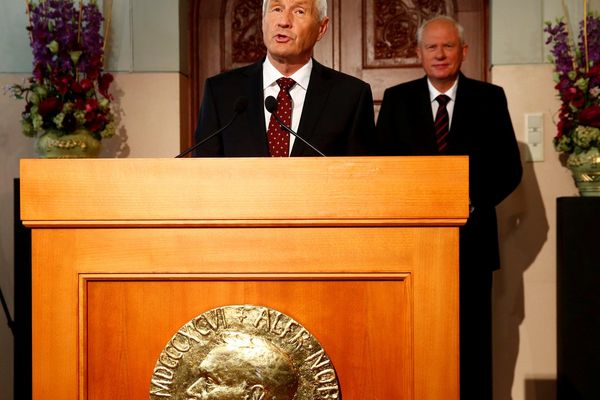
So as Minister for Covid-19 Response Chris Hipkins approached the podium to announce the MIQ overhaul this afternoon, people around the world with a plan to travel to New Zealand would have been watching with bated breath.
Hipkins revealed the biggest changes to the MIQ system since Director-General of Health Ashley Bloomfield first issued the order that all international arrivals would have to spend two weeks in a hotel, in the first months of New Zealand’s pandemic life.
Hipkins announced that from November 14, international arrivals will only have to stay in MIQ for one week, followed by around three days of self-isolation at home.
Travellers will be tested at days 0, 3 and 6. Before leaving MIQ, they will have a rapid antigen test and then isolate at home until a PCR test on their ninth day since arrival.
Not only will cutting the time guests need to be in MIQ halve the cost - it will free up rooms across the system.
By the Government's own promises, this should make things easier for people trying to get to New Zealand.
Ever since the MIQ booking system began to see demand far outstrip supply around six months ago, the Government has told desperate Kiwis stuck overseas that it was a lack of supply preventing them from coming home, rather than an issue with how it was running the system.
“This isn’t a systems problem so much as a demand versus supply problem. Right now, the demand is high,” said joint head of MIQ Megan Main back in July.
And despite some big changes to the system such as shifting from a faceless booking system requiring hours of hitting refresh to a randomly assigned place in a virtual queue, the unwieldy ratio of demand to supply has continued to prevent many MIQ hopefuls from locking down a space.
So dividing the amount of time each person needs to spend in their hotel room will increase supply - it surely follows that it will be easier for travellers to get a room?
Not necessarily. Since the August outbreak, MIQ has been doing double duty - allowing people to safely enter the country, and housing community cases and the potentially exposed in Auckland.
Hipkins signalled today that many of the freed-up rooms will be kept for community cases.
“This evolution will free up around 1500 rooms a month in MIQ,” he said. “Many of these rooms will be used for community cases, but some will be re-released in the MIQ voucher system.”
He cautioned desperate overseas Kiwis to manage their expectations.
“I don’t want there to be expectations it will double the amount of rooms as it won’t - but it will increase the amount of rooms.”
Hipkins said at present, modelling for the number of rooms needed for community cases is not conclusive enough for the Government to make big promises around MIQ capacity.
MIQ itself was quick to lower the expectations of hopefuls in a press release, which stated clearly that capacity will not increase substantially.
Rather than fixing the problem that has dogged the system for most of this year, these changes are intended to return MIQ capacity to the levels it was at in August, before the current outbreak.
Capacity has decreased since Delta hit Auckland’s streets, largely due to the conversion of the Holiday Inn and Novotel and Ibis Ellerslie in Auckland and the Distinction in Hamilton to community quarantine facilities - and with the need for more community facilities looking to increase rather than go away, this trend may well continue into next year.
“With the change to the seven-day MIQ model, we are hoping we can reinstate the level of rooms we had available for international returnees prior to the community outbreak in mid-August,” said an MIQ spokesperson. “This change will help to offset the reduction in MIQ capacity we’ve been experiencing as a result of the outbreak, rather than doubling the capacity of MIQ rooms.”
The spokesperson suggested that as self-isolation at home for community cases becomes the norm, there will be potential for opening up MIQ capacity to international travellers down the road.
Hipkins also set out the other two steps in the MIQ makeover - quarantine-free travel for fully-vaccinated travellers from low-risk countries such as Samoa, Tonga, Vanuatu and Tokelau, and once the traffic light system has been adopted, moving to self-isolation at home instead of MIQ.
He predicted a move towards travellers being able to bypass MIQ for self-isolation at home or elsewhere in the first quarter of 2022, but cautioned that it was contingent on New Zealand reaching the Government’s vaccination target of 90 percent double dosed.
“When the Covid-19 protection framework is bedded in, 90 percent of eligible New Zealanders will be fully vaccinated,” he said. “So we’ll have a higher level of confidence than we do right now in allowing international arrivals to go straight into the community.”
And as sudden and unexpected circumstances have been a leitmotif of the pandemic, Hipkins was careful to leave room for changes in the Government’s plan for MIQ.
“The length of time that people are required to isolate at home will depend on a number of factors, including what more we have learned about dealing with Delta,” he said. “The Covid situation continues to evolve rapidly and we do need to move quickly, so we will, as we always have, step through changes carefully.”
He said if Kiwis in-country wanted to help family and loved ones get home, one thing they could do was get vaccinated.
“The faster New Zealanders get fully vaccinated so we can move to the traffic light system, the faster we’ll be able to reopen the border.”
While change is afoot for the hotels in the MIQ system, there is still no telling as to when they will be able to go back to their intended purpose - hospitality and accommodation as opposed to public health defence mechanisms.
Self-isolation replacing MIQ will prioritise New Zealanders and people with a visa to enter the country, before going to groups like international students. The latter group will be considered as Hipkins said schools and universities can play a part in providing them with somewhere to isolate.
For tourists, who would have nowhere to hole up for a week outside of a hotel or motel anyway, a trip to New Zealand won’t be on the cards for the indefinite future.
Self-isolation for community cases
These changes to MIQ come as the way community cases are dealt with is also changing. Currently, 288 community cases are self-isolating in their own homes - a move which should in time help to aid supply issues for MIQ as well.
“As Auckland transitions from an elimination approach to COVID-19 to a suppression strategy, it is important to establish low-risk ways to create higher capacity for isolation,” said Northern Region Health Coordination Centre lead and Counties Manukau Health CEO Fepulea'i Margie Apa. “The home isolation model is one of our first steps towards how we will sustainably manage COVID-19 cases in the future.”
At the moment, community cases are eligible to stay at home if they live in a residence in which it is possible to stay clear of others and have necessary resources such as good enough phone and internet for tele-check-ins by Healthline staff.