

Last moth, I wrote a piece on slow play that maybe offered a rather pessimistic view. Basically, I don’t believe there is a solution to this age-old issue.
Perhaps I should have worded it better. There are plenty of slow play solutions - it’s just that the difficulty in implementing rules and getting golfers to follow them, I believe, will prevent any real progress being made.
Anyway, thank you for your comments and emails, most of which were polite and constructive.
One or two, however, took issue with the suggestion that high handicap players are to blame for slow play.
Just to be clear, there are many types of slow golfers. The high-handicapper who reloads on every tee, spends over five minutes looking for their ball on every other hole, and refuses to pick up when they can’t score, is just one of the culprits.
The very good golfer with a 60-second pre-shot routine for every shot, including 18-inch putts (don’t get me started on AimPoint), is another.
However, having given the impression that I’m anti high handicapper player (I’m really not, and I’m often one myself), I feel obliged to ‘go after’ someone else this week: the extremely fast player.
Who gets your goat more? The slow golfer or the fast golfer? Not just fast, ridiculously rapid. The golfer who’s always on a mission to set a new PB for 18 holes.
We’ve all encountered slow players on the course and maybe been guilty of it ourselves, especially when catching up with friends or playing somewhere new.
If you’ve played the game for long enough, no doubt you’ve also come across the extremely fast golfer, too, which only becomes a problem when they start to make you feel uncomfortable.
Here’s the profile of a typical fast golfer: Fairly accomplished. Not overly interested in their score. Rarely hits a provisional. Not big on putting out. Keen to get home as quickly as possible. Hates waiting for the group in front. Once is just about Ok, twice… Raging mad.
I once fell out with a couple of quickies. I’d met up with three old friends on an annual trip, and we played a course on a Tuesday afternoon as guests (we like to play off-peak as it’s generally quieter).
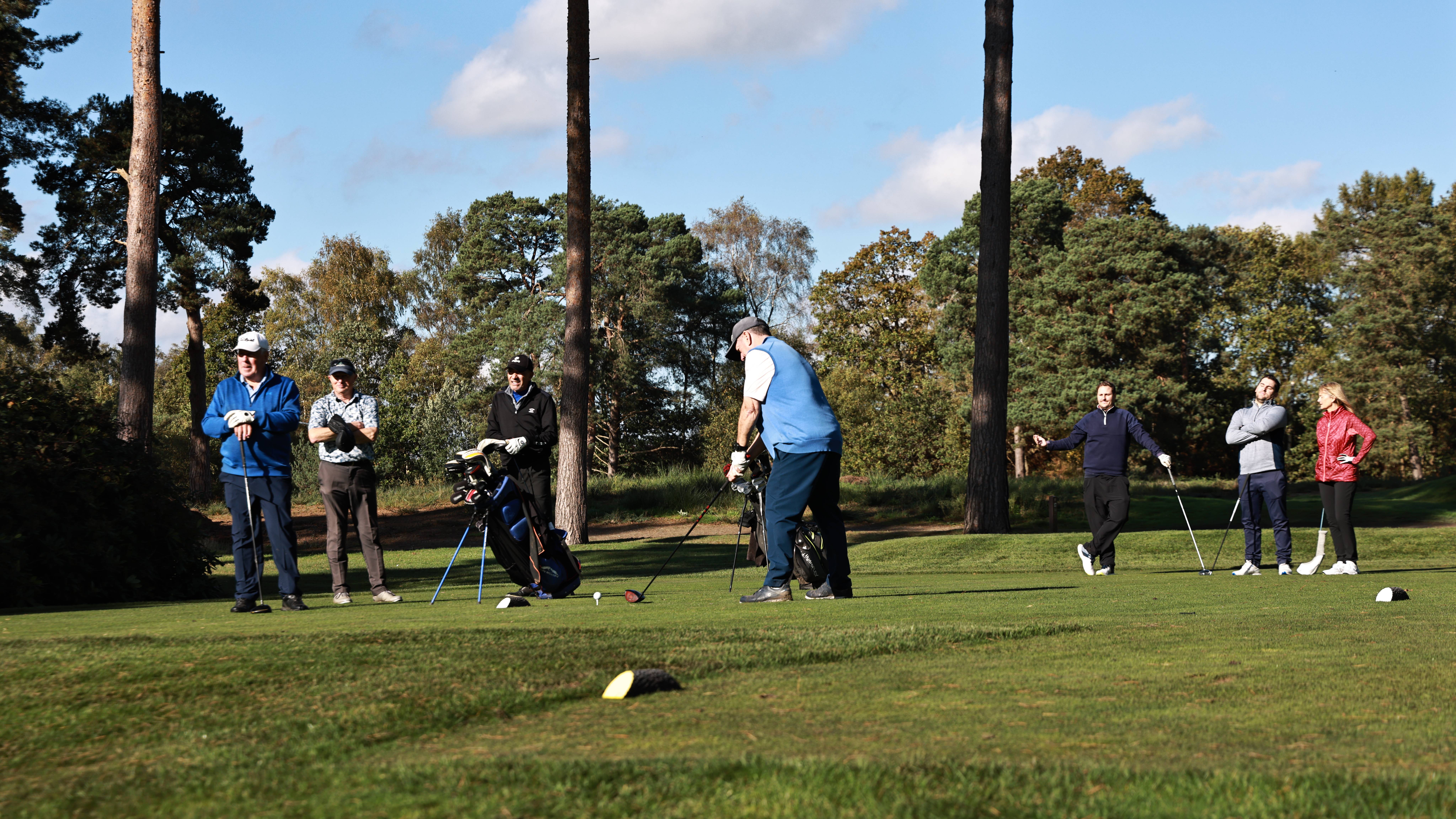
By the time we reached the green on the 3rd, a two-ball had closed in behind us and had signalled their displeasure by placing hands on their hips. Both of them.
I’m not a big fan of this type of passive-aggressive behavior - I think it’s wholly unnecessary.
We had always intended to let the group through. The next hole, a par 3, was the perfect opportunity to allow them to play up and carry on through at their lightning speed.
“You should really try to keep up with the pace of play,” was one of the comments we received. I bit my tongue.
We ended up discussing where we were from, why we were visiting, and what we thought of the course - but it felt awkward. Moments earlier, they’d told us off like we were a bunch of schoolchildren!
This sort of thing has happened a few times, and in my experience, it’s members who are a little too keen to point the finger. That attitude of it's our golf course, perhaps.
I actually don’t have an issue with fast golfers. What irks me is when they start gesticulating on the tee and standing in the teapot position.
I also love a quick round. In the winter months, I play with several groups who target sub-four-hour rounds. It's like speed golf - keeps you fit.
Anything longer than that is considered slow. Lost your ball just off the fairway? Hard luck. Can’t score? Just pick the thing up.
But there’s a time and a place for this. Come the weekend, during competitions, everyone accepts that the pace of play is generally a bit slower. That’s fine.
We don’t do the teapot (actually, maybe one guy does, but does it to wind up his friend).
Not all fast golfers act like they’re driving in Italy. Some are naturally quick, and when asked if they’d like to play through, are quite happy to slow their pace.
Others, particularly single players, will drop another ball down and take it as an opportunity to get a bit of practice in.
If a course is busy, as tends to be the case on weekends, there’s little to be gained by playing through - that only tends to work when the fairways are fairly quiet.
No teapots, please, until you get to the clubhouse. Accept, of course, if you come across a really slow high handicapper - now they are really annoying (I’m joking, no more angry emails).