
Physical Description
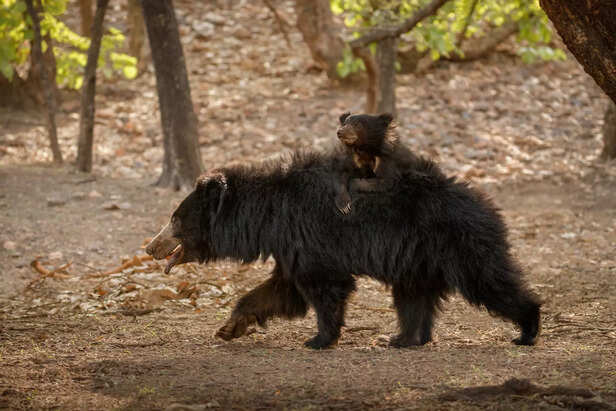
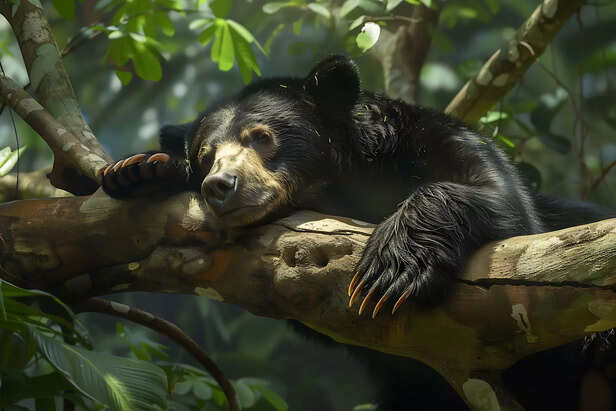
Sloth bears have shaggy, dusty-black coats pale, short-haired muzzles, and long, curved claws which they use to excavate termites and ants. A cream-colored “V” or “Y” shape usually marks their chests. Their shaggy fur does not have an undercoat, so it keeps them relatively cool in their native, warm climate and protects them from tropical insects. Sloth bears nostrils can close completely, protecting the animals from dust or insects when raiding termite nests or beehives. They have a keen sense of smell, as well as near-sight similar to that of humans. Adult sloth bears are missing their top two front teeth (incisors), which enables them to suck up termites and other insects with ease. Due to their diet of insects and fruit, their premolars and molars are smaller than those of other bears, but they have large canines to use for defense. It is thought that their feet are turned inward to increase digging efficiency.
Size
Sloth bears grow 5 to 6 feet (1.5 to 2 meters) long, stand 2 to 3 feet (0.5 to 1 meters) high at the shoulder and weigh, on average, 200 to 300 pounds (90 to 140 kilograms).
Native Habitat
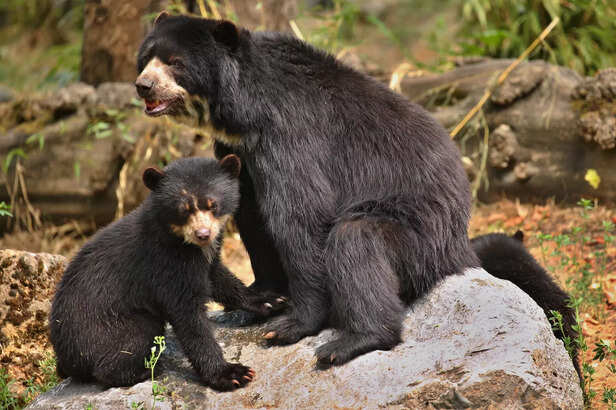
Sloth bears live in a variety of dry and moist forests and in some tall grasslands, where boulders, scattered shrubs and trees provide shelter. Their range includes India, Sri Lanka and southern Nepal. Historically, sloth bears have also been reported in Bangladesh and Bhutan, but it is unclear whether sloth bears are still present in the wild of these countries. They are currently considered extirpated, or no longer present in Bangladesh and may also be absent from Bhutan.
Communication
Sloth bears are noisy and busy animals. They grunt and snort as they pull down branches to get fruit, dig for termites and ants or snuffle under debris for grubs and beetles. If threatened, they will stand on two legs, brandishing their clawed forepaws as weapons. Their large canines are used for defense against tigers. Other potential predators include jackals, wild dogs, wolves, leopards and other Asian bear species.
Food/Eating Habits
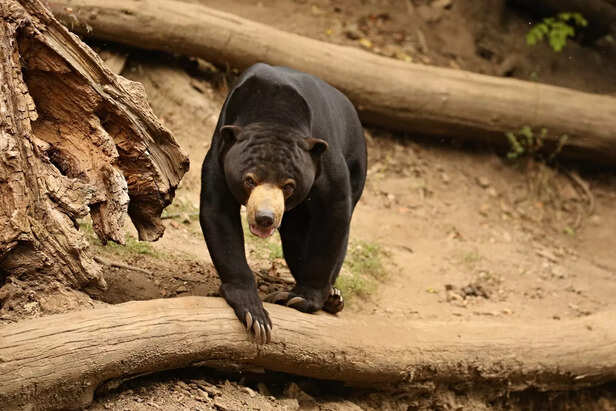
As animals who consume termites and ants, sloth bears are considered myrmecophagous. When trees are in fruit, usually during the monsoon season, sloth bears dine on mango, fig, ebony and other fruits, as well as on flowers. Termites, dug out of their cement-hard nest mounds and some ants are year-round staples. During non-fruiting season, insects constitute 95 percent of a sloth bear's diet. Sloth bears climb trees and knock down honeycombs, later collecting the honey from the forest floor. Beetles, grubs and other insects round out their diet. During food shortages, sloth bears will eat carrion. They also sometimes raid farm crops.
Sleep Habits
These bears adapt their sleep-wake cycle to their environment and may be on a nocturnal, diurnal or crepuscular schedule depending on how many other bears, people or predators share their habitat. In protected areas, for example, sloth bears may be more active during the day. Sloth bears are typically active for about eight to 14 hours each day, and they do not hibernate. At the Zoo, they tend to keep a crepuscular schedule, meaning they are active in both the morning and evening but sleep midday and overnight.
Celebrate the bond with your pets, explore Health & Nutrition, discover Breeds, master Training Tips, Behavior Decoder, and set out on exciting Travel Tails with Times Pets!
Frequently asked questions (FAQs)
-
Where are sloth bear found ?
Sloth bears are mainly found in India, Sri Lanka, Nepal, and Bhutan, living in forests, grasslands, and rocky areas.
-
Why is sloth bear called a "Sloth" bear ?
It is called a sloth bear because early naturalists confused it with a sloth due to its long claws and shaggy appearance.
-
Are sloth bears dangerous to humans ?
Sloth bears are generally shy but can become aggressive if threatened, surprised, or protecting their cubs.
-
Why are the sloth bears are important to the ecosystem ?
They help control insect populations and spread seeds also maintaining forest balance .