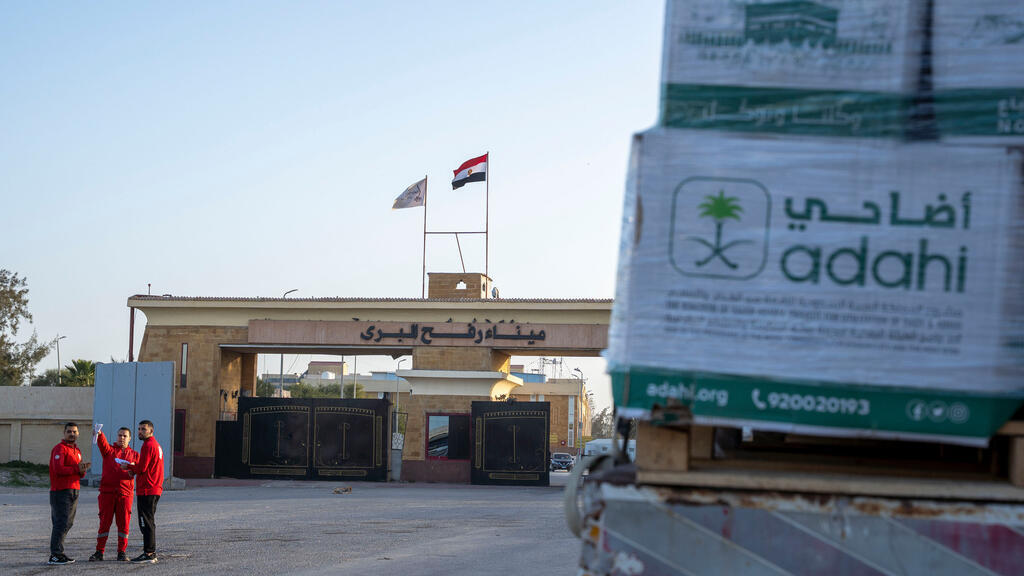
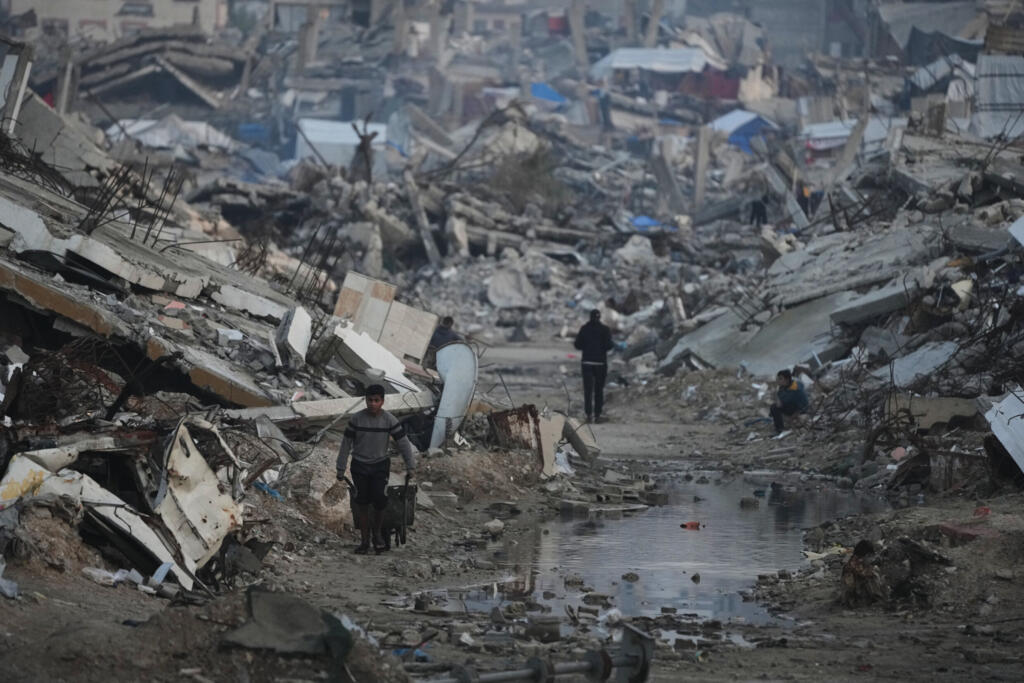
Israel has announced it is partially reopening the Rafah crossing between the devastated Gaza Strip and Egypt following months of urging from humanitarian organisations, although the initial access will be limited to the movement of people. Rafah is considered a key entry point for supplies into the Palestinian territory, where humanitarian conditions remain dire after two years of war in spite of a ceasefire.
COGAT, the Israeli defence ministry body coordinating Palestinian civilian affairs, made no mention of allowing in a long hoped-for surge of aid, and clarified that the passage of individuals through the gateway in both directions was expected to begin Monday.
The crossing has been closed since Israeli forces seized control of it in May 2024 during the war with Hamas, aside from a brief and limited reopening in early 2025.
COGAT said Sunday that the "Rafah Crossing was opened today for the limited passage of residents only", but later added that the "movement of residents in both directions, entry and exit to and from Gaza, is expected to begin tomorrow".
An official at Gaza's health ministry, which operates under Hamas authority, said that about 200 patients were waiting to be permitted to leave the territory once the crossing opened.
Footage by French news agency AFP showed a queue of ambulances entering the crossing from the Egyptian side, though sources said none had been allowed into Gaza so far.
"The opening of Rafah opens a small door of hope for patients, students and people in Gaza," Amin Al-Hilu, 53, who lives in a tent in the territory's Al-Shati camp, told AFP.
Pilot phase
"We need the crossing to fully open for travel and bringing in goods without Israeli restrictions, and this I think will require major pressure on Israel."
A Palestinian official told AFP on condition of anonymity that a group of "around 40 Palestinians affiliated with the Palestinian Authority has arrived on the Egyptian side of the crossing" and was also waiting to be allowed in.
Israel had previously said it would not reopen the crossing until the body of Ran Gvili – the last Israeli hostage held in Gaza – was returned.
UN Security Council approves international force for Gaza
His remains were recovered days ago and he was laid to rest in Israel on Wednesday, with COGAT announcing the reopening two days later.
COGAT described Sunday's reopening as "an initial pilot phase", coordinated with the European Union, adding the parties were carrying out "preliminary preparations aimed at increasing readiness for full operation of the crossing".
No agreement has yet been reached on the number of Palestinians permitted to enter or exit, sources said, noting that Egypt plans to admit "all Palestinians whom Israel authorises to leave".
"My generation and I deserve a chance at life and to build a future," said Adam Awad, 19, who was waiting to travel through the Rafah crossing to join a civil engineering programme at a university in Turkey.
"We are still living in fear and anxiety, without shelter, water or electricity."
Doctors without Borders contract terminated
Located on Gaza's southern border with Egypt, Rafah is the only crossing into and out of the territory that does not pass through Israel.
It lies in an area held by Israeli forces following their withdrawal behind the so-called "Yellow Line" under the terms of the ceasefire brokered by the US on 10 October.
Israeli troops still control more than half of Gaza, while the rest remains under Hamas authority.
Mediators Qatar, Egypt insist Israeli troop withdrawal essential for Gaza truce
"We call on the mediators and guarantor states of the (ceasefire) agreement to monitor the occupation's behaviour at the Rafah crossing to prevent Gaza from facing a new Israeli siege," Hamas spokesman Hazem Qassem said in a statement.
Meanwhile, Israel's Ministry of Diaspora Affairs and Combating Antisemitism said Sunday that it had decided to terminate the work of medical charity Doctors Without Borders (MSF) in Gaza by 28 February over its "failure to submit lists of local employees, a requirement applicable to all humanitarian organisations".
MSF said it decided not to give the list after it did not receive assurances from the Israeli side that the information would not "put colleagues at risk".
The group says 15 of its employees have been killed over the course of the war.
(with AFP)