
As the new year arrives, many of us are thinking of self improvement. How can we be at our best in 2026? Whether you're learning a new language or finally mastering high school algebra, there's one aspect of learning that requires a laidback approach: sleep.
“Sleep contributes directly to critical cognitive functions, such as learning and memory,” explains Dr. Rebecca Robbins, Sleep Scientist and Sleep Expert to Oura Ring.
“Sleep really is a magic elixir — if we're not getting enough sleep, we're not going to be at our best physically, emotionally or mentally,” elaborates Sam Sadighi, Certified Sleep Practitioner at Easy Sleep Solutions.
Research suggests that both REM (rapid eye movement) and NREM (non-rapid eye movement) stages in the sleep cycle are essential to memory consolidation. So if you want to ensure all those hours of cramming really stay in your brain, go to sleep.
Can sleep help you learn?
While we're asleep, our brain 'pressure washes' itself
Sam Sadighi
We'll keep it simple: yes, sleep can help you learn. From languages to hands-on skills to budgeting, your brain commits things to memory as you rest.
A 2024 systematic review of sleep and learning described sleep as a "fundamental factor for the consolidation, processing and functioning of memory and learning."
“Essentially, while we're asleep, our brain 'pressure washes' itself," explains Sadighi. "Without this deep clean every night, the messages within our brain don't work as effectively, meaning we're more forgetful and just not as sharp, as the messages get caught up in the debris that would have been cleared away.”
Research suggests that the non-rapid eye movement (NREM) stages of sleep are good at preparing the brain for learning, while deep sleep helps strengthen memory and rapid-eye-movement sleep (REM), the most active stage, can help with problem solving.
Sleep and creativity
Studies also suggest that there's a creative sweet spot between wakefulness and sleep, sometimes referred to as the 'hypnagogic' state. In this state, your brain is relaxed, you're only just conscious and your mind is free to explore.

So if you're struggling to ignite your creative spark (will 2026 be the year you write that novel?) it might be best to go to sleep.
Sleep and memory
“Research suggests that REM sleep in particular is associated with memory consolidation," explains Dr. Robbins. REM sleep is the most active sleep stage and we spend roughly 25% of the night experiencing REM sleep.
Performance testing after a new task is markedly improved after sleep as compared to testing before sleep
Dr. Rebecca Robbins
"One study found that participants who receive intensive training in foreign languages demonstrate an increase in next night REM sleep, and further, that learning outcomes were correlated with the percent increase in REM,” she elaborates.
“The processes underlying these observations could include replaying events learned from the day during REM sleep," says Dr. Robbins, "as some research in animals suggests." (Relatedly, REM sleep also is when most dreaming occurs.)
"Performance testing after a new task is markedly improved after sleep as compared to testing before sleep," Dr. Robbins notes.
"Therefore, it is possible that we take in new memories during the day. These memories are then rehearsed and replayed during sleep, contributing to next day sleep-dependent gains."
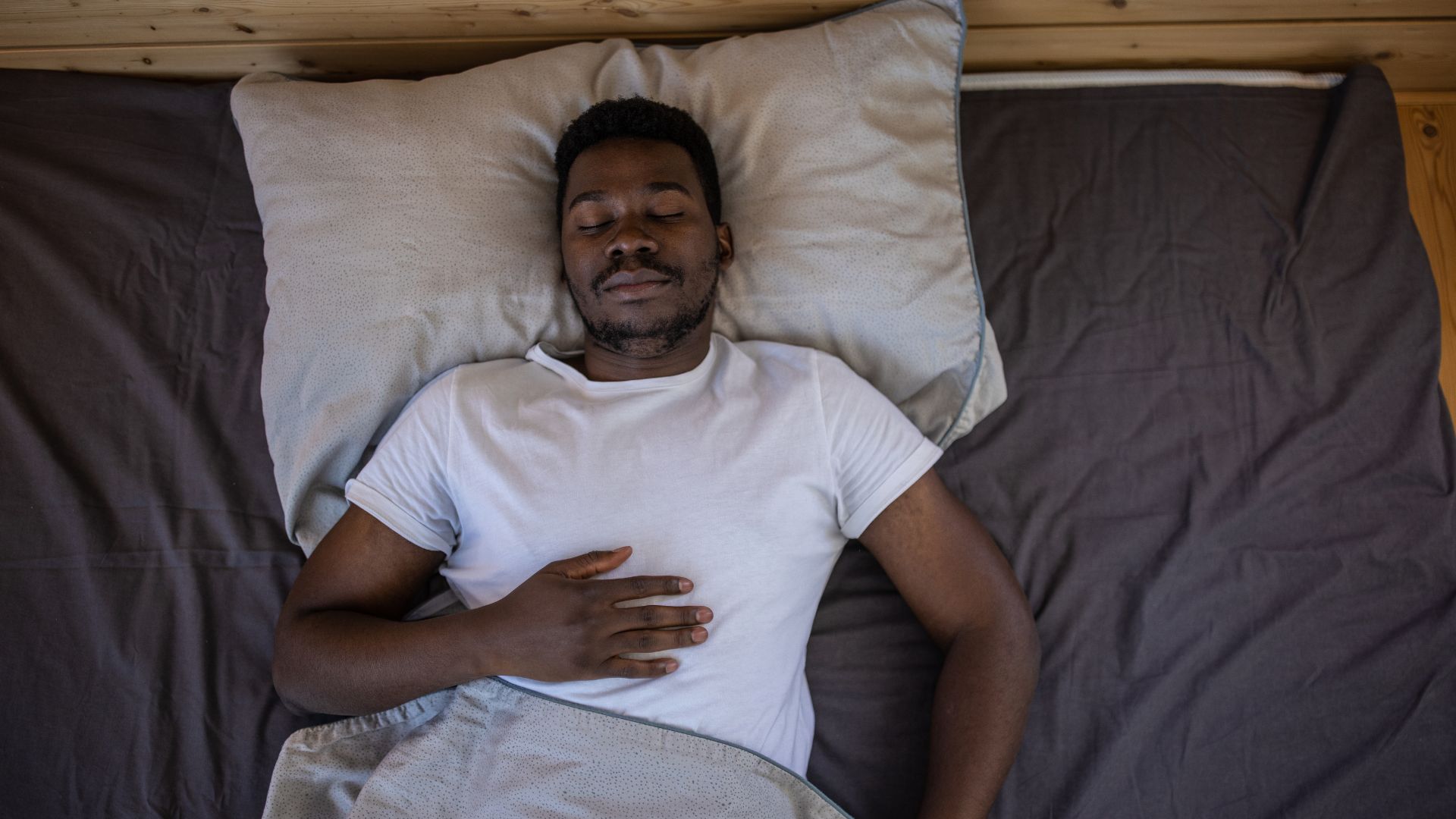
For anyone interested in learning and performance, Dr. Robbins suggests that sleep is "essential."
Can you learn in your sleep?
So sleep can help you retain the things you've learned and prime your brain for knowledge but can we cut out the middle man — can you learn new information as you sleep?
Unfortunately, no. Listening to the Spanish Dictionary while you snooze won't give you a whole new grasp on your donde estas. Or at least, you won’t remember it when you wake up.
However, don’t throw away your beginner’s Español tape just yet. Research suggests listening to word pairing as you sleep not only reinforces information you already know, but can introduce new words to your vocabulary.

This is thought to be linked to sleep spindles, a type of brain activity observed during NREM sleep. Researchers observed increased spindle activity when sleeping participants were presented information they'd been taught that day, resulting in better recall the following morning.
But you'll still need to do the heavy lifting yourself — you can't learn when to use "Soy" or "Estoy" as you nap.
Napping and learning
“We're more likely to remember things if we have learnt them close to bedtime, as while we are asleep we consolidate the information and form the neural pathways so that we can retrieve the information when we need it,” explains Sadighi.
We're more likely to remember things if we have learnt them close to bedtime
Sam Sadighi
However, delaying your studying until bedtime might leave you too alert to drift off. The solution? Napping.
Following a bout of intense studying with a nap (we recommend keeping your naps to 20 minutes or 90 minutes) might commit the information to memory while leaving your brain primed for more learning in the afternoon.
How to get more sleep and improve your learning
So a good night's sleep can help you learn new information, retain the information you've learned and even spark creativity. That means it's time to ditch those all night cram sessions and prioritize rest.
There is no exception to the rule; we do need to spend the time sleeping
Dr. Rebecca Robbins
But is getting better sleep as simple as learning a new skill?
“Anyone interested in improving their sleep and their learning, memory, and performance, could focus on a few simple things," advises Dr. Robbins.
"First, there is no exception to the rule; we do need to spend the time sleeping. The recommended sleep duration for teenagers is 8 to 10 hours and the recommended duration for adults is 7 to 9 hours of sleep," says Dr. Robbins.
"If you are far from these goals, inch toward them by adding 15 minutes to your sleep schedule each night until you are in the recommended duration."
"Second, pick a time that you can wake up and fall asleep as many nights of the week as possible and do your best to not vary this schedule by more than 1 hour. Maintaining a consistent bedtime routine will allow you to fall asleep faster and wake up more refreshed."

"Third, make time for a relaxing bedtime ritual. Fill the 15-30 minutes before bedtime with soothing activities, such as reading a book, taking a warm shower, and doing breathing or relaxation exercises, like the 4-7-8 technique.”
Sadighi also has advice for anyone tackling a new skill at home: make space for it. She recommends using your bed for sleep only, so your brain understands that's what it's for. "Studying or worrying wants to be done elsewhere if possible.”
How a lack of sleep can prevent learning
When learning a new skill, particularly in a classroom situation, the temptation is often to prioritize taking in information ahead of anything else. See: cramming before a test.
But this might actually hinder your learning.
“When you don’t sleep enough, your ability to focus, absorb new material, and remember things later takes a hit. It’s like trying to study with a foggy brain — nothing really sticks," says Dr. Leah Kaylor, sleep expert and author of If Sleep Were a Drug.
Poor sleep can reduce your ability to learn the next day by 40% (News in Health), while irregular sleep has been linked to poor grades in high school students.
“Sleep helps strengthen the connections, which is key for long-term memory. Without it, your brain has a harder time holding onto both old and new memories,” explains Dr. Kaylor.
“Sleep deprivation doesn’t just make you tired — it can make you forgetful, slow down your thinking, and reduce how much you’re able to learn and retain.”

Follow Tom's Guide on Google News and add us as a preferred source to get our up-to-date news, analysis, and reviews in your feeds.