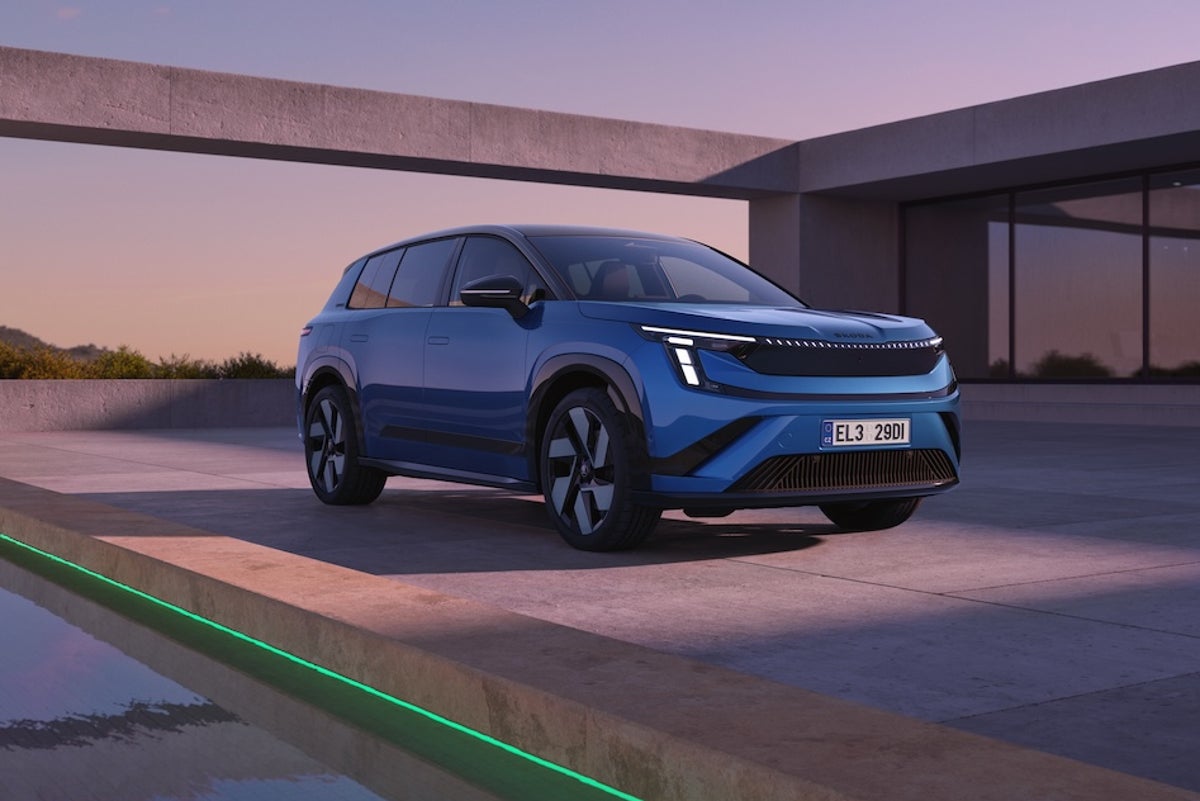
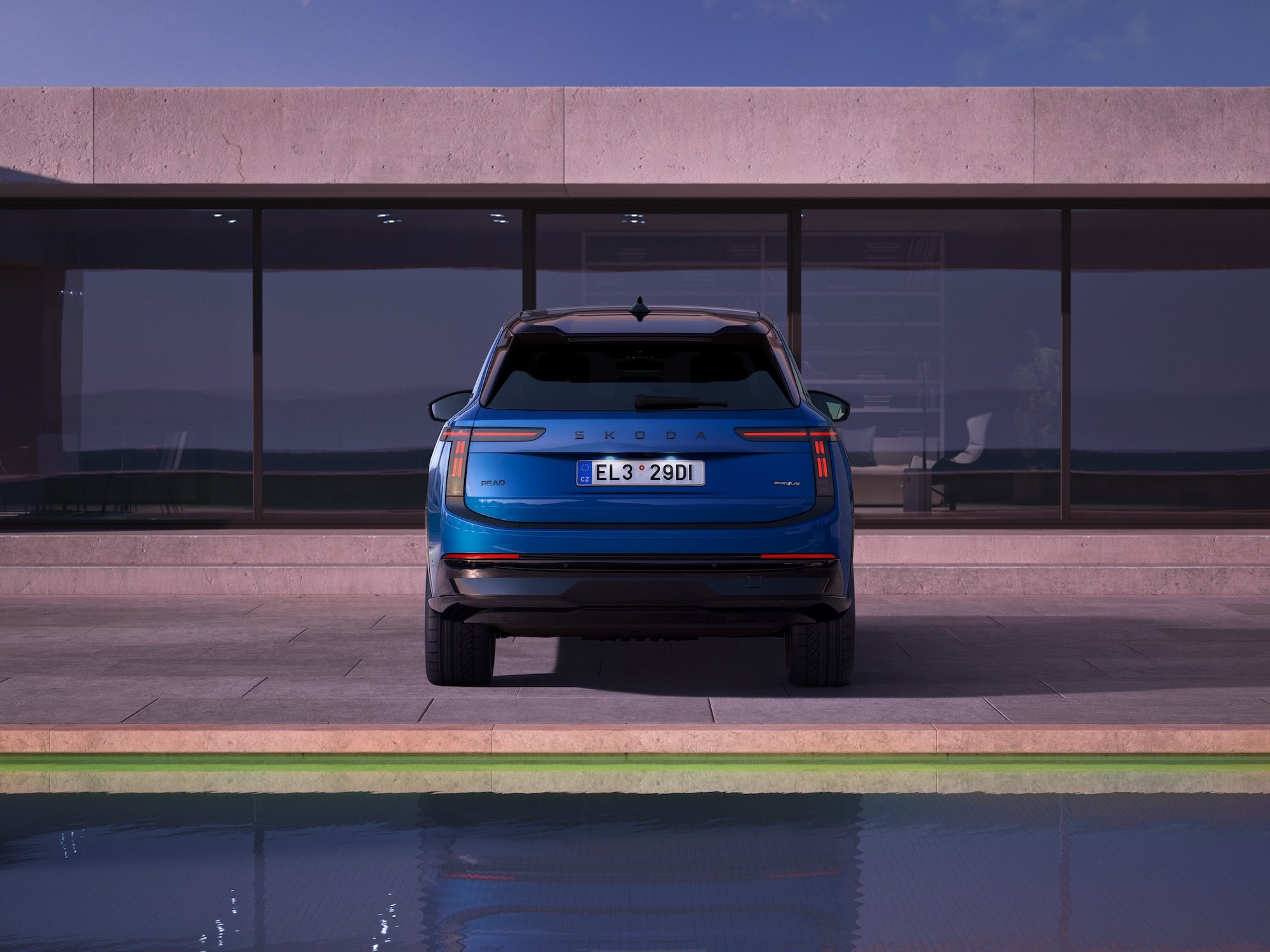
In the space of just a few weeks, Škoda has topped and tailed its popular EV line up. First there was the brilliant little Škoda Epiq, priced from just £24,950. Now Škoda has pulled the cover off its biggest model, the seven-seat Peaq, which sits at the head of the brand’s now five-strong electric SUV range with a starting price of £51,980. Order books are set to open in September.
The Peaq is a significant new model for Škoda. It is not only the company’s new electric flagship, but also its first seven-seat EV and its largest production car to date. With room for seven adults, up to 390 miles of official range and a maximum 2,075 litres of luggage space, it will give Škoda a new contender at the larger, pricier end of the electric SUV market, pushing it into contention with some more premium players.
It also moves the Czech brand into territory currently occupied by cars such as the Kia EV9, Hyundai Ioniq 9 and Volvo EX90. All are large electric SUVs designed for families who need more seats, more luggage room and the ability to cover big distances without turning every long journey into a charging expedition.
The Peaq massively undercuts the Kia, Hyundai and Volvo (which can exceed six figures in top spec) and is slightly smaller than those models, although it hides the deficit well when it comes to interior space. A Peugeot E-5008 is cheaper, but is smaller and doesn’t feel as premium, nor look as stylish at the Škoda.
Having crawled all over the Peaq, sitting in all three rows, seeing the styling first hand and playing with some of the tech on board, I can report that Škoda’s latest car sits very comfortably at this new exalted price point, with the promise to really delivery against some excellent – and mostly more expensive – rivals.
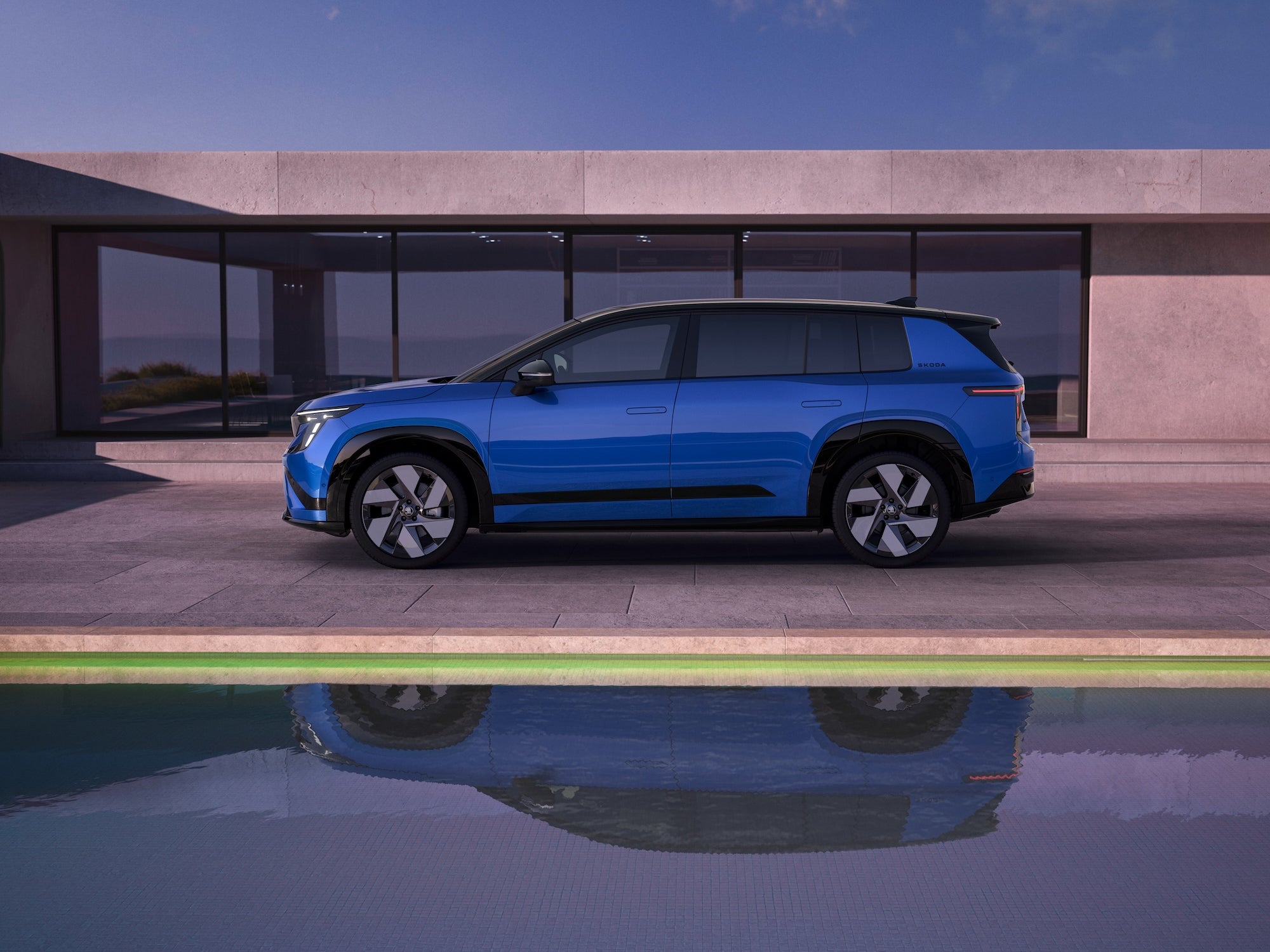
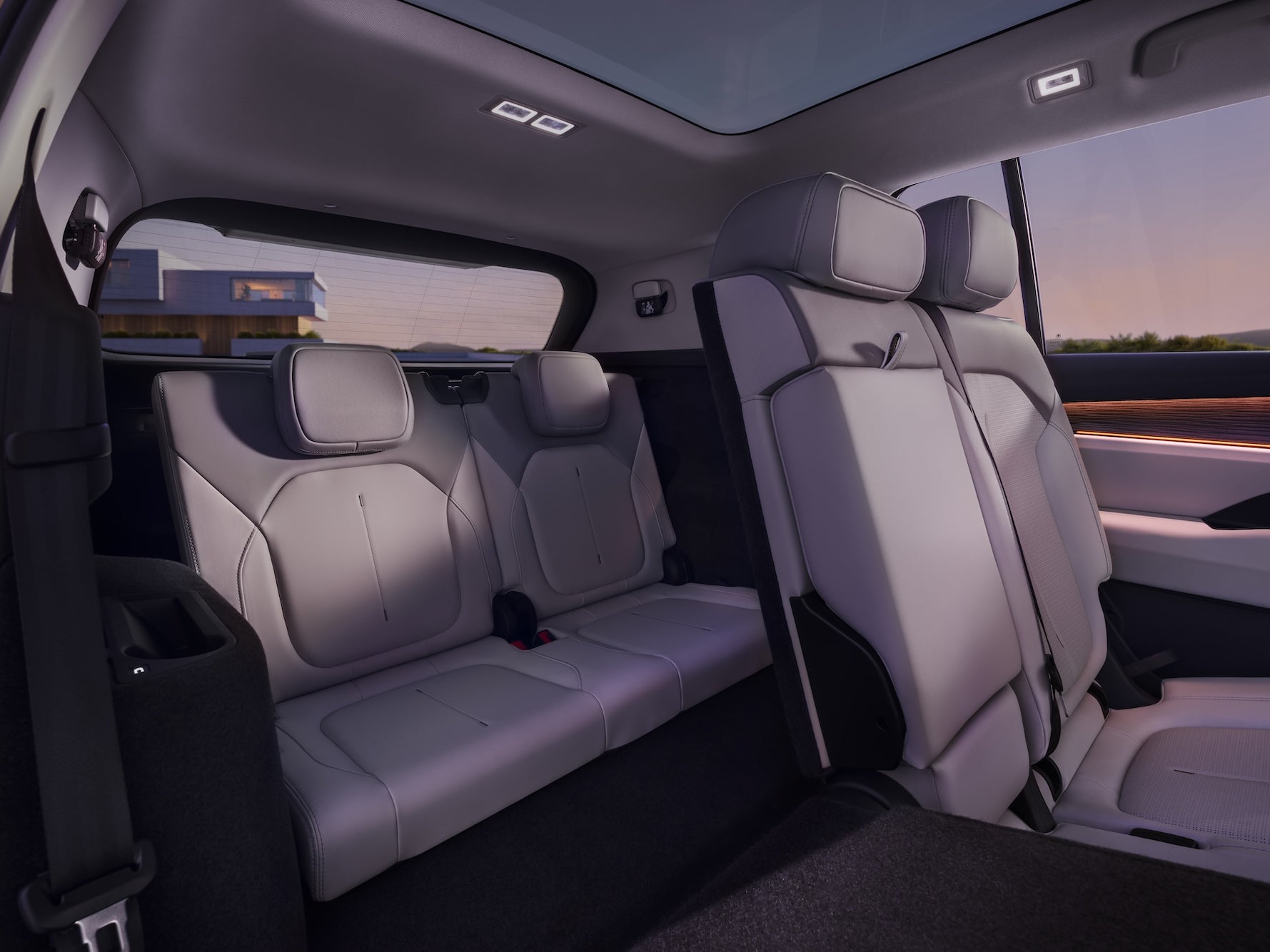
At almost 4,900mm long and 1,700mm tall, the Peaq is longer than Škoda’s Kodiaq SUV, while its 2,965mm wheelbase should help make the most of its size inside. Having sat in rows two and three, I can confirm that in usual Škoda style, there’s generous passenger space and – at close to six feet tall and not exactly with snake-thin hips – I could get right into the back and be happy there on a short journey.
The third row in many seven-seat SUVs is still very much a place for children, occasional use or the person who lost the family vote. Škoda is clearly aiming to make the Peaq a proper seven-seater rather than a five-seater with two emergency chairs in the boot.
The Peaq will be built in Mladá Boleslav in the Czech Republic and sits on the Volkswagen Group’s MEB electric-car platform, already used by the Škoda Enyaq, Volkswagen ID.7 and Volkswagen ID. Buzz. It uses the largest battery ever fitted to a Škoda EV, with every Peaq getting an 86kWh pack.
Two powertrain options will be offered. The rear-wheel-drive Peaq 90 produces 282bhp, while the Peaq 90x adds four-wheel drive and boosts power to 295bhp. The latter can accelerate from 0-62mph in 6.8 seconds, which is brisk for a large, seven-seat family SUV.
But the headline number is the range. Škoda claims the rear-wheel-drive Peaq can travel up to 390 miles in official tests, a figure that puts it among the longest-range electric SUVs due to be sold in the UK. As ever, real-world range will depend on the weather, speed, road conditions and how much of that roomy cabin is filled with people, luggage and the usual collection of family paraphernalia.
The Peaq can charge at up to 199kW on a suitable rapid charger – more expensive rivals charge faster, but it still allows the Škoda’s battery to go from 10 to 80 per cent in around 28 minutes. That is about what buyers now expect from the latest generation of larger electric cars and should make longer trips easier to plan.
It will also have vehicle-to-load capability, allowing power from the battery to be used for external electrical equipment. That could mean charging an e-bike, running camping equipment or plugging in a laptop, although exactly how useful it becomes will depend on how owners use their cars.
Three trim levels will be offered in the UK, called SE L, Edition and SportLine. The range begins with the Peaq SE L 90 at £51,980, followed by the rear-wheel-drive Peaq Edition 90 at £55,130. The four-wheel-drive Edition 90x costs £57,230, while the SportLine starts at £58,280 in rear-wheel-drive form and rises to £60,380 with four-wheel drive.
Even the entry-level SE L comes with a healthy list of standard kit. There are 19-inch alloy wheels, LED headlights, a powered tailgate with a virtual pedal that will open the boot with a wave of the foot, heated front and rear seats, a heated windscreen, a digital key and wireless phone charging.
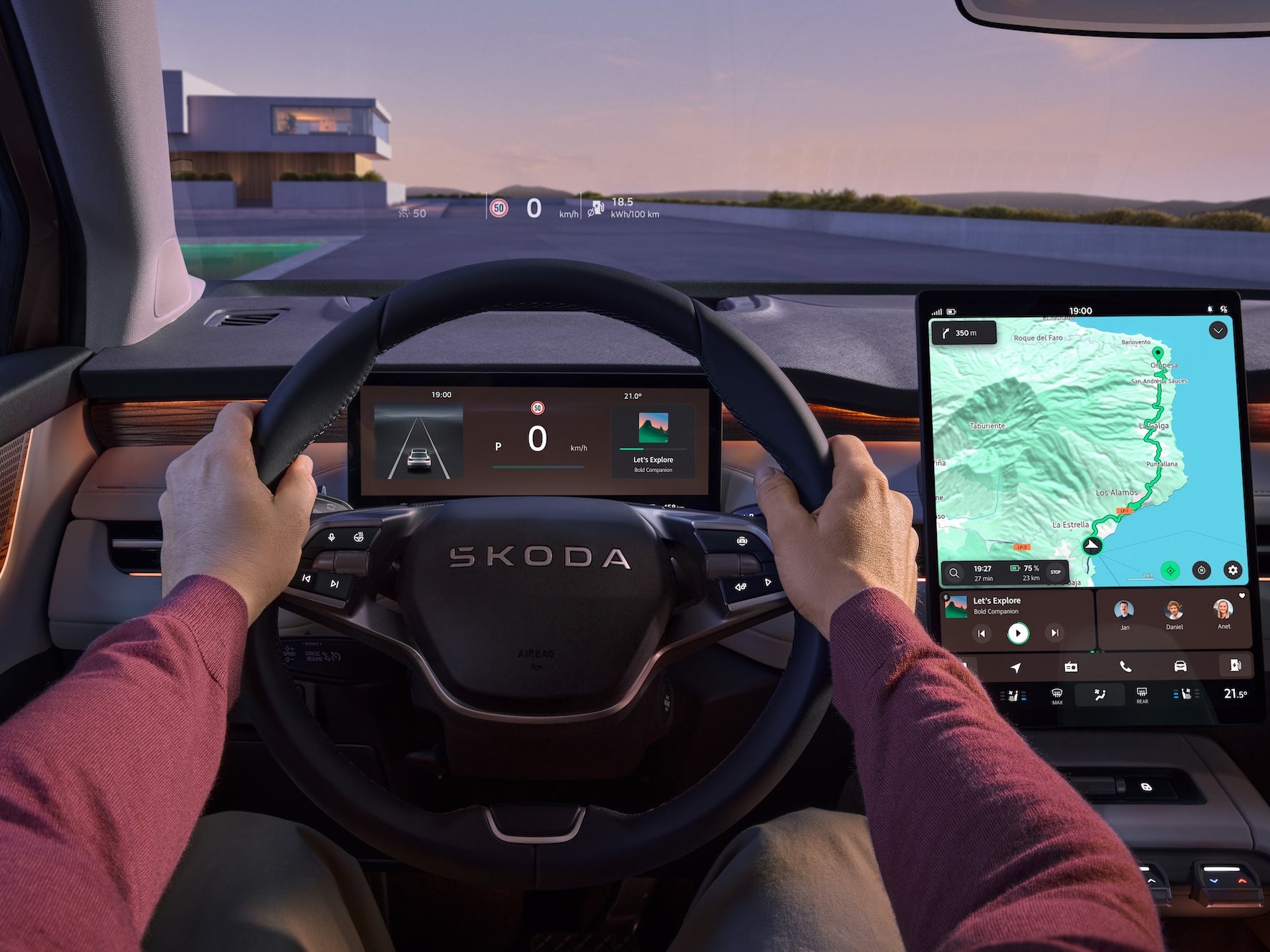
Inside, the Peaq introduces a new Android-based infotainment system, controlled through a 13.6-inch vertical touchscreen. It is the biggest infotainment display yet fitted to a Škoda and is joined by a 10-inch digital driver display behind the steering wheel.
The system will include built-in Škoda apps alongside services such as Spotify, YouTube and Google Maps. It is another sign that car makers are increasingly putting the apps drivers already use on their phones into the dashboard, rather than asking them to learn a whole new digital world every time they get in the car.
A digital mobile key will also be available, allowing a smartphone or smartwatch to replace the conventional key. That could be particularly handy for shared cars, where different drivers might otherwise have to keep passing a physical key around.
An augmented-reality head-up display will be available from 2027. That will project driving information onto the windscreen, including navigation directions, while keeping the driver’s eyes closer to the road ahead.
The Edition model adds more of the flashy stuff, including matrix LED headlights, a horizontal lighting strip, a 360-degree camera and the Suite interior, with either black leather or artificial leather. It also gets remote parking assist and trained parking. The latter sees the car repeat a learned parking manoeuvre – potentially useful for drivers with a narrow driveway, a tricky garage entrance or a parking space that regularly requires a little bit of careful wheel-twisting.
SportLine models take a different approach, adding a sportier look and more driver-focused equipment. They get 20-inch alloy wheels, black exterior detailing, a Škoda wordmark on the D-pillar, sports seats, aluminium pedals and a three-spoke heated steering wheel. Dynamic Chassis Control is fitted as standard, allowing the suspension to adjust according to conditions and driving style.
The SportLine can also be specified with 21-inch alloy wheels and an optional black roof, while its cabin gets darker trim, a black headlining and electrically adjustable sports seats with more side support.
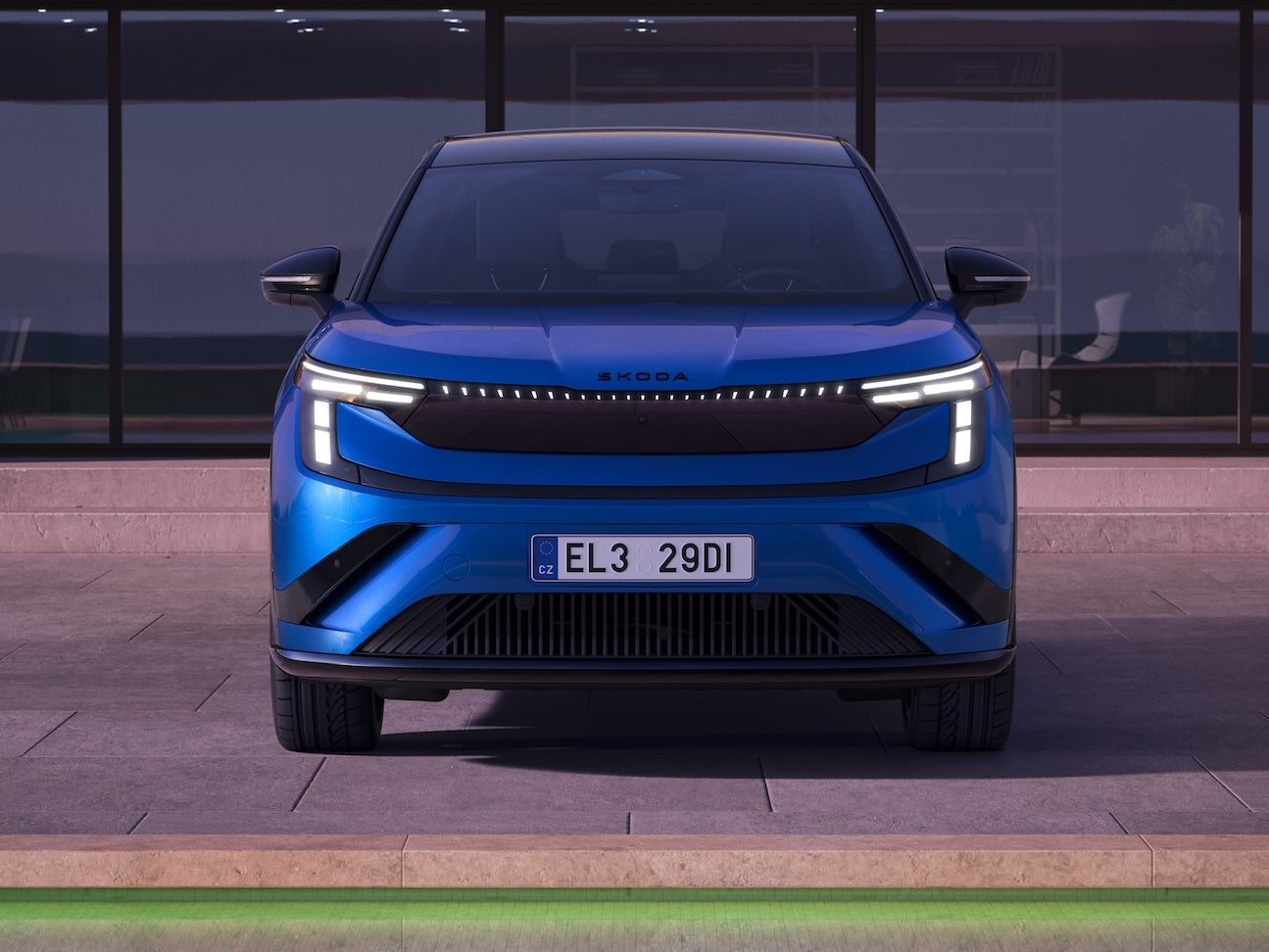
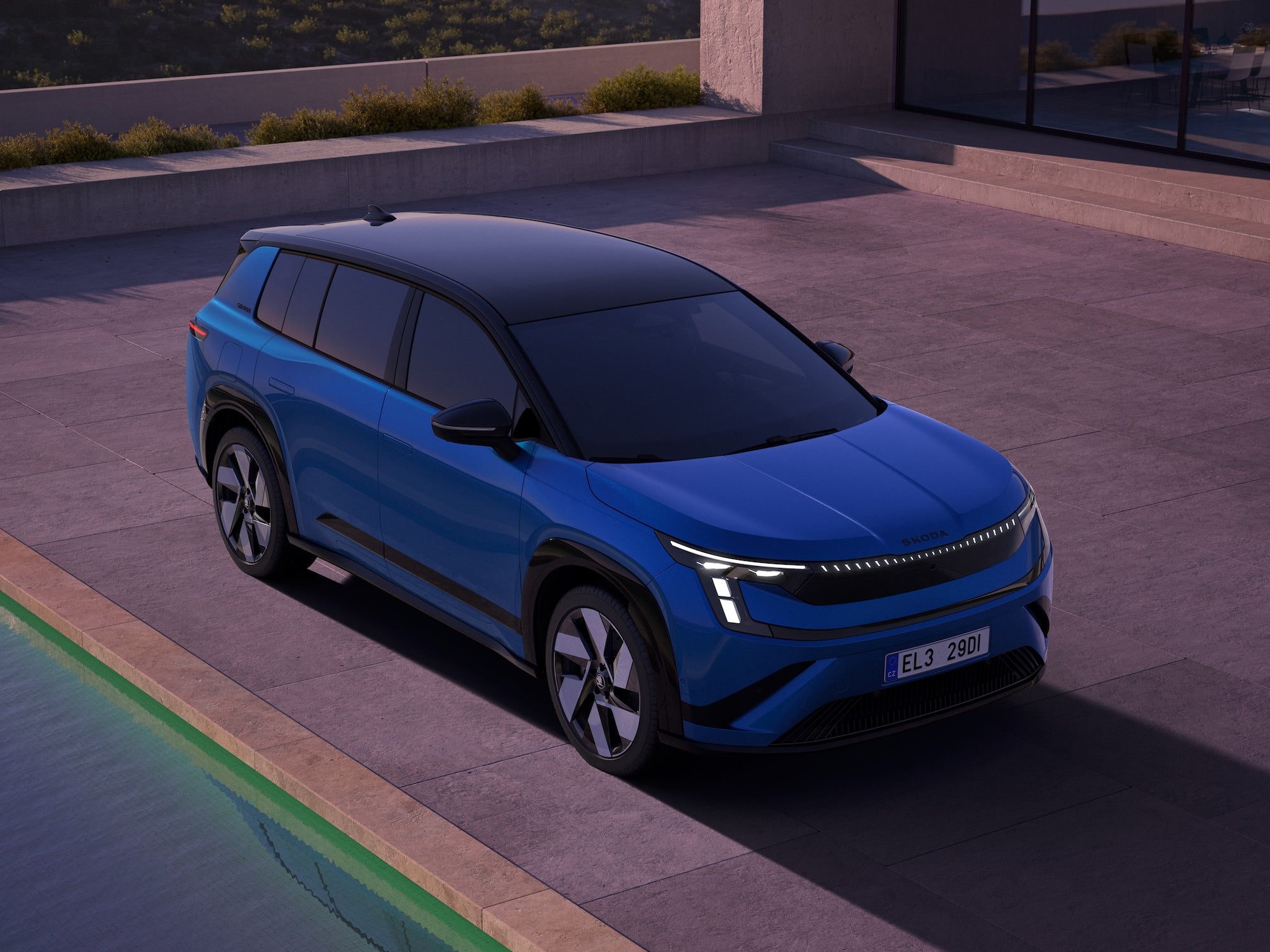
Design-wise, the Peaq follows Škoda’s latest Modern Solid look, which has already appeared on the smaller Epiq, Elroq and updated Enyaq to excellent effect. At the front is the company’s illuminated Tech-Deck Face, a glossy black panel with slim vertical details and LED backlighting instead of a conventional grille.
Matrix LED headlights will be available, using 18 individual light segments to help light the road without dazzling oncoming drivers. The Peaq will be available with wheels ranging from 19 to 21 inches and buyers will have nine paint colours to choose from.
There are also some new details for Škoda. The Peaq gets flush door handles for the first time on one of the company’s production cars. They sit flat against the body when the car is locked or moving, then extend as the driver approaches with their key (or phone).
Another first is an optional panoramic glass roof with adjustable shading. Instead of a conventional blind, the roof is divided into nine sections and can vary the amount of light coming through each one. Passengers can choose from three preset settings or control it manually through the infotainment screen.
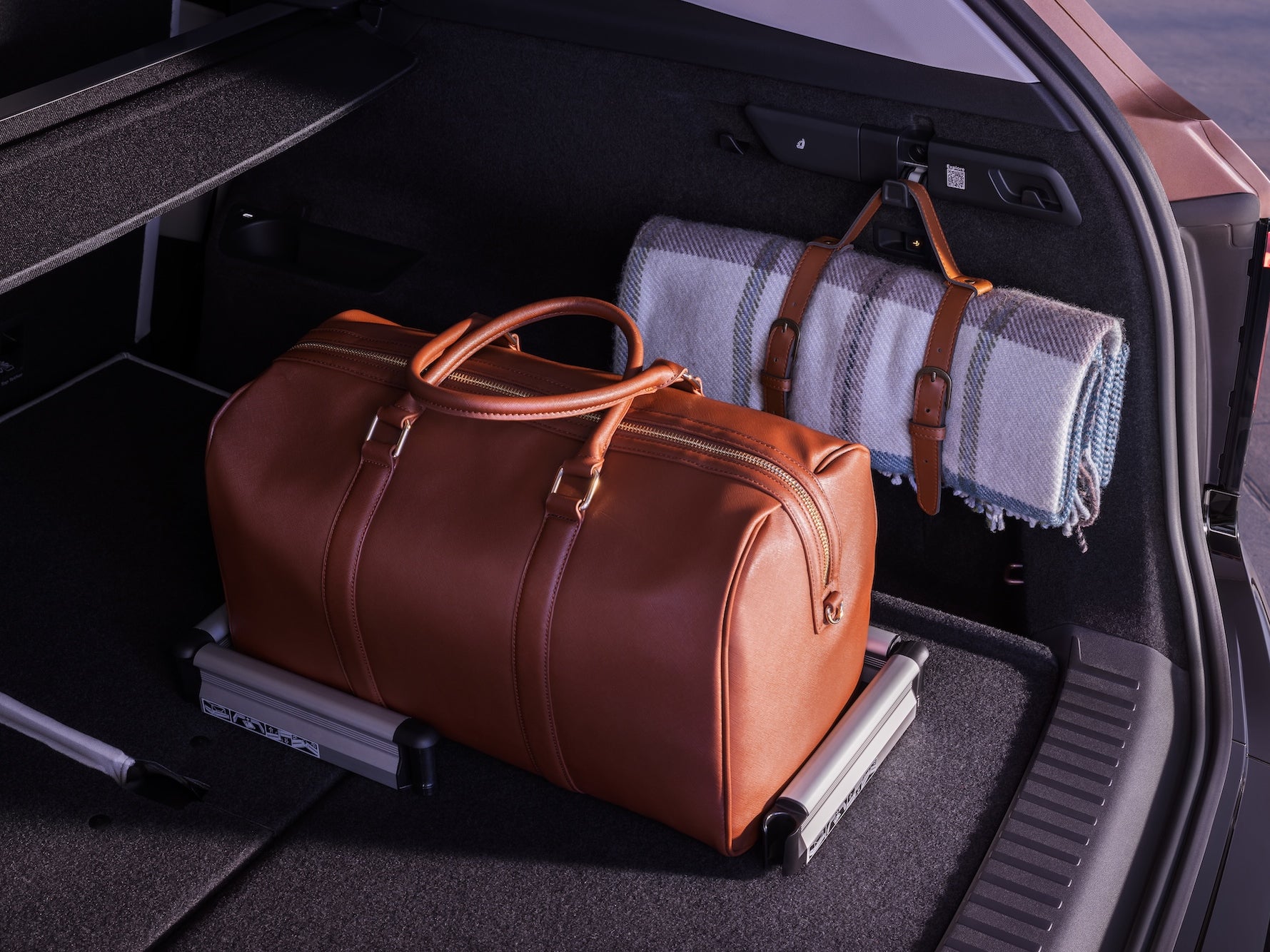
Škoda has always liked to make a fuss about practical details, and the Peaq has plenty of them. With all seven seats in place, boot space is 299 litres. Fold the third row and capacity rises to 890 litres, while dropping both the second and third rows opens up a huge 2,075 litres.
There is also a 37-litre storage compartment or frunk (although I still think it should be called a froot) under the bonnet, giving drivers somewhere to keep charging cables rather than leaving them to slide around in the boot. Škoda says it can also hold the parcel shelf when it is not being used, which sounds like exactly the sort of small but useful detail families will appreciate when there’s usually nowhere sensible to put it.
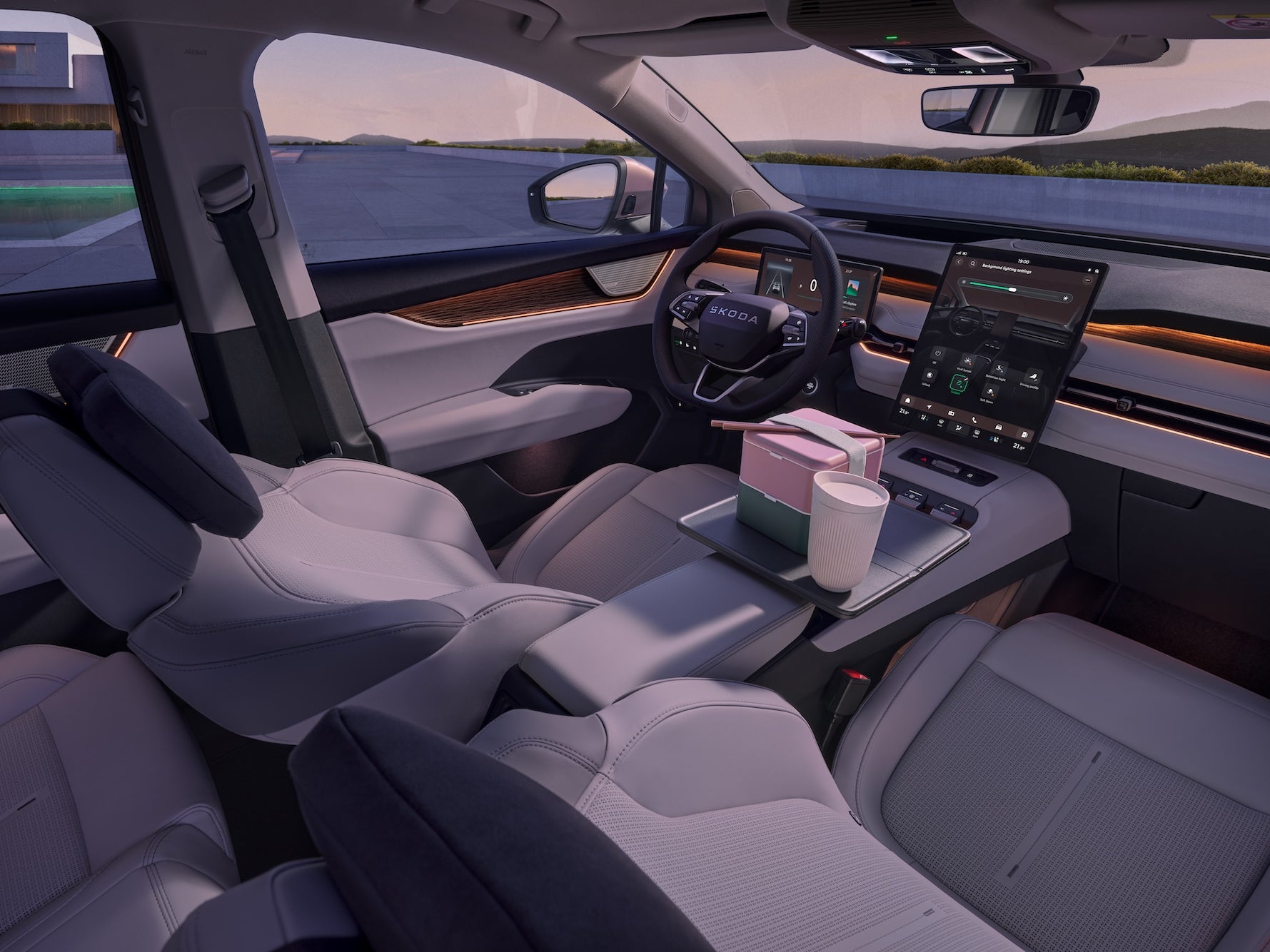
Other touches include windscreen wipers with integrated washer jets, which Škoda says use washer fluid more efficiently, plus a foldable table, a display cleaner, parking ticket holder, USB socket in the rear-view mirror (handy for powering a dash cam) and another USB port for passengers in the third row.
There will be five interior designs, with materials including fabric, artificial leather and microfibre upholstery by Suedia. Škoda says selected interior choices contain more than 50kg of recycled material.
Optional extras will include massage seats, front footrests, a folding table integrated into the front centre armrest, the adjustable panoramic roof and a Sonos sound system, although the latter will arrive after launch.
Safety equipment will include traffic sign recognition, front assist, turn assist, blind-spot detection, cross-traffic assist, adaptive cruise control, electronic child locks and ISOFIX mounting points for the front passenger seat and the outer seats in the second row.
The Peaq will open for orders in September, giving Škoda a new flagship EV that combines its familiar focus on space and practicality with the sort of battery range, charging speed and family-friendly flexibility that buyers of larger electric SUVs increasingly expect.
And from my experiences with the Epiq, Elroq, Enyaq, Enyaq Coupe and now Peaq, Skoda has assembled one of the most complete – and impressive – electric SUV line-ups, with something for every kind of family.