Bones of a newly discovered species of vegetarian dinosaur have been dug up in Brazil.
Three “astonishingly well preserved” skeletons were uncovered and shed new light on one of the earliest of the long-necked dinosaurs that lived more than 225 million years ago.
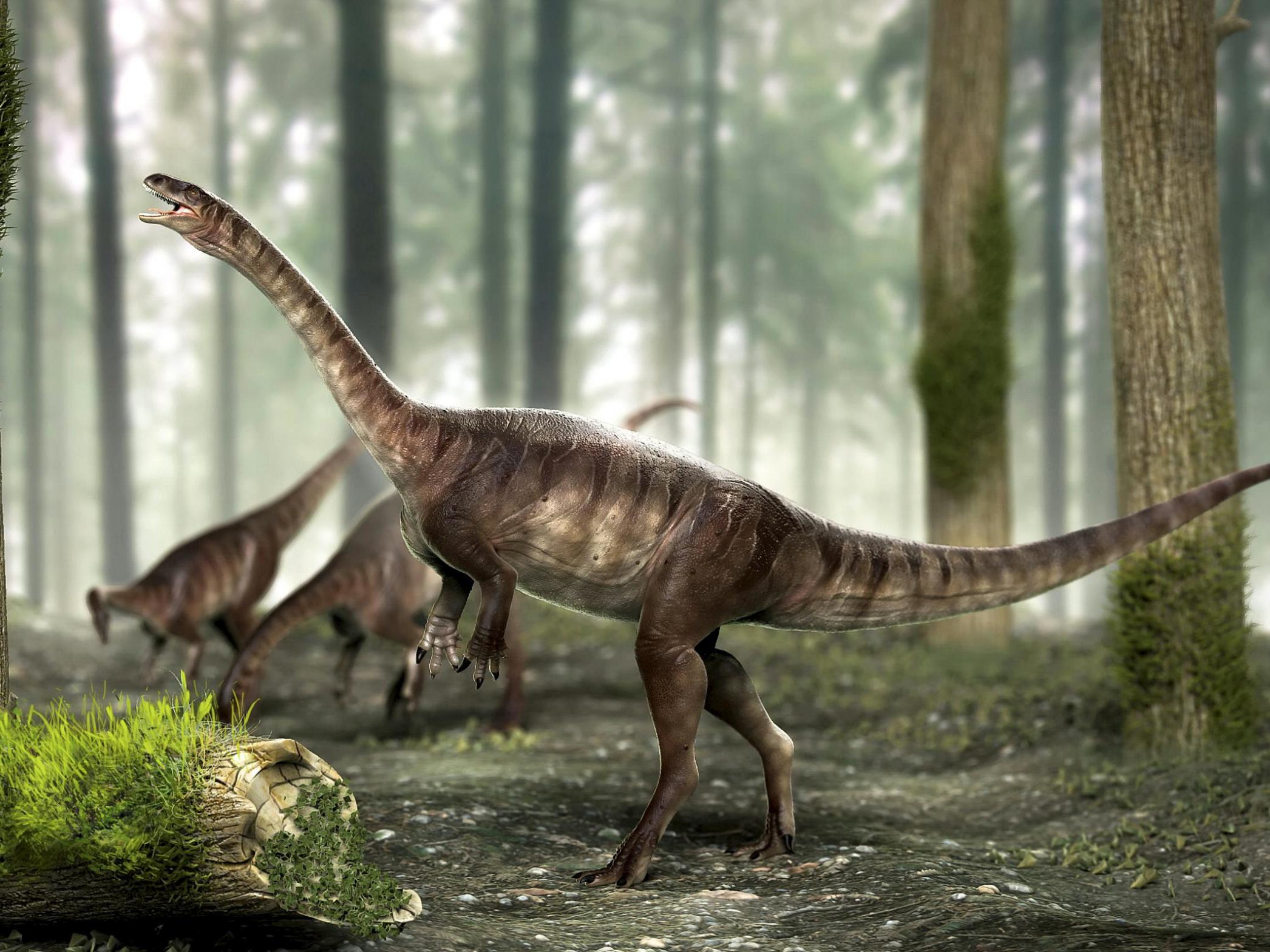
The new species, which lived before giant dinosaurs had emerged, would have weighed about 16st and grown to around 12ft long and 5ft tall.
Experts say the discovery is also remarkable because it shows the dinosaurs were social creatures at this early stage of their evolution, choosing to live in groups rather than alone.
Named Macrocollum itaquii, it is a distant cousin of the sauropods – the later long-necked beasts that walked on four legs, such as Brontosaurus, which grew into the largest terrestrial animal to walk on Earth.
It roamed South America when it was still part of one huge supercontinent called Pangaea, before the land mass broke up.
Macrocollum, Latin for long neck, may help palaeontologists finally discover how the sauropods grew so big.
Like sauropods, the new species was also a plant-eater, but unlike them it walked on two legs.
This gives us an amazing picture of how these animals lived, which has never been done before
The dominant vegetation at the time was ferns and gymnosperms, flowerless plants that produce cones and seeds, and the creature would have gorged on them to nourish its substantial body.
Biologist Rodrigo Muller, of the Federal University of Santa Maria, Brazil, said: "The morphology of its teeth suggests this dinosaur was herbivorous."
Its long neck would have helped it access a lot more food, reports the Royal Society journal Biology Letters.
Mr Muller said: "Indeed, the neck elongation present in the new dinosaur may also have provided a competitive advantage for gathering food resources.
"It would have allowed members of the group to reach higher vegetation compared to other early vertebrates.
"There are three articulated skeletons in five tons of rock. This is unique.
"It suggests these animals probably died together, as they share the same degree of disarticulation.
"So if they died together, these dinosaurs probably lived together.
"This gives us an amazing picture of how these animals lived, which has never been done before."
Agencies contributed to this report.