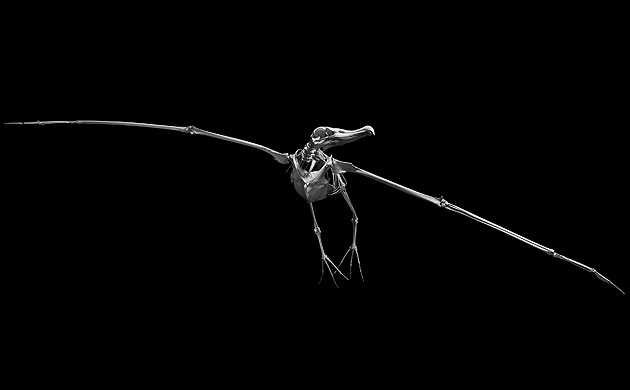
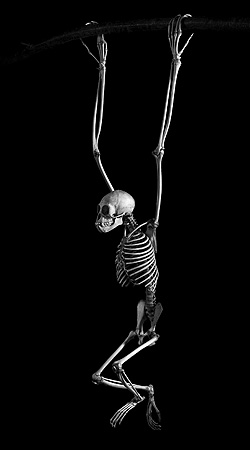
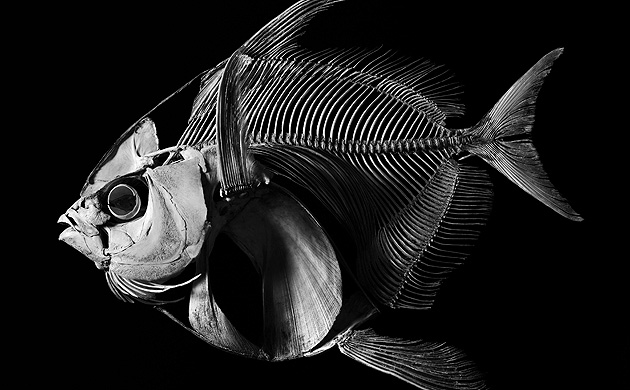
The snowy albatross is one of a happy breed that, given its vast span, can soar for hours without a wing beat. Photograph courtesy of Editions Xavier Barral, in association with The Museum of Natural History, Paris.Photograph: Patrick Gries/Thames & HudsonThe white-cheeked gibbon, native to China and Vietnam, has an ancestor in common with the South American spider monkey, but has evolved differently. Photograph courtesy of Editions Xavier Barral, in association with The Museum of Natural History, Paris.Photograph: Patrick Gries/Thames & HudsonThe lampris guttatus, or moonfish, swims by flapping its pectoral fins and has no teeth - it eats other fish using its mouth as a suction cap. Photograph courtesy of Editions Xavier Barral, in association with Jeco.Photograph: Patrick Gries/Thames & Hudson
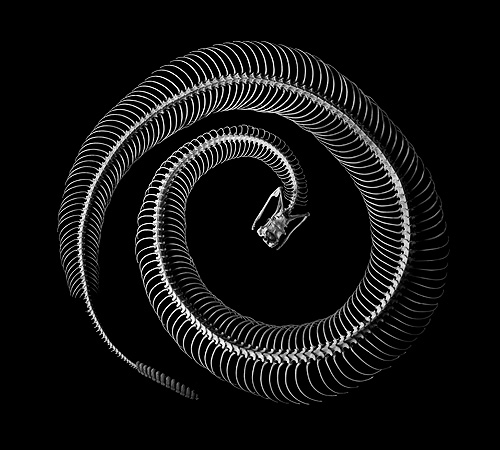
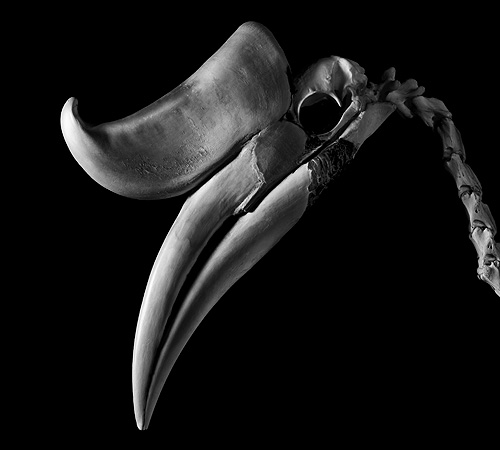
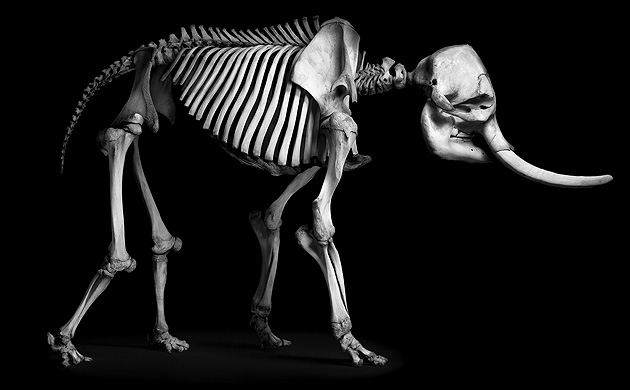
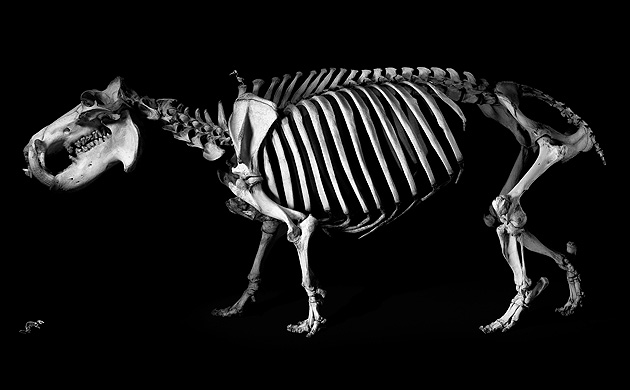
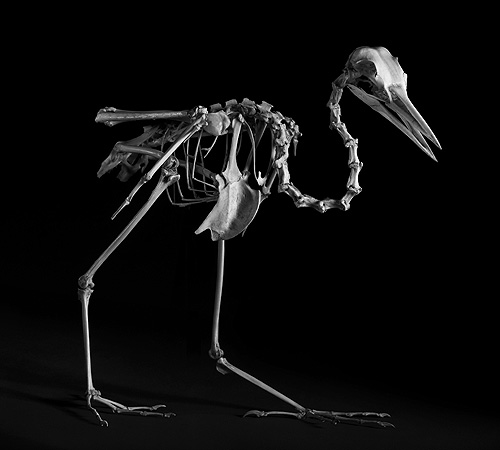
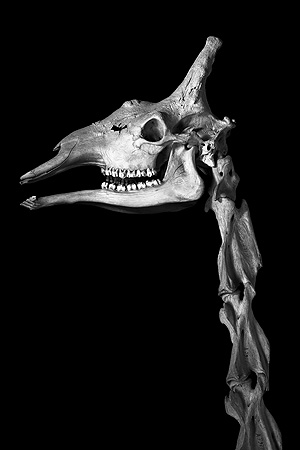
A rattlesnake demonstrates the proliferation of ribs and a flexible spine. Photograph courtesy of Editions Xavier Barral, in association with The Museum of Natural History, Paris.Photograph: Patrick Gries/Thames & HudsonExamination of skeletons can lead to the identification of previously unnoticed similarities. The Japanese giant salamander in life bears little resemblance to the antelope, but their skeletal structures tell a different story. Photograph courtesy of Editions Xavier Barral, in association with The Museum of Natural History, Paris.Photograph: Patrick Gries/Thames & HudsonThe rhinoceros hornbill is a native of south-east Asia and has a wing span of over a metre. Photograph courtesy of Editions Xavier Barral, in association with The Museum of Natural History, Paris.Photograph: Patrick Gries/Thames & HudsonThe skull of an African elephant, complete with tusks, represents about a quarter of the skeleton's weight, hence the short, flat vertebrae in the neck. Photograph courtesy of Editions Xavier Barral, in association with The Museum of Natural History, Marseille.Photograph: Patrick Gries/Thames & HudsonThe hippopotamus is many thousand times heavier than the wood mouse (bottom left), yet their skeletons are not so dissimilar. Photograph courtesy of Editions Xavier Barral, in association with The Museum of Natural History, Paris.Photograph: Patrick Gries/Thames & HudsonA black-crowned night heron. Certain herons have a dentated beak which holds onto the fish they catch. Photograph courtesy of Editions Xavier Barral, in association with The Museum of Natural History, Paris.Photograph: Patrick Gries/Thames & HudsonThe extended cervical vertebrae of the giraffe produce a long neck, useful for reaching high branches and fighting (male giraffes wield their heads like golf clubs - the less belligerent females have shorter necks). Photograph courtesy of Editions Xavier Barral, in association with The Museum of Natural History, Paris.Photograph: Patrick Gries/Thames & Hudson
Sign up to read this article
Read news from 100’s of titles, curated specifically for you.