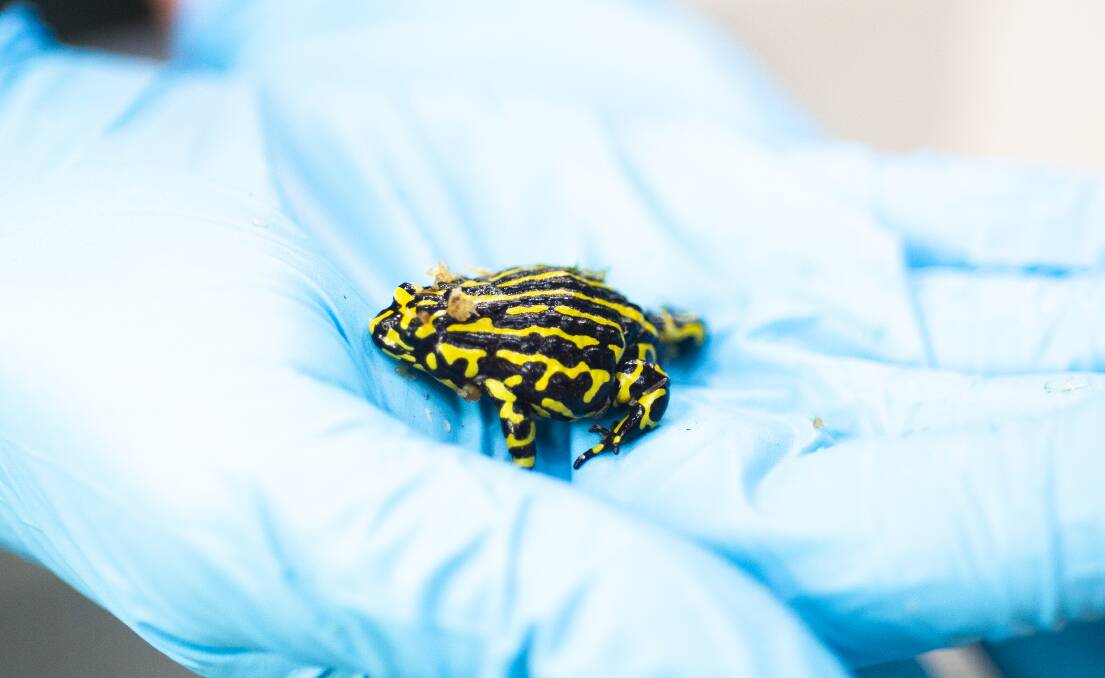
The size of animal species such as frogs and toads may determine how likely they are of becoming extinct, new research has revealed.
A study conducted by researchers at the Australian National University has found smaller amphibians have a bigger risk of dying out compared to larger ones.
That's in comparison to other types of animals such as mammals or reptiles, where larger species are more in danger of becoming extinct.
Computer modelling was used to determine the levels of risk factor involved in extinction for amphibians not just in Australia, but other areas around the world.
Researcher Marcel Cardillo, a professor of ecology at the Australian National University, said the findings were a wake-up call for conservation efforts for some of the world's smallest species.
"Unfortunately, the situation for these species will be worse as time goes on," Professor Cardillo said.
"I think because frogs and toads are so closely tied to aquatic ecosystems, they'll be impacted more heavily than species in terrestrial ecosystems."
While the research does not lay out an exact reason as to why smaller species were more at risk, Professor Cardillo said habitats may be among the key factors.
"Species of smaller body size are more likely to inhabit a smaller geographic area," he said.
"That makes them more sensitive to human impacts and the destruction or alteration of rivers and waterways, and they have fewer refuges.
"In other groups such as mammals, smaller species have an advantage due to a higher reproductive output, which means their population grows more rapidly and that buffers them to potential impacts."
It's estimated as many as 54 per cent of all amphibian species may be threatened with extinction.
The computer modelling carried out for the research examined as many as 8000 amphibian species from around the world.
Professor Cardillo said while smaller amphibians were at greater extinction risk, there were some notable surprises.
"Species in Australia as well as North America were the two exceptions to the general pattern," he said.
"In all other areas we got the result that there's a negative association between body size and the risk of extinction."
While amphibian species have been declining around the world as a result of the destruction of natural habitats, less has been known about how different species have been affected.
"We've seen how some have been more sensitive and decline at a rapid rate while others have been robust," Professor Cardillo said.
"The research has aimed to help make conservation plans more proactive and more forward looking."
The researcher said the conservation of habitats for amphibian species was critical.
"Currently all the impacts are continuing like water pollution and damming," Professor Cardillo said.
"The next step is to take research like this and help translate it into practical use."
The research was published by The Royal Society.