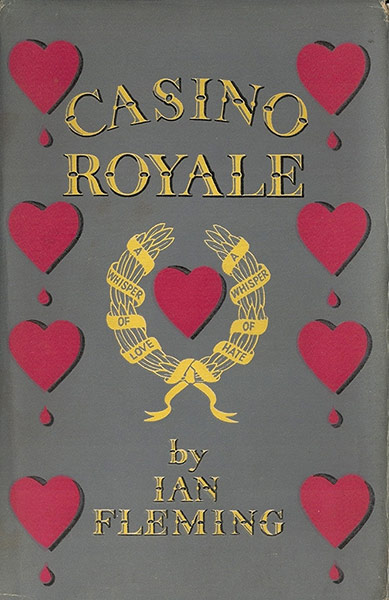
This was the first of Ian Fleming’s 14 James Bond books (12 novels, two collections of short stories) published by Jonathan Cape. The art for this first edition dustjacket was devised by Fleming with advice from Kemsley Newspaper Group’s in-house artist, Kenneth Lewis. It is based on the winning hand that Bond draws against Le Chiffre during their intense game of baccarat. As Fleming explains in chapter 13, 'It was a nine, a wonderful nine of hearts, the card known in gipsy magic as "a whisper of love, a whisper of hate", the card that meant almost certain victory for Bond'
Photograph: Jonathan Cape
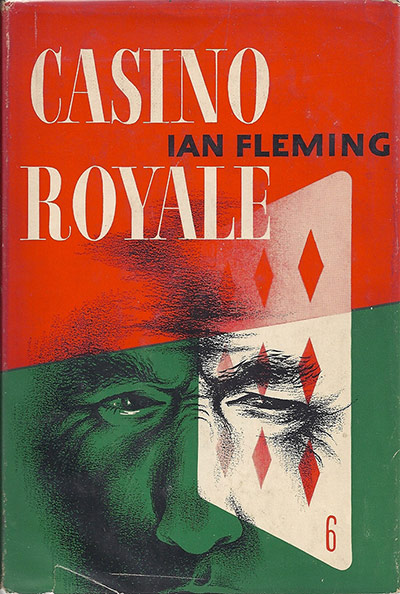
The dustjacket art for this first US appearance of Bond was designed by Leo Manso, the abstract painter and collagist. It is a very striking cover in green and red with Bond squinting through the nine of diamonds. One has to wonder, however, why the nine of diamonds was chosen, given that the famous winning hand was due to the nine of hearts. It is said that Fleming’s first design concept for the Cape edition used bleeding diamonds Photograph: Macmillan
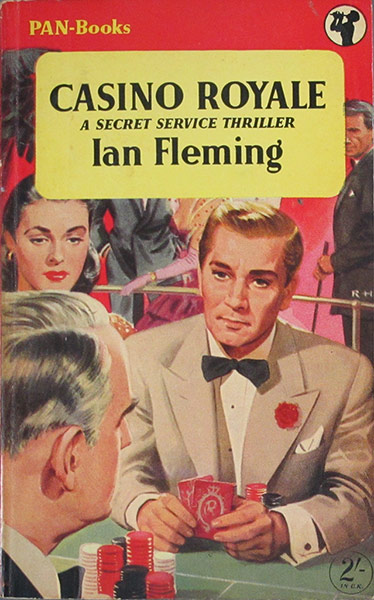
Roger Hill’s art, used for this first British paperback edition of a Bond novel, is perhaps the first published artistic representation of James Bond. The image of Bond was based on the American actor Richard Conte, who appeared with James Stewart and Lee J Cobb in the 1948 film noir Call Northside 777 and later starred in the films Ocean’s Eleven in 1960 and The Godfather in 1972 Photograph: Pan Books
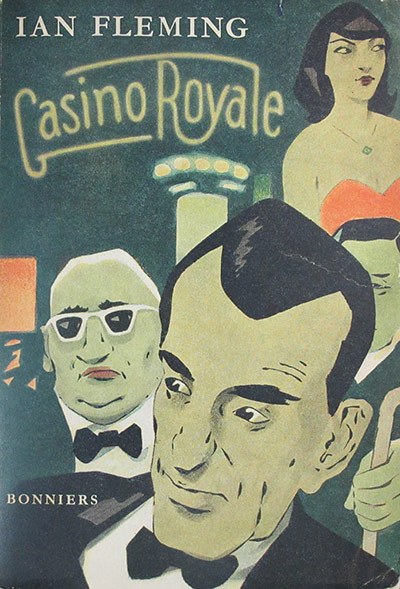
Swedish Publisher Bonniers was the first to buy foreign rights to the first three novels. Troubled by the lack of foreign sales, Fleming spoke to his friend Eric Ambler, who suggested that he get in touch with literary agent Peter Janson-Smith. Fleming met with Janson-Smith in September of 1956 and that same day rights were sold to the Dutch Publisher, AW Bruna. The Bond books have never since been out of print in Holland. Janson-Smith was eventually responsible for ensuring that the books were read worldwide Photograph: Bonniers
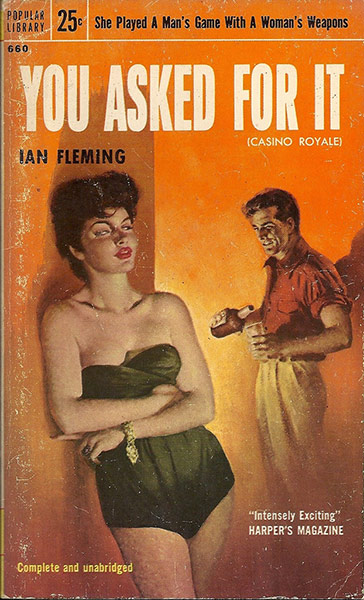
The British and American Casino Royale paperback covers reflected the historical eras during which the books were published. None is more representative than the this first American paperback of Casino Royale, published by Popular Library under the title You Asked For It. This is a classic provocative pulp paperback seen on shelves in the US in the 1950s. One reason for the new title, apart from it being more alluring, is that it was feared that American readers would not be able to pronounce ‘Royale.’ It is also notable that the back cover of You Asked For It refers to Bond as Jimmy Bond Photograph: Popular Library
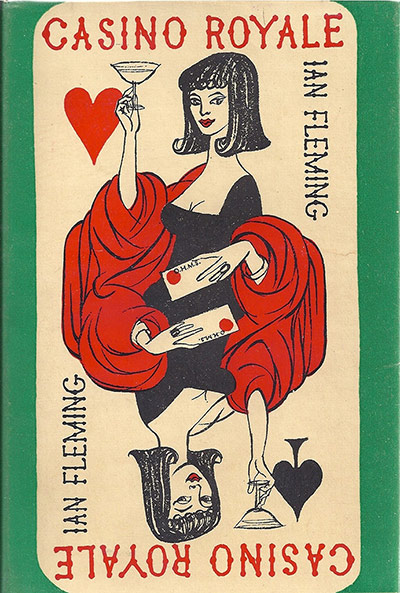
For this fourth hardback printing, Jonathan Cape reset the type for the book. They also decided to completely redesign the dustjacket and used Pat[ricia] Marriott, who was Cape’s preferred artist at the time and who had designed the dustjacket for Diamonds are Forever, which was released in 1956. She also designed the Cape dustjacket for Dr No, released in 1958. This Casino dustjacket was used on all subsequent Cape hardback releases until the 1990s Photograph: Jonathan Cape
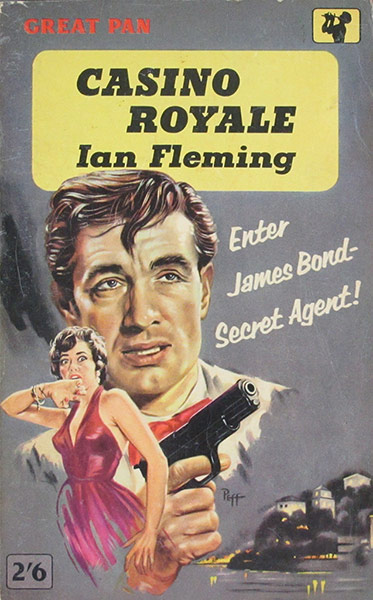
This artwork was done by one of Pan's freelance artists, Sam ‘Peff’ Peffer. ‘Peff’ drew all of the Bond Pan covers from 1957 to 1962. His images of Bond were based on the model Dick Orme. This cover is interesting because it shows both the scar on Bond’s right cheek and the comma of hair, which were two of the few physical descriptions Fleming ever wrote of Bond Photograph: Pan Books
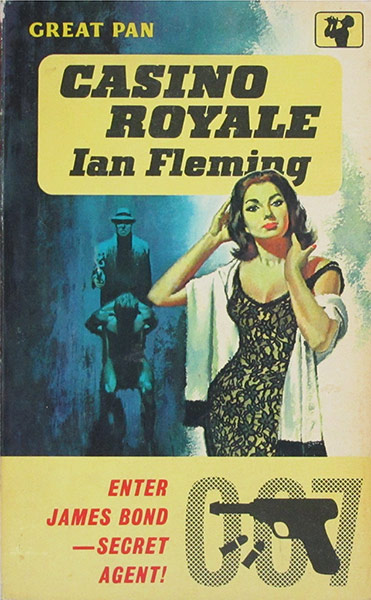
This Sam Peffer ‘Peff’ paperback cover is interesting because it illustrates, for the first time on a cover, the gruesome torture that James Bond endured at the hands of Le Chiffre. The Pan covers of the Fifties and early Sixties were styled after the vivid and alluring American pulp paperbacks of those days. This version of the Pan eighth printing has 007 with Bond’s gun over it, which is strikingly similar to the 007 logo used on the posters for the first James Bond film, Dr No, which premiered in 1962 Photograph: Pan Books
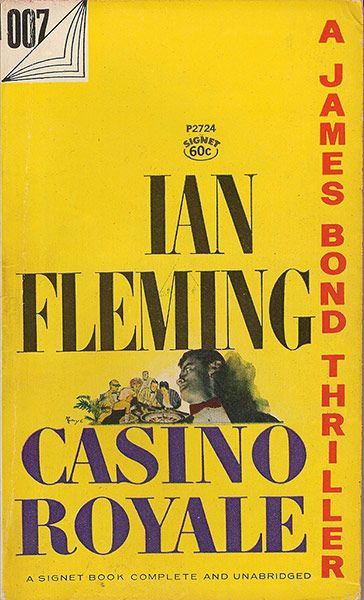
James Bond fever hit the United States hard in the early 60s. In March 1961 Life magazine reported that one of President John F Kennedy’s ten favorite books was Fleming’s From Russia with Love. In November of that same year, Signet Books started producing a series of uniform covered paperbacks – the first being Diamonds Are Forever, which appeared in a bright pink cover. Signet tied this series in to an advertising campaign that linked James Bond to the White House. While this yellow US Signet cover for Casino Royale is not as provocative as some of the earlier ones, it is the version of Casino Royale that most Americans over the age of 50 remember reading Photograph: Signet
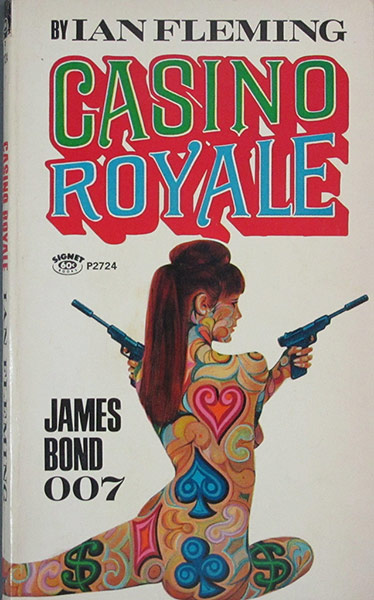
This movie tie-in cover for Charles K Feldman’s 1967 spoof film of Casino Royale uses the psychedelic Robert McGinnis art from the film posters. This style truly reflected the 1960s. McGinnis was also the artist for the poster art for the EON films Thunderball, Live and Let Die, Diamonds are Forever, and You Only Live Twice. Despite this movie tie-in poster, the book itself was not a novelisation of the crazy movie, which starred David Niven, Woody Allen, Peter Sellers, and Ursula Andress all playing James Bond Photograph: Signet Books
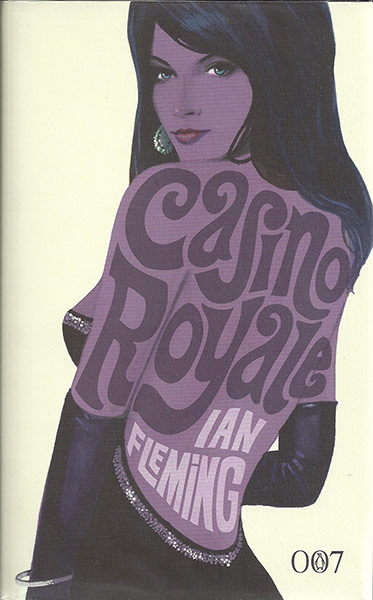
Penguin Books reissued all of Ian Fleming’s James Bond books in 2008 to celebrate the centenary of Fleming’s birth. The dustjacket artist was Michael Gillette who is English-born but lives in San Francisco. Gillette’s work is greatly influenced by the psychedelic art of the late 1960s. His purple portrait of Vesper Lynd, with the book’s title and author’s name following the contours of her back, is reminiscent of the Signet and Pan movie tie-in covers for the 1967 film version of Casino Royale. This edition was limited to just 4,000 copies Photograph: Penguin