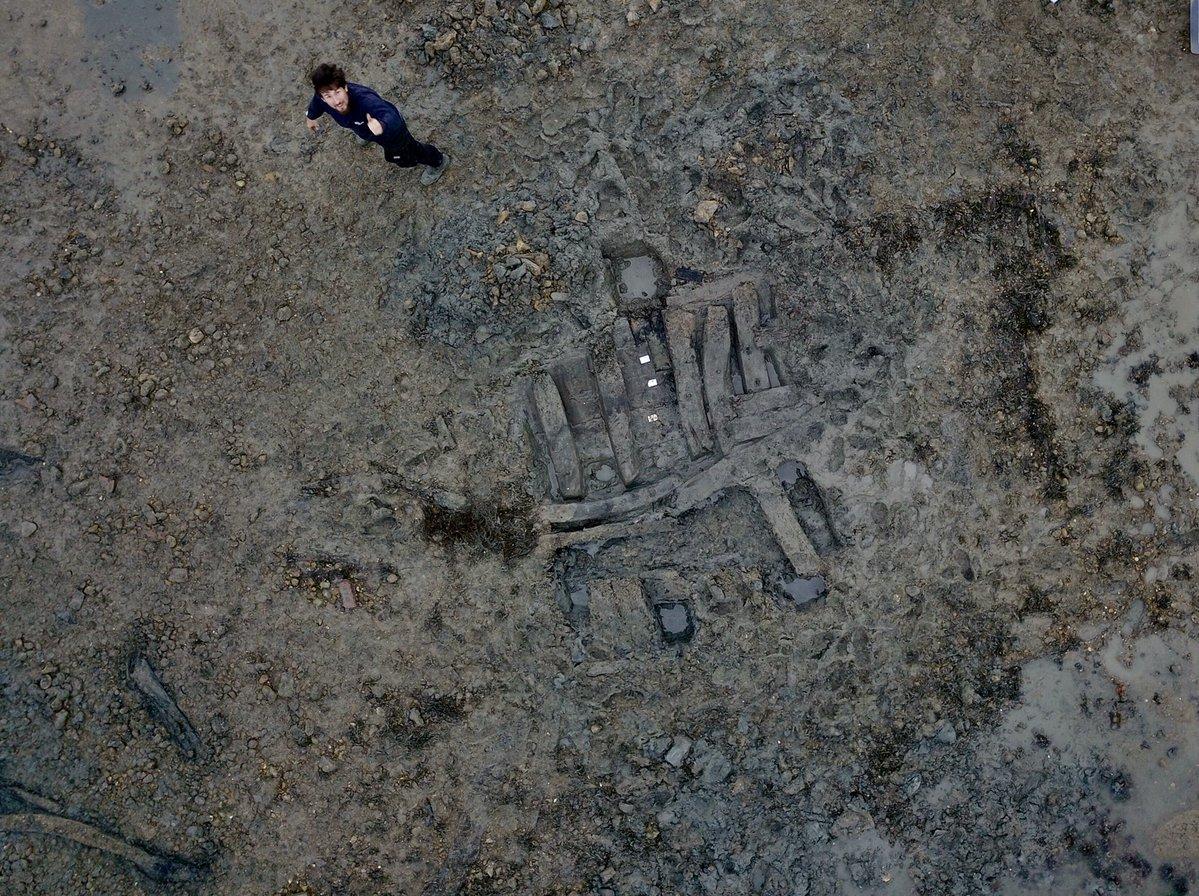
A Tudor shipwreck dating back to the 16th century has been given protected status after its timbers were spotted sticking out of the sand on a Kent beach.
A local archaeology group saw part of the boat's skeleton protruding from Tankerton Beach, Whitstable, while hunting for the remains of Second World War pillboxes in April last year.
Samples of the wood – which has been preserved by silt in the sand – revealed one plank comes from woodland in southern England, and would have been felled in 1531.
Experts at Historic England believe it is a late 16th-century single-masted merchant ship of up to 200 tonnes. They say it is an unusual find, because such working vessels are far less likely to survive than ships associated with matters of state.
It has now been scheduled for protection by the Department for Digital, Culture, Media and Sport,whilearchaeologists spent the weekend excavating the wreck and attempting to recover evidence of cargo and possessions. Parts of an old rigging block and barrel were among finds made.
Mike Harrison, director of Timescapes, the group which first made the discovery, told The Guardian: “Our group of volunteers was looking for exploded World War Two pillboxes along the coast. Adjacent to a lump of exploded concrete, we were amazed to see the timbers of a ship appearing out of the sand.
“We reported the find to Historic England and are pleased that what turned out to be a mediaeval wreck has been given protection.”
Another ship – found at nearby Camber Sands in East Sussex– is also being considered for similar protection.
Historic England said that boat is likely to be "a substantial oak-built sailing vessel" measuring roughly 47m long and probably dating from the late 18th or early 19th century.
Some of the timbers are of North American origin, and it is thought it could be the Avon which was lost in August 1852 with a cargo of timber.
Duncan Wilson, head of Historic England, said: "These two very different ships are equally fascinating and will shed light on our maritime past.
"Many of the ships that Historic England protects are accessible only to divers but when the sands shift and the tide is right, visitors to these beaches in Kent and Sussex can catch a glimpse of these incredible wrecks."