I recently relocated to Istanbul where I work on the United Nations Development Programme’s (UNDP) online communications in the regional hub. I see countless blog posts, tweets, Facebook updates and more every week.
Let me tell you, the good and the bad look as different as night and day.
Here is a reflection on some of the most common mistakes I see on social media across the region.
1. Don’t photograph five men in suits sitting lethargically around a table. And if you happen to, don’t tweet it.
When you post an image of men sitting around a table (and yes, the gender disparity is often glaring) you’re contributing to the impression that you’re doing nothing but reinforcing the status quo.
Perhaps the men (and lone woman) in the photo are doing something really fantastic – that’s irrelevant here.
A picture of people in suits – men or women – discussing “something” says nothing. We can’t hear the conversation so the photo does nothing but make us feel like outsiders.
It’s not that what they’re saying is bad, but what they’re saying is not the story. The story is the story.
Instead, take “action shots” – people “doing” something. If you absolutely have to tweet an image of a speaker, a facial or bodily expression can go a long way.
2. Don’t tweet what’s happening every second of your big event just because the conference has its own hashtag.
Things that make sense to tweet:
- Important takeaways from a presentation.
- Quotes that are meaningful that more people should know about (Statistics? Data?).
- Your thoughts about, feedback and/or critique of the event.
Things you should probably keep to yourself:
- Vague sentences that are a rehash of things we know already dressed as quotes (“Public procurement is important because it impacts services delivery”).
- A sentence that only uses jargon (“Linking economic performance to effective transparency policies”).
- “@Person1 and @Person2 currently discussing jargon” (with attached picture of @person1 and @person2 in front of a microphone).
3. Don’t expect interesting content to promote itself.
Sometimes you have the opportunity to promote the most beautifully prepared and engaging publication.
Don’t simply copy and paste the link to Twitter; you’re wasting months of someone’s precious work when you do. Pull out one or two of the most interesting things about that report. Give people a reason to take five minutes out of their day to look at what you’re offering. See a successful example here.
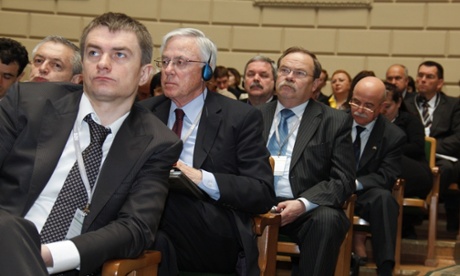
4. Don’t tweet pictures of people looking sleepy, unhappy, or generally hating their lives.
Hopefully self-explanatory.
5. Don’t post seven times in one day and disappear for three weeks, until the next time you feel like saying something.
At least not if you’re looking for the audience to be engaged in your work. Remember to budget for specific staff responsible for delivering interesting content every day, not just when you have something to announce.
6. Don’t be scared to have a personality.
No matter how much money or power you have, if people feel that you’re faking something, you simply lose their real-time interest. Like it or not, social media is very democratic that way.
Here is an overall super-simple guide for your social media posts:
Step 1: Visualise a close friend.* Not a friend who is an expert in your field. A friend with whom you like hanging out and shooting the breeze. Your best friend!
Step 2: Before you click “Post”, imagine your friend reading what you have just written. Do they understand what you are saying?
Step 3: If yes, go ahead and post. If not, rewrite.
Step 4: Repeat.
(*Alternatively, when prepping a Tweet ask yourself: would your mother, your boss and CNN approve?)
Mehmet Erdogan is a communications specialist for the UNDP in Europe and Central Asia. He writes for UNDP’s Voices of Eurasia blog where this was originally published.
Join our community of development professionals and humanitarians. Follow@GuardianGDP on Twitter.