Get all your news in one place.
100’s of premium titles.
One app.
Start reading
The Guardian - UK
The Guardian - UK
Environment

Six of Britain's oldest trees

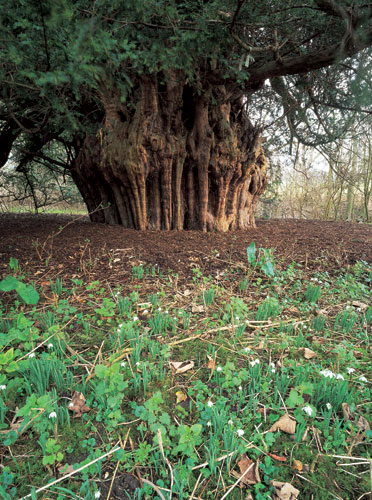
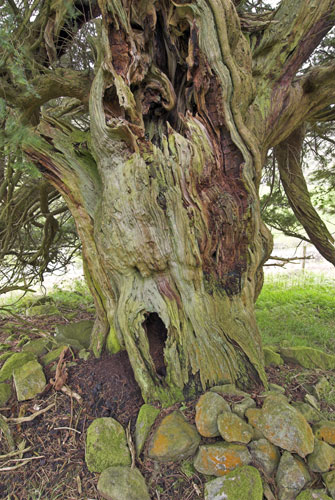
Ancient trees: Ankerwycke yew at Runnymeade
The Ankerwycke yew There may be yew trees in Britain that are older but the 31-ft wide yew (Taxus baccata) found in the ruined priory of Ankerwycke in Berkshire has witnessed at least 2,000 years of history and myth-making. It is said to have been the spot where King John signed the Magna Carta in 1215 and is rumoured to be where Henry VIII conducted his first liaisons with Anne Boleyn. Many yews are found close to abbeys or in church yards. They were considered holy trees by the Celts and often symbolise death and resurrection in Christianity – due to their ability to sprout again and put on new growth. Many yews will be older than the ancient churches they grow near Photograph: Constable and Robin/Heritage Trees
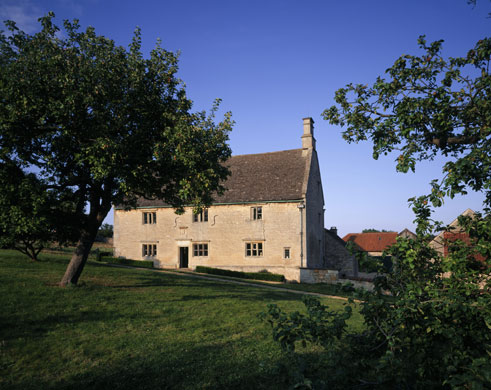
Ancient trees: Apple tree at Woolsthorpe Manor
The apple tree at Woolsthorpe Manor A number of apple trees lay claim to inspiring Isaac Newton’s “notion of gravitation” – or being descended from the tree that did. One candidate is the tumbling apple tree that still stands in the garden of Wools­thorpe Manor, Newton’s birthplace and family home. The tree is a rare Flower of Kent variety, which produces cooking apples, and it fell over in 1820. It survived because it sent down roots where the trunk touched the ground. Other trees also claim to be descendents of the relevant tree where Newton watched an apple fall, while the King’s School in Grantham claims that it purchased the tree, which was uprooted and placed in the headmaster’s garden Photograph: Nick Meers/NTPL
Ancient trees: Borrowdale yews
The following correction was printed in the Guardian's Corrections and clarifications column, Saturday 1 August 2009 This picture included a reference to Wordsworth's 1803 poem Yew Trees. In fact, the poem's date is disputed
The Borrowdale yew, Cumbria
But worthier still of note/ Are those Fraternal Four of Borrowdale,/ Joined in one solemn and capacious grove;/ Huge trunks! and each particular trunk a growth/ Of intertwisted fibres serpentine
So wrote Wordsworth in his 1803 poem, Yew Trees. One of the quartet fell victim to a storm in 1883 but three still survive in the magical valley of Borrowdale in Cumbria. This yew (Yaxus baccata) can fit four people inside a hollow in its trunk. Another yew singled out by Wordsworth also survived storm damage and still stands in the village of Lorton, Cumbria. It was one of many under which John Wesley, the founder of Methodism, preached
Photograph: /NTPL/Simon Fraser
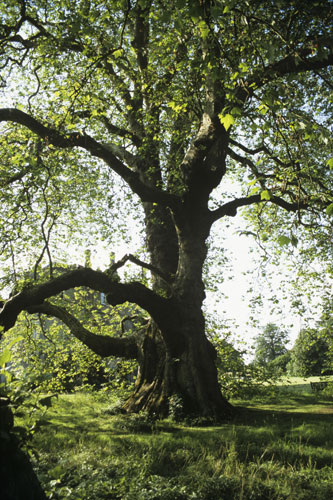
Ancient trees: Plane Tree at Mottisfont
Mottisfont Abbey plane tree City parks are home to many impressive plane trees but they are dwarfed by one great plane (Platanus x acerifolia) which grows in the grounds of Mottisfont Abbey, a 12th-century Augustinian priory in Hampshire. Unless the ancient tree hunt proves otherwise, this is believed to be the largest tree of its kind in the country, its branches spreading out over an area of 1,500 sq m Photograph: Rosie Mayer/NTPL
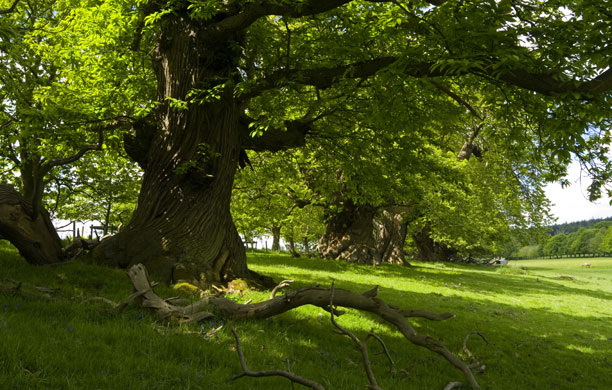
Ancient trees: Spanish Chestnut Avenue at Croft Castle
The Spanish chestnuts, Croft Castle The avenue of pollarded sweet chestnuts (Castanea sativa) march for a kilometre west of Croft Castle in Herefordshire, a country home with a 1,000-year family history and more than 300 veteran trees. Like many ancient trees, they are bound up in storytelling and legend and it is suggested that they were grown from nuts that came from the wrecked Spanish Armada in 1588 and planted in 1592 Photograph: NTPL/Robert Morris
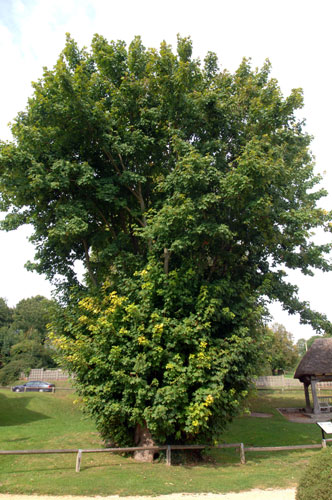
Ancient trees: Tolpuddle Martyrs Tree in Tolpuddle Dorset
The Tolpuddle Martyrs’ tree Many ancient trees have acted as natural meeting posts, places to plot and preach – open air village halls for communities. In the 1830s, a group of Dorset farm labourers met under the then 150-year-old sycamore in their village to swear a secret oath and form the Friendly Society of Agricultural Labourers to protest against the lowering of their wages. Their union led to their arrest, punishment and deportation to Australia. They were eventually pardoned and their example helped inspire the creation of the trade union movement. There are other memorials but the pollarded sycamore (Acer pseudoplatanus) in the village of Tolpuddle is the only living one Photograph: Jack Sullivan/Alamy/Alamy
Sign up to read this article
Read news from 100’s of titles, curated specifically for you.
Already a member? Sign in here
Related Stories
Top stories on inkl right now
One subscription that gives you access to news from hundreds of sites
Already a member? Sign in here
Our Picks
Fourteen days free
Download the app
One app. One membership.
100+ trusted global sources.