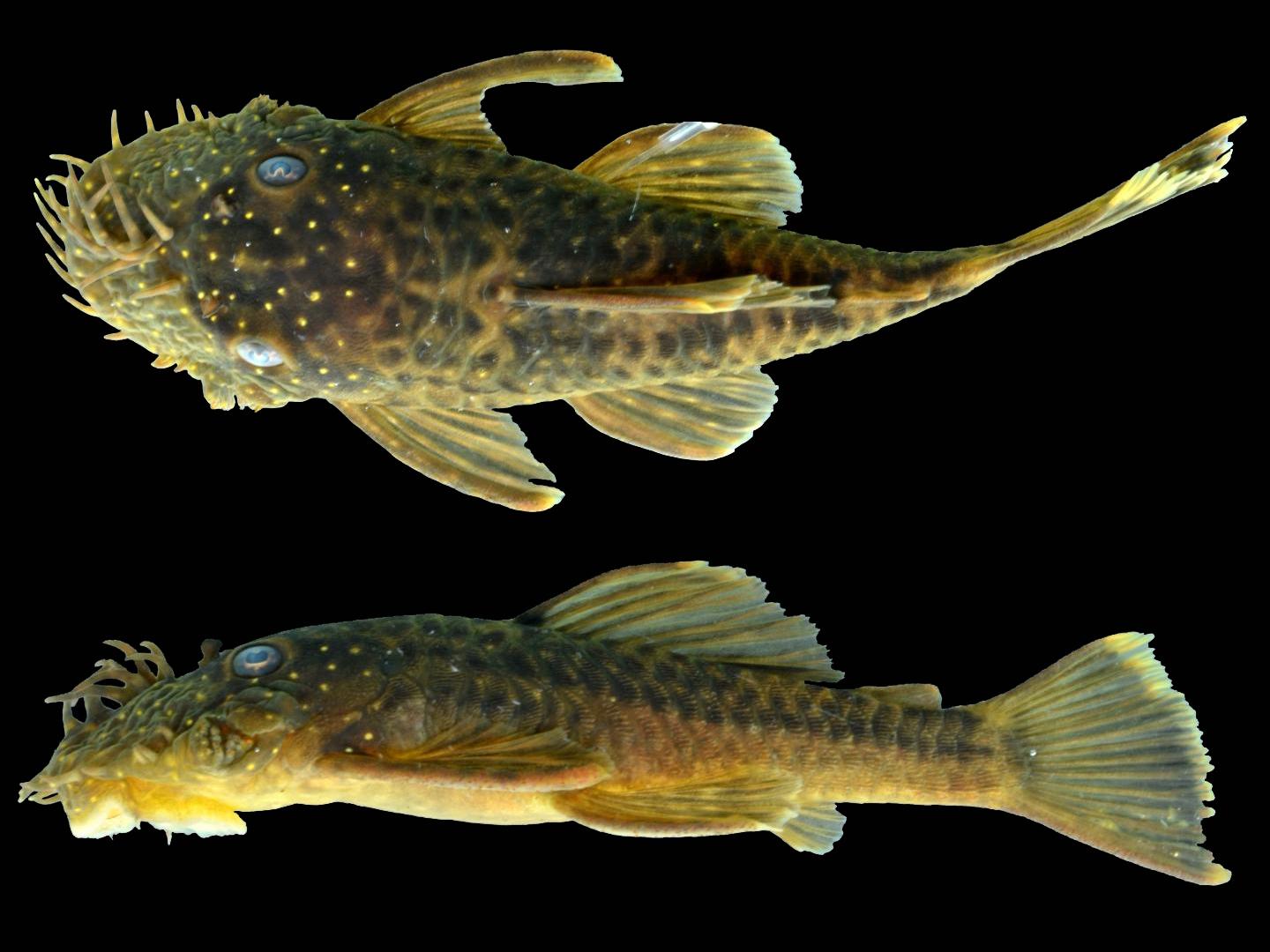
Scientists have discovered six new species of fish with faces covered in tentacles hiding in the waterways of South America.
All of these unusual aquatic creatures are bristlenose catfish, relatives of the sucker-mouthed species often used in fish tanks to keep them clean of algae.
The fish were identified from specimens collected in the Guiana Shield region, an area encompassing parts of Venezuela, Colombia and Guyana.
Dr Lesley de Souza from the Chicago Field Museum came across the fish while examining museum samples belonging to what she thought were five species of catfish.
Instead of merely validating the existence of those species, the fish expert ended up bringing the total number she was dealing with up to 11 after examining their features and DNA.
“We discovered six new species of really cool catfish from the Amazon and Orinoco River basins,” said Dr De Souza.
“They have tentacles on their snouts, they have spines that stick out from their heads, almost like claws, to protect themselves and their nests, and their body is covered with bony plates like armour.”
“They’re warriors, they’re fish superheroes.”

The fish, which grow up to about 15cm long, use the tentacles on their snouts to gauge the quality of potential mates. If males have impressive tentacles, females will see them as high quality partners.
Dr De Souza and her colleagues documented their discoveries in the journal Zootaxa.
The scientists said it was crucial to understand how many undiscovered species are still lurking in the rainforests of South America, as the region is under threat from human expansion and the knowledge can be used to build a case for its defence.
Threats to the catfish and their habitats include intensive agriculture, deforestation and chemicals used in gold mining.
“They are sensitive to subtle changes in the environment, we have seen this at sites where they were plentiful and now scarce, this is due to habitat destruction,” said Dr De Souza.
The Amazon rainforest is thought to be home to around 10 per cent of known species, with many more unknown creatures still to be found.