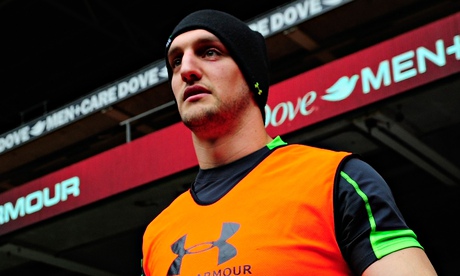
Sam Warburton may be winning his 50th cap on Friday evening but in one sense the Wales captain will be stepping into the unknown. Rugby union at the top level, he feels, is going through another stage of evolution and he is not sure what to expect from England.
Since Warren Gatland took over as the head coach at the end of 2007, Wales have been the most successful team in Europe, with three Six Nations titles and a fourth-place finish in the World Cup. When they moved into the Millennium Stadium at the end of the 1990s, they tended to put out the welcome mat for visitors but in the past seven seasons they have lost only four championship matches in front of their own supporters while winning 14.
They are at full strength going into Gatland’s eighth Six Nations campaign, settled in selection and playing style, while England are beset by injuries and are without two of their leaders in defence, Brad Barritt and Owen Farrell.
Their back division has an atypically adventurous aura to it – Danny Cipriani and Nick Easter, players set in their own moulds, are on the visitors’ bench and bookmakers report that punters, anticipating an arm-wrestle rather than a talent show, are lavishing their money on a home victory.
Warburton does not believe the contrast in the style of the two sides will be marked. Ireland showed last season that one way to beat Wales was to play a no-frills territory game, forcing them to run from deep and holding ball-carriers in a choke tackle. New Zealand overcame them in the autumn by chip-kicking behind the onrushing defence and winning the race for the ball. In Jonathan Joseph, Jonny May, Anthony Watson and Mike Brown, England have chasers with instant acceleration and in George Ford they have an outside-half who is more tactically astute than Owen Farrell.
“The game is slowly changing,” said Warburton. “Teams are kicking a lot more now. A couple of years ago, ball in play was a big factor but now the kicking game is among the top three aspects [that influence a match]: attacking kicks, turning the wingers and asking a team to get away from their five-metre line from a lineout as you apply pressure on the set piece.
“I remember watching England a couple of years ago against Australia and being impressed by the way they went into the contact area so fiercely that they forced the Wallabies to adopt a kicking game. When it comes to England’s style, we have to prepare for both and it is now about mixing things up.”
England will need to minimise the influence of the Wales centre Jamie Roberts. The pre-match talk of the Lion running through Ford’s channel ignores the mess he made of Luther Burrell’s defence last month when Racing Métro defeated Northampton at Franklin’s Gardens.
Roberts was largely a spectator in Dublin last year as, when Wales did manage to get into their opponents’ half, they had little set-piece possession, struggled to get the ball away quickly from the breakdown and were held up in the choke tackle.
The choke tackle is a speciality of the England flanker James Haskell whose Wasps side used the ploy to telling effect in their Champions Cup match at Harlequins last month.
“Three or four-second tackles are a win nowadays because you have slowed the ball down,” sad Warburton. “If you go for a low-leg chop and no one comes in over the ball, it will be away quicker than if you went higher and tried to choke someone. England are effective in that area, putting pressure on the scrum-half. It will be a big way for them to stop our possession and Haskell is an extremely strong guy. England are one of the most difficult sides I have played against at the breakdown: I find games against them extremely tough but I love that physical challenge.”
When Wales defeated England in Cardiff two years ago, they won an abundance of penalties at the scrum and the breakdown. Even though he was not the Wales captain that day, Warburton enjoyed the ear of the referee, Steve Walsh, far more than Chris Robshaw, who was treated dismissively.
A year ago at Twickenham, the decisions went England’s way and the prop Gethin Jenkins was sent to the sin-bin for not scrummaging straight, the third time he had suffered the sanction in six Tests. England have picked two props who do not have a reputation for boring in and Friday’s referee, Jérôme Garcès, controlled their last Test, against Australia at the end of November, when Robshaw’s men won the penalty count 12-7.
“Robshaw is England’s most consistent performer and individual battles are so important in international rugby,” said Warburton. “There are three priorities for forwards: scrum, lineout and the contact area. Come out on top in two of those three, as we did two years ago, and you have a good chance of winning the game. In 2013, we came out with such intensity because it was a must-win game: we had to do so by eight points to retain the title.
“We have to treat this match with the same attitude as then: we are a tight, settled side, morale is high and we have worked hard. I am delighted to be winning my 50th cap at home, but I know how hard it is going to be; there is never much in it when we play England.”