Bix Beiderbecke
“His playing sounded like shooting bullets shot from a bell.”
Leon Bismark “Bix” Beiderbecke has been cited as one of the greatest influences in early jazz history. The cornetist came to prominence with the Wolverines and the big bands of Jean Goldkette and Paul Whiteman. He made some of his finest recordings as Bix and His Gang between October 1927 and September 1928. His beautiful tone, characterised by spare, well-placed notes was “like a girl saying ‘yes’,” according to guitarist Eddie Condon. Bix died in Queens, New York, in 1931, aged just 28. The official cause of death was pneumonia, but it was the drink that did it; legend has it that he would fill up a bathtub with bootleg hooch and drink it from a ladle.
Recommended listening: Bix’s recordings with Frankie Trumbauer in 1927, in particular Singin’ the Blues and I’m Coming, Virginia.
Robert Johnson
And the days keeps on worryin’ me,
there’s a hellhound on my trail,
hellhound on my trail, hellhound on my trail
Bluesman Robert Johnson has been a source of legend ever since his death in a hotel room in New York at the age of 27. His guitar prowess came, many believe, from a pact he made with the devil at a crossroads near the Dockery Plantation in rural Mississippi. BB King once claimed to have seen Johnson play to a circle of people in a forest glade and believed there was something spooky about the man. Keith Richards says that when he first heard Johnson, for years he was convinced that there was another guitarist playing. Although he only recorded 29 songs in his lifetime, he became a huge influence on the British blues explosion in the 1960s. He died in August 1938, poisoned with strychnine by the jealous husband of a woman he’d flirted with.
Recommended listening: Sweet Home Chicago, Cross Road Blues, Love in Vain, all on the LP King of the Delta Blues Singers, Vols I and II.
Brian Jones
“Brian Jones with his puffed-up Pisces, all-knowing, suffering fish eyes … Brian always ahead of style, perfect Brian.” Lou Reed, Fallen Knights and Fallen Ladies.
That explosive bottleneck guitar break on I Wanna Be Your Man. The looping riff on The Last Time. The hypnotic marimba groove on Under My Thumb. That was Brian Jones. The founder of the Rolling Stones, Jones was a mass of contradictions even before the drink and the drugs took hold. One of those kids who passed every exam without really trying – he had an IQ of 135 – and a gifted musician from an early age, Jones developed a passion for jazz and blues in his teens. In London, he met Mick Jagger and Keith Richards, recruited Charlie Watts, and Bill Wyman had an amp, so they were away. Jagger said that the only thing Jones ever wanted to do was play the blues at the Marquee Club, and it seems that everything else was a joke – he would play Popeye the Sailor Man on the stage to screaming fans – until it wasn’t funny anymore. Drink and drugs increased his paranoia until he simply became a liability. He was kicked out of the band in June 1969 and was found drowned a month later at his home at the age of 27. Jones’s last meaningful contribution to a Stones record was the beautiful slide guitar on No Expectations, on Beggars Banquet.
Recommended listening: His bottleneck guitar on Little Red Rooster, the sitar riff on Paint It Black.
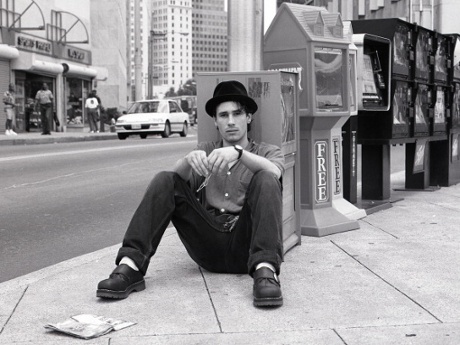
Jeff Buckley
“This is a song about a dream …”
On 29 May 1997, Jeff Buckley walked into the Wolf river in Memphis, Tennessee, playing his guitar. His body was found five days later – he was only 30. Buckley, whose father, the folk/jazz singer Tim Buckley, died of a heroin overdose in 1975, was working on the follow-up album to his breakthrough LP Grace, a beautiful mixture of folk and blues shot through with eastern mysticism, with covers of Benjamin Britten’s Corpus Christi Carol and Leonard Cohen’s Hallelujah. His voice he inherited from his father, whom he hardly met, but he was influenced mainly by female singers such as Liz Fraser, with whom he had a relationship, and Joni Mitchell.
Recommended listening: Lover, You Should’ve Come Over, from the LP Grace, and Everybody Here Wants You, from the LP Sketches for My Sweetheart the Drunk
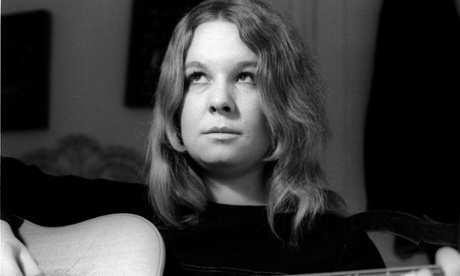
Sandy Denny
“Sandy’s music was uncomfortable. It demanded too much.” Linda Thompson
A beautiful singer, filled with self-doubt who tried to overcome it with drink, drugs and bravado, Denny was the voice behind some of the most haunting songs yet recorded, from murder ballads to songs about love and abandonment with a rogue chorus including sailors, Gypsies and serving girls. She began her career with the Strawbs, but it was with Richard Thompson and Ashley Hutchings in Fairport Convention that she recorded her most durable and most beautiful work on albums including Unhalfbricking and Liege and Lief. On leaving the Fairports, she joined Fotheringay, before going solo and making, among other albums, The North Star Grassman and the Ravens, and guesting on Led Zeppelin’s The Battle of Evermore. Denny had always been the life and soul of any party and the refrain Sandy on the brandy, was a warning that anything could happen. But it left its toll. In April 1978 she fell down the stairs at a friend’s house and died four days later from a brain haemorrhage – she was 31.
Recommended listening: Who Knows Where the Time Goes?, from Unhalfbricking (the cover shot was of her parents standing outside the family home in Arthur Road in Wimbledon, south London); Late November, from The North Star Grassman and the Ravens; It’ll Take a Long Time, from Sandy.
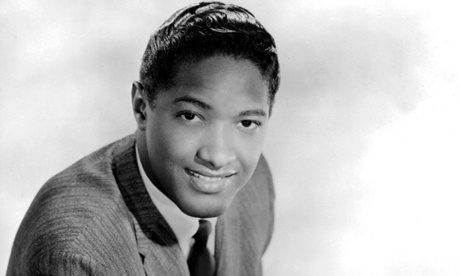
Sam Cooke
“If I had half the voice that Sam had, I wouldn’t dance.” James Brown
When Sam Cooke left the gospel group the Soul Stirrers in 1957 to pursue a career in secular music, he would create a revolution as big as Presley’s, where black church music would be made palatable to a white audience. Blessed with a pure tenor, Cooke knew from an early age that all he wanted to do was sing and make money. He ended up with his own record label and music publishing business. Songs like Bring It on Home to Me, You Send Me and Wonderful World, were beautiful, perfectly pitched compositions that went right into the heart of 1950s America. But it was later work, especially Chain Gang and the magnificent A Change Is Gonna Come – “It sounded like death,” said Bobby Womack when he first heard it – that heralded a new black political consciousness. Who knows what might have been in store for Cooke if he hadn’t been shot and killed by a woman in a seedy motel in Los Angeles in December 1964. He was 33.
Recommended listening: Live at the Harlem Square Club, 1963 – a man at his absolute peak.