We really do rely on our backs for a lot. They support us through long commutes, extended hours at our desks, housework, exercise, and even winding down at the end of the day. Since they quite literally carry us through everyday life, it only makes sense to give them some attention.
Carrie Lamb, physical therapist and Balanced Body Educator, compares moving the thoracic spine to getting all the essential nutrients your back needs. She says, “It’s good for everything! If we think of the spine like a giant spring meant for shock absorption, a tight thoracic spine is like having a kink in the spring. The lower neck and the lower back both can bear the brunt of a stiff thoracic zone.”
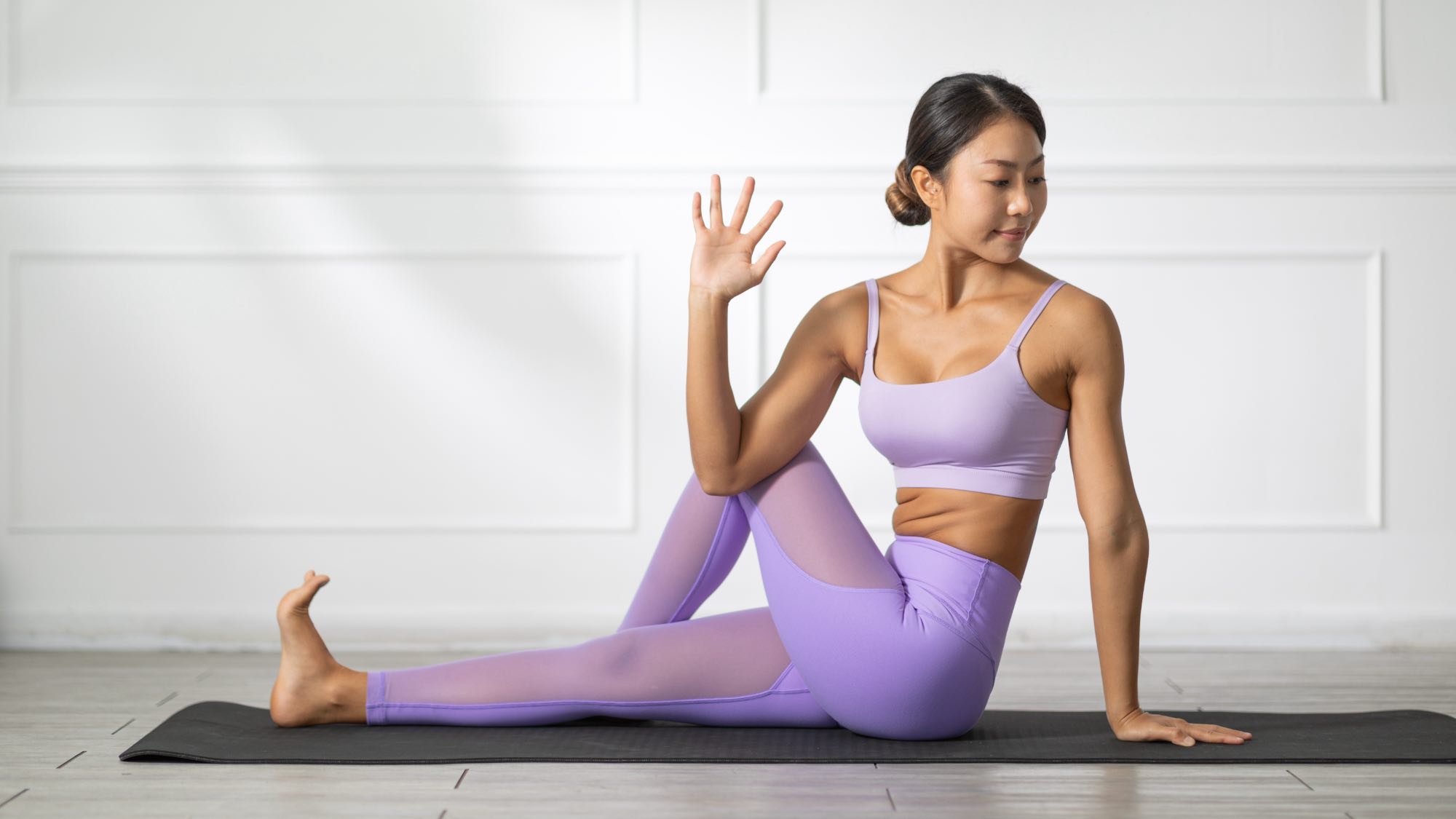
The thoracic spine is the middle section of your back, running from your shoulder blades down to just above your lower back.
The thoracic spine is the middle section of your back, running from your shoulder blades down to just above your lower back. It's naturally curved and designed to rotate and extend, which helps with posture, reaching, lifting, and general mobility. Keeping it flexible and mobile helps to reduce strain on your neck and lower back.
There are plenty of little things we can do to support spinal health. For example, science has found that walking can help with back pain, while strength and posture also play an important role. Mobility exercise can often be overlooked, but is a very important one. This is why I asked Lamb to outline the exercises she recommends for maintaining back mobility and reducing tightness.
Here's seven of her favorite exercises.
1. Seated thoracic extension with chair
- Sit in a chair with your feet flat on the floor.
- Cross your arms across your chest or lace the fingers behind your head as shown.
- Inhale as you lift your heart, open the elbows wide, and lean back slightly. (A chair with a back can be helpful to localize the stretch to a specific area of your back.
- As you exhale, pull the elbows together and look down to round the spine.
- Repeat 5-8 times alternating between rounding and arching.
- Make sure to emphasize the middle back and not the neck as you are moving.
- Variations: As you lift your heart twist towards the left and as you round forward twist to the right. Repeat going the other way.
2. Seated side stretch
- Sit with your feet firmly planted on the ground and your spine straight.
- Reach your left arm up towards the ceiling imagining your spine could grow taller as you reach.
- Continue to reach up as you inhale and bend to the right.
- Exhale as you sit back up.
- As you bend right, keep your left sitz bone heavy into the chair.
- Repeat reaching the right arm up and bending to the left.
- Perform 5-8 reps on each side. You can hold the stretch and use your breathing to increase the stretch.
3. Side lying rotation
- Lie on your side with hips and knees bent to about 90 degrees, arms outstretched and palms together.
- Reach the top arm up to the ceiling and rotate the rib cage as you continue to reach back behind you.
- Make sure the hips and knees stay on top of one another as you twist.
- Repeat 5-8 times then hold the stretch and breathe.
4. Prone extension with ball
- Place small, soft ball (8-10”), under your chest and place the forearms on the ground next to you.
- Take a breath in as you lift your heart and roll the ball slightly forward.
- Exhale to lower back down to the starting position.
- The use of a ball helps the body understand where you are asking it to move as the middle back is an area that is often skipped in movement. If you don’t have a ball, consider imagining one there as you perform the same movement.
- Progressions: Try lifting the heart as above then lifting and lowering your arms. If you can lift both arms stretch them forward and lower your chest, as you pull them back see if you can lift a little higher.

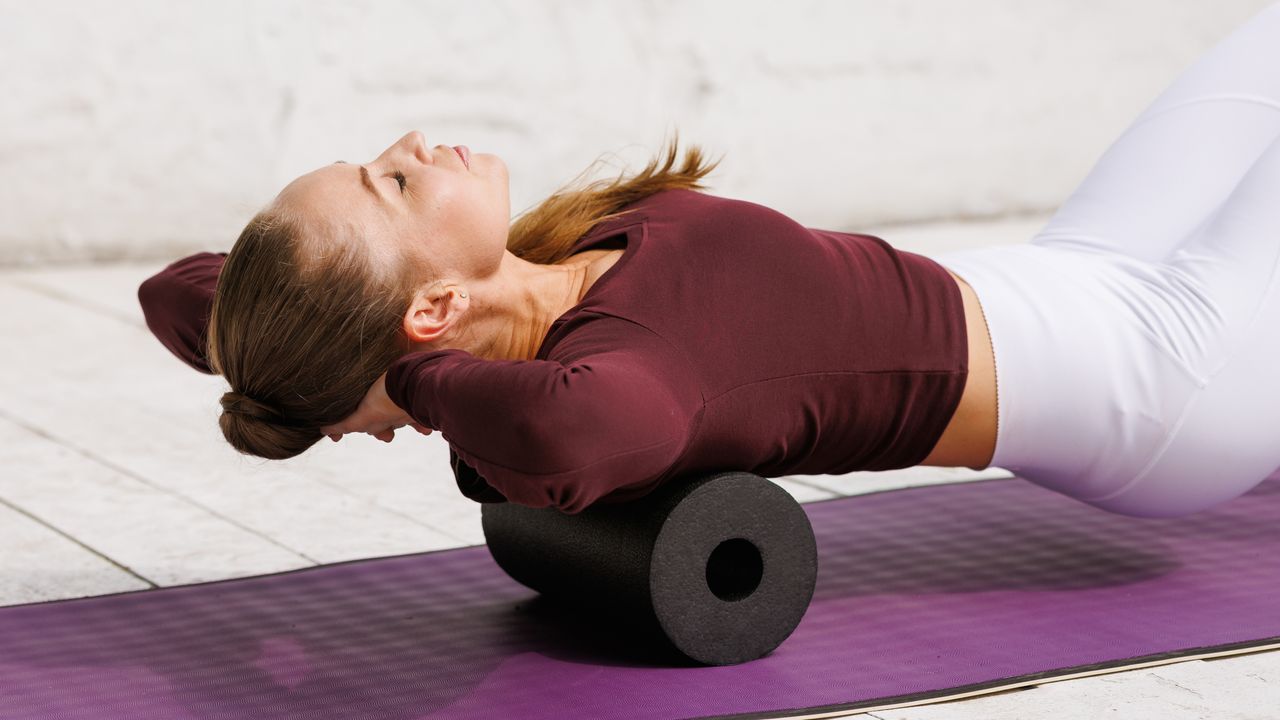
5. Supine ball/foam roller
- Lie on your back on a soft ball (8-10”), a foam roller, or a rolled towel with hips and knees bent and feet flat on the ground.
- Place the ball at or just below the zone of your back you are trying to move.
- Cradle your head with your hands and inhale as you stretch back. Exhale to come back to the starting position.
- Progression: as you lean back lift the hips. Keeping the hips lifted, push and pull with the legs to roll the spine on top of the ball or roller.
6. Wall partial roll down
- Stand with your back up against a wall and feet about 12” away then take a partial squat.
- Starting with the head, gently “peel” yourself down off the wall vertebrae by vertebrae until only your tailbone is touching.
- Starting with an exhale breath, lift your belly muscles and stack yourself back up one vertebra at a time until the back of your head is touching the wall.
- Repeat 5-8 times.
- Variation: stretch the arms overhead to begin then pull the arms down the wall into a goalpost position in between reps.
- Only move as far as feels comfortable and focus on your breathing.
7. Hands and knees rotation
- Begin in a hands and knees position with knees under the hips and hands under the shoulders.
- Place the left hand behind the head or in the small of the back.
- Press through the right arm as you twist to the left and open the chest.
- You head should follow in the direction you are twisting.
- Imagine you are wringing out the ribcage as you twist.
- Return to the starting position and twist towards the right arm without bending the elbow.
- Repeat 5-8 times each side.
- More flexible people can reach with a straight arm as they open up and reach the left arm under the right as though they were going to place the left shoulder blade on the ground.
If you have osteoporosis, experience symptoms like chest pain, shortness of breath or nausea, or notice back tightness that doesn’t improve with gentle stretching, it’s best to pause and seek advice from a healthcare professional such as a physician or physical therapist.

Follow Tom's Guide on Google News and add us as a preferred source to get our up-to-date news, analysis, and reviews in your feeds.
More from Tom's Guide
- ‘Do this every morning to feel 10 years younger,’ says a mobility coach — and no, it’s not stretching
- You don't need heavy barbell squats to strengthen your quads, glutes and hamstrings — try the pendulum squat instead
- I'm a personal trainer — My dad is 72, and we use this exercise all the time to increase full-body mobility and strength