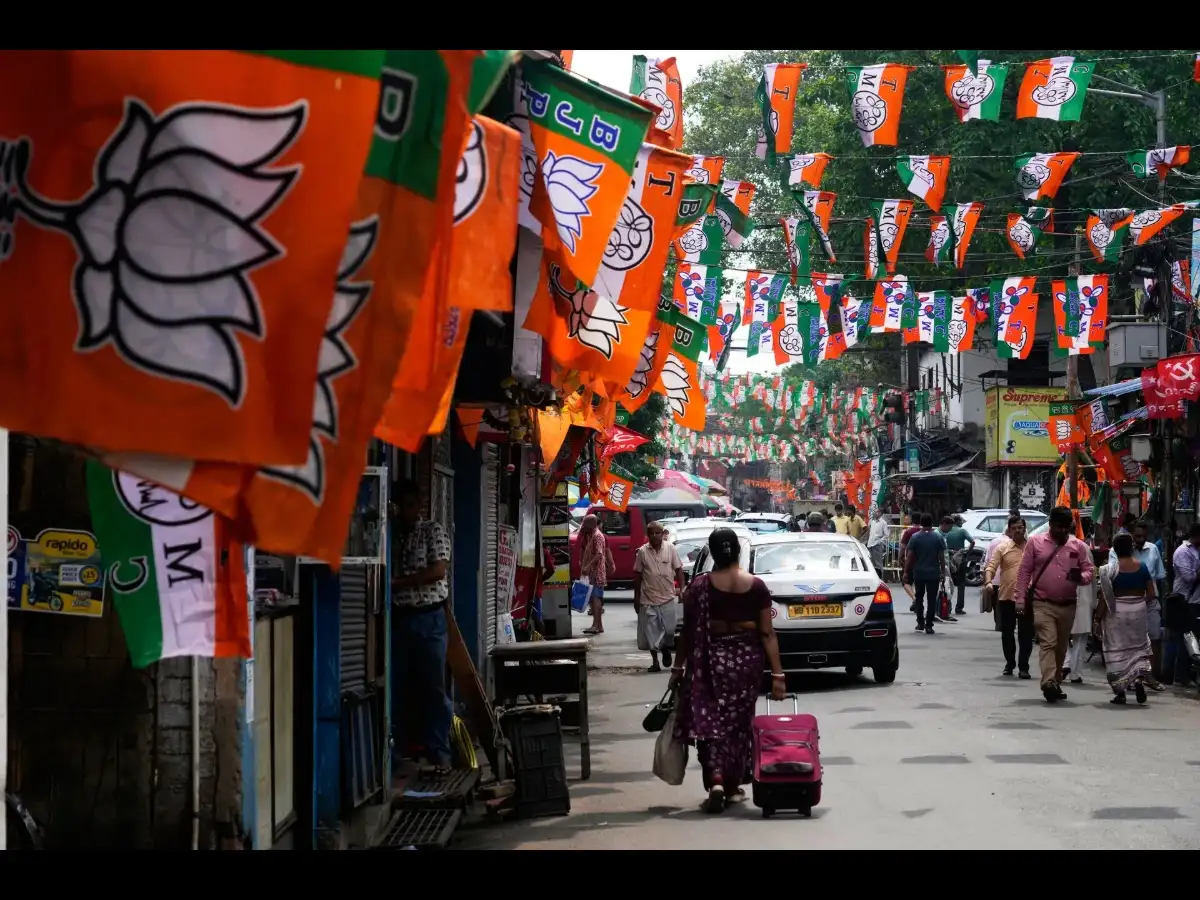
Electoral upsets--like the stunning debut of TVK in Tamil Nadu--and spectacular results--like BJP’s victory in West Bengal--have become more frequent in Indian state politics. This time, however, as an electoral analyst and political scientist, I find myself unable to analyse these results as I would normally do.
To be sure, votes have been counted, seats allocated, and winners have claimed their mandates. But the results cannot be properly interpreted, due to the mishandling of electoral rolls and conditions under which the special intensive revision (SIR) was conducted.
This is especially the case in West Bengal, where SIR altered the composition of the electorate to such an extent that millions of citizens were deprived of their voting rights, in ways that systematically disadvantaged specific communities, geographies, and parties.
To be very clear, there is no direct, incontrovertible evidence that EC designed SIR with the intention of producing an electoral advantage for BJP. What we have is an accumulation of indicative evidence that, in aggregate, is deeply troubling.
SIR was launched at speed, on a timeline that left no room for adequate safeguards, with no justification offered for the sudden necessity of a drastic overhaul after two decades of routine maintenance of electoral rolls. The door-to-door enumeration process penalised migrant workers, seasonal labourers, and others who were not at home when officials knocked. In Bengal, deletions were concentrated in opposition strongholds, affecting more Muslim and urban voters, through an undisclosed algorithm that produced mass erroneous deletions among Indian citizens.
The figures are damning. Around 91 lakh voters were removed from West Bengal's electoral roll: 63 lakh marked as absent, shifted, deceased or duplicate; a further 27 lakh deleted due to ‘logical discrepancies’--a category created specifically for this state. Of 34.35 lakh appeals filed, only 1,607 names were restored--fewer than 0.05%.
This contrasts with Kerala, where over 98% of flagged voters were restored through a claims process that actually worked.
In Tamil Nadu, the picture is less clear-cut than in West Bengal. Nearly 50 lakh voters were removed from just eight districts falling under the Chennai and Tiruppur clusters, both DMK strongholds. These account for over 50% of total deletions statewide. In Chennai city alone, 35% of registered voters were removed from the list, a deletion rate that cannot be easily explained by administrative inaccuracy. That said, there is no evidence that specific communities or party supporters were targeted.
The question remains: why did the correction mechanism work in Kerala, but not in Tamil Nadu and West Bengal? Why was Assam, the only BJP-governed state among those subject to SIR, exempted from the mass deletion exercise applied to opposition-ruled states, and subjected to a lighter treatment?
The scale across states is impossible to justify on administrative grounds alone. These are not coincidences that democratic institutions can afford to leave unexplained. EC’s selective enforcement of the Model Code of Conduct-- swift against the opposition, lenient, at best toward BJP--only deepens the suspicion that the custodian of India's electoral process is no longer independent or impartial.
Electoral analysis—and, indeed, democratic integrity--rests on a foundational assumption: that the electorate that voted is, within tolerable margins, the electorate that was supposed to vote. That assumption has been broken, nowhere more severely than in West Bengal. Any swing calculation, any seat-wise reading, any statement about what the people of Bengal wanted is, at best, incomplete and at worst, meaningless.
We can count the votes that were cast. We cannot recover the votes that were never allowed to be cast.
The tragedy is that these elections are not meaningless for voters who could have participated in them. Nor for those who did. Clearly, the upheaval in Tamil Nadu cannot be explained solely by alterations to the electoral roll. Clearly, targeted communal polarisation accounts for much of the BJP’s performance in Assam and West Bengal, among other factors.
But EC’s interference in these elections has muddied the waters and precludes any clear analysis of how people voted.
This is not a lightly-made statement. So, to be clear, this article is not saying that TMC would necessarily have won the election had SIR not been conducted, or had it been conducted differently. After all, party chief and chief minister Mamata Banerjee was contending with 15 years of incumbency, widespread allegations of corruption, and an economy that has not kept pace with its peers.
What this article points out is that one cannot know what the results would have been without EC’s interference with the voter lists, and that this alone is sufficient to cast doubt on the legitimacy of this election.
Legitimacy rests not on results, but on the integrity of the process that produced the count. India has held elections for 75 years and survived disputed counts, electoral boycotts, and accusations of fraud and manipulation. What it has never faced, at least at this scale, is the systematic reengineering of who gets to participate before a single ballot is cast. Until there is a full, independent accounting of how SIR was conducted, these results will carry an asterisk that no victory speech can remove.
The writer is a political scientist at CERI, Sciences Po Paris