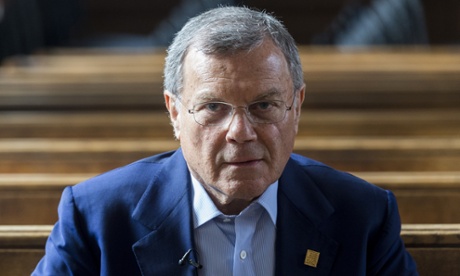
Sir Martin Sorrell has waded into the debate about the future of the BBC, arguing that the licence fee funding mechanism should “maybe change over time”.
The WPP chief executive said that he has “sympathy” with those who argue about the competitive advantage the BBC has over commercial rivals receiving £3.5bn in licence fee funding annually.
“The BBC is a very fine institution but I have some sympathy with some things you hear,” he said, speaking at the a Broadcasting Press Guild breakfast on Wednesday. “Even us together, all of us, if we were paid £3.5bn up front on 1 January [each year] in cash we could build great offline and online brands. Clearly it’s an approach which is immensely advantaged and maybe it should change over time.”
Sorrell was asked if ideas such as opening up the licence fee for potential uses such as funding programmes that would air on rival broadcasters should be considered.
“Maybe, it is one of the alternatives [of licence fee use],” he said. “The BBC is in a strong position, you might even say privileged position. I don’t know what the right way to deal with it is, I don’t know how any inquiry [or] review will turn out. But when you think about it logically for a minute, to receive that amount of public money in that way obviously it is a tremendous opportunity but it imposes tremendous responsibilities on the people who receive it.”
Sorrell was also asked whether if Jeremy Clarkson leaves the BBC he is likely to be considered hireable by commercial rivals.
“He has a tremendous following,” he said. “This is the problem of the incumbent [the BBC]. In any situation an incumbent views it differently to a challenger. A challenger is prepared to take more risk. Honestly, yes, someone will come [and hire Clarkson] whether that is Netflix, ITV or Sky, and maybe have a clause in his contract that attempts to deal with the issue. For the incumbent it is very difficult [to keep him].”