In the 1950s, ad legend Bill Bernbach said that communicators must focus on the “unchanging man”. Human nature hasn’t changed for a million years, he said: “It won’t even change in the next million years. Only the superficial things have changed.”
However, we believe that not even the King of Madison Avenue, as he was known, could have predicted the nature and pace of change heralded by this age of information.
With the seismic shifts of the web, social media and mobile – and the levels of messaging they have ushered into both our work and social lives – questions have arisen on the implications for people and marketing communications:
- Does technology allow us to multi-task more efficiently, or divide our attention detrimentally across multiple digital devices?
- Does technology allow us to communicate more effectively, or is it addicting us to high-frequency, shallow interactions, undermining our long-term memory?
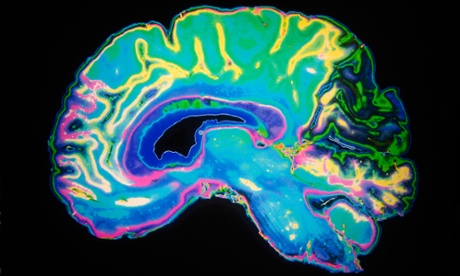
Existing neuroscience tells us that every new stimulus physically rewires our brain connections, via a process known as neuroplasticity. We at HeyHuman set out to explore the serious questions this raises for marketing in the context of the digital age.
- What is the deluge of digital messaging doing to our heads? What does this mean for attention spans, comprehension and brand recall?
- How must brands change their messaging to cut through in this complex context?
- Is the digital age an opportunity for brands to enrich communications, or should their focus be on making communication easy?
We commissioned pilot research run by expert neuroscience partners to find out what happens to people’s brains while they are multi-tasking: simultaneously using a TV, laptop and mobile device.
Through a combination of neuro and biometric sensors, we found that when people think they are multi-tasking, they are in fact task-switching. This is key, because task-switching divides our attention and has a comprehension cost every time we switch from one thing to another. It also has implications for long-term memory.
Our four key findings included:
- People max out their attention span (or “cognitive load”) while task-switching
- Distraction increases as stimuli increases
- Emotional engagement decreases as people do more simultaneously
- Brand recall diminishes
What our study suggests is that the brain’s capability to be “plastic” – to rewire in response to stimuli – is being outpaced by the tech-driven growth in messaging. If we think of an “economy of attention”, the demands of messaging are currently outstripping cerebral supply. While we think we are being productive, actually we are getting caught in a self-amplifying loop of shallow, repetitive interactions that make us less attentive, less emotionally engaged and only partially able to recall brand communications.
Bill Bernbach’s perspective of the “unchanging man” challenges us with the notion that technology and digital media merely represent new ways to communicate. However, the digital age represents more than that – our industry needs to communicate in new ways.
While the natural tendency for brands is to see digital media as an opportunity to enrich the brand experience, our research suggests that simplicity is key. Since our conscious cognition is overloaded with information – and we can’t wait for the brain to evolve – we need to give it a helping hand by making messaging easy to process.
This has three top-line implications for brands:
- Nudge the non-conscious: with the conscious channel of cognition overloaded, we need to think about “brand priming” through non-conscious use of key brand assets
- Surprise people with simplicity: synchronise brand experiences across touchpoints, or resort to classic mnemonic methods such as rhyming
- Conquer context: by understanding when, where and in what mindset people will receive your messages – ads not just at that moment, but for that moment
The clear mission for brands in this increasingly challenging context? Make communications easy again.
Our opinion at HeyHuman has changed somewhat. We have to concede that Bernbach was right – to an extent: the “unchanging man” remains immovable at the heart of this messaging maelstrom. However, with the digital revolution, the communications context has completely changed, so brands must change too. They must once again become the calm cognitive port for people in the communications storm.
Dan Machen is director of innovation and Felix Morgan is innovator at HeyHuman
This advertisement feature is brought to you by the Marketing Agencies Association, sponsors of the Guardian Media Network’s Agencies hub