If single parents have to isolate themselves due to the coronavirus, who will take care of their children? Facilities are needed for that purpose.
In Tokyo, where many infections clusters are known to have occurred at home, experts call for local governments to cooperate in building systems for accepting such family members.
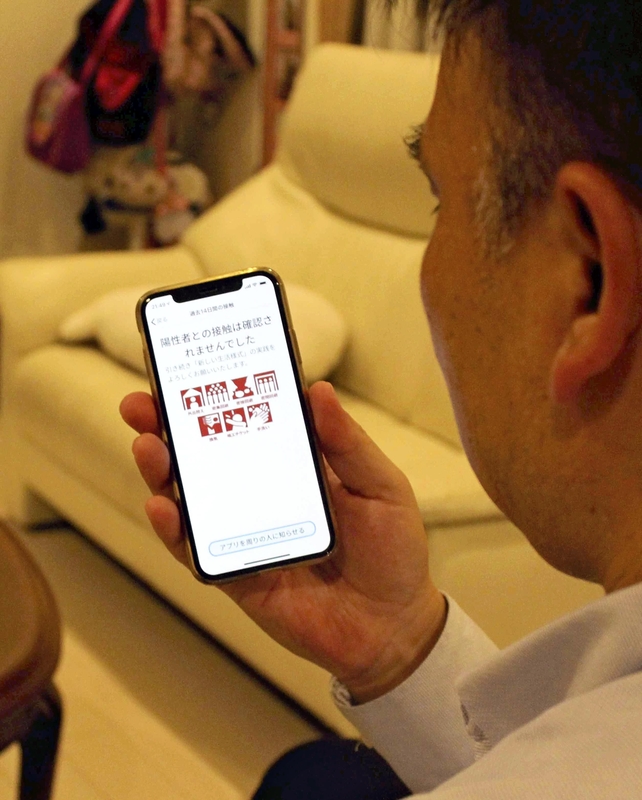
A 52-year-old company employee living in Saitama City was informed via the COVID-19 Contact Confirming Application (COCOA) on his smartphone in mid-August that he had been in contact with a person who tested positive for the virus.
The man is raising two daughters, aged 6 and 4, on his own. As he had no symptoms, he did not undergo an infection test but was told by his company to work at home for two weeks. He had no relatives living nearby whom he could ask to look after the children, nor did he know of any facilities he could count on enough to put his daughters in their care.
When two weeks had passed since he was notified of his contact with the infected patient, he had not shown any symptoms to indicate he had been infected, nor did his daughters show any change in their physical condition. But he said, "Even if I had been infected, there would be no other way but for the three of us to confine ourselves at home, as things stand now."
Hitorioya Shien Kyokai, a general incorporated body based in Osaka that supports single parents, said it had received many requests from single parents seeking advice over situations like the one faced by the man in Saitama.
In one such case, an infected single mother in Osaka Prefecture sent her son to be taken care of by his grandparents at their home, while the woman recuperated at home by herself.
Tomohiro Imai, 33, chief director at the association, said, "Most single parents have been feeling anxious about [the possibility of] being infected."
-- Holing up at hotels
Hotels and similar facilities have commonly been used as places where asymptomatic patients and those with mild symptoms can be isolated to recuperate at the expense of local governments, but arrangements for housing such patients' dependent family members have varied.
The municipal government of Minato Ward, Tokyo, has rented all 20 rooms on one floor of a hotel in the ward and developed a system for accepting guests younger than 18 around the clock if their parents have been hospitalized due to infection.
Staff from a private contractor who are qualified as childcare workers are stationed at the hotel to take care of the children in terms of eating meals and changing clothes and so on. But, as an official in charge at the Minato Ward office put it, "Many parents feel some misgivings about living separately from their children," so there have been many vacancies since the hotel rooms were rented in April.
Meanwhile, the Tokyo metropolitan government has not set up any facilities to take in children of infected parents. Local health centers deal with such cases individually upon requests from parents, asking medical institutions where the parents are hospitalized to also take in their children. The metropolitan government, since November, has given subsidies of up to 10 million yen per case to local governments of wards, cities, towns and villages for arranging facilities to take care of such children.
Prof. Masakazu Shirasawa of the International University of Health and Welfare, a scholar on the study of social welfare, said: "If arranging facilities where dependent family members of infected parents can stay is left entirely up to municipal governments, regional discrepancies may arise. Tokyo and other prefectural governments have to estimate the number of such facilities needed by each area of a certain size and then coordinate cooperation among municipal governments of wards, cities, towns and villages, so that family members of infected patients within their area can be accepted."
Read more from The Japan News at https://japannews.yomiuri.co.jp/