Singing frog and 'walking' catfish among 126 new species discovered in Mekong basin – in pictures
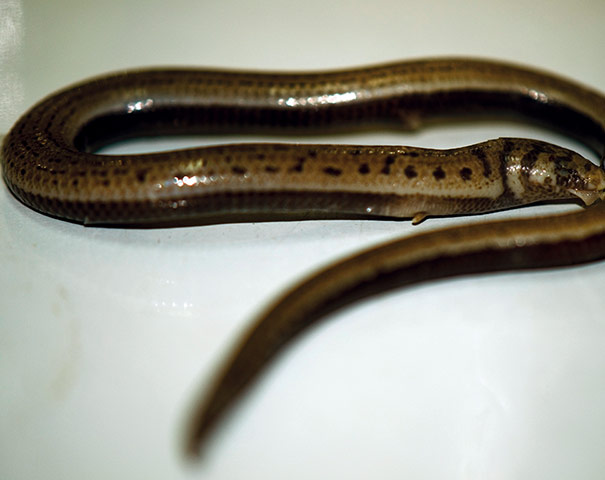
A stunning yin-yang frog (Leptobrachium leucops), one of five new amphibian species discovered in the region. These measure between 3.8-4.5cm and are known only at elevations 1,558–1,900m above sea level in wet evergreen and cloud forest habitats. Its striking black and white eyes are unique in the genusPhotograph: Jodi J. L. Rowley/Australian Museum./WWFTwo-legged lizard (Jarujinia bipedalis). This extraordinary two-legged skink was discovered in Suan Pung district, Ratchaburi province in central Thailand. It is the first skink (and only the second species of terrestrial reptile in the world) to have forelimbs but no hind limbPhotograph: Michael Cota/WWFBeelzebub’s tube-nosed bat (Murina beelzebub). One of three new Murina bat species, discovered in Bac Huong Hoa nature reserve, Quang Tri province, Vietnam. It depends on tropical forest for survival, but its habitats face severe threats from human pressuresPhotograph: Gabor Csorba/WWF
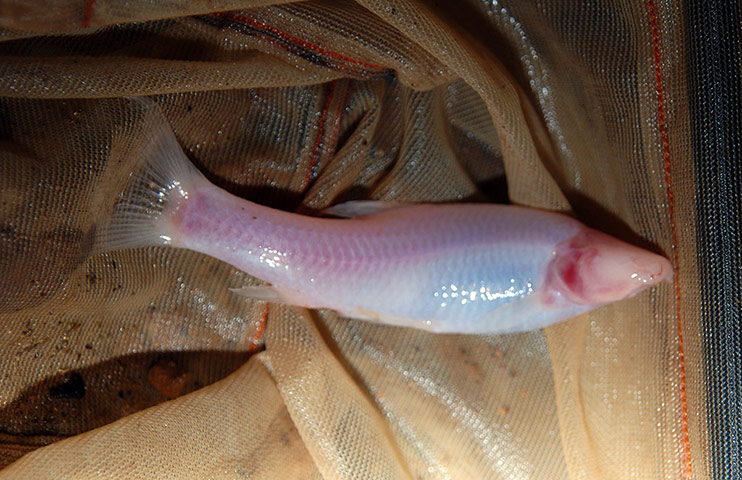
Thick-spiked coelogyne orchid (Coelogyne pachystachya). Despite its thorny name, this organism is pure white, elegant and majestic. It is native to Thailand Photograph: John Varigos/WWFPygmy python (Python kyaiktiyo). This 1.5m-long python was found in a small dry streambed in the Kyaiktiyo wildlife sanctuary in Burma. Its mountainous habitat, straddling the Thai-Burmese border, is known as the Dawna-Tenasserim landscape and is one of the highest priority conservation areas in the world for tigers and Asian elephants. Given the high value of pythons on the international pet market, and the beauty and rarity of this new species, Python kyaiktiyo is very likely to be at immediate riskPhotograph: George Zug, Division of Amphibians & Reptiles, National Museum of Natural History-Smithsonian/WWFBoraras naevus, a dazzling new miniature fish recently discovered 83km north of Surat Thani in southern Thailand. Measuring just 15–20mm, the species has been recorded at several spots within the lower Tapi river catchment. The fish is named after the large blotch on its body (the Latin "naevus" means "blemish")Photograph: Peter Maguire/WWFRuby-eyed pit viper (Trimeresurus rubeus). A new species of snake called the ruby-eyed green pit viper (Trimeresurus rubeus) has been discovered in forests near Ho Chi Minh City. Vietnam’s Cat Tien national park is a stronghold for the Trimeresurus rubeus, which inhabits a rather small geographic rangePhotograph: Peter Paul van Dijk/Darwin Initiative/WWFBangana musaei. A subterranean blind fish from the carp family, measuring 7.7cm, this species was found in the Xe Bangfai catchment, a Mekong tributary in central Laos that runs 7km underground through limestonePhotograph: Helmut Steiner/WWFA sweet singing frog, called Gracixalus quangi. While most male frogs attract females with repetitive croaks, Quang’s tree frog spins a new tune each time. No two calls are the same, and each individual mixes clicks, whistles and chirps in a unique order. It was discovered in the high-altitude forests of northern VietnamPhotograph: Jodi J. L. Rowley/Australian Museum/WWFA vibrant, iridescent blue skink, the Larutia nubisilvicolaPhotograph: Michael Cota/WWFWalking catfish (Clarias gracilentus). This species lives in freshwater streams on the island of Phu Quoc off the Mekong Delta province of Kien Giang. While it does not truly walk, Clarias gracilentus has the ability to use its pectoral fins to stay upright while it wiggles forward with snake-like movementsPhotograph: Ng Heok Hee/WWFThe Theloderma palliatum, a species of frog discovered in VietnamPhotograph: Jodi J. L. Rowley/WWF
Sign up to read this article
Read news from 100's of titles, curated specifically for you.