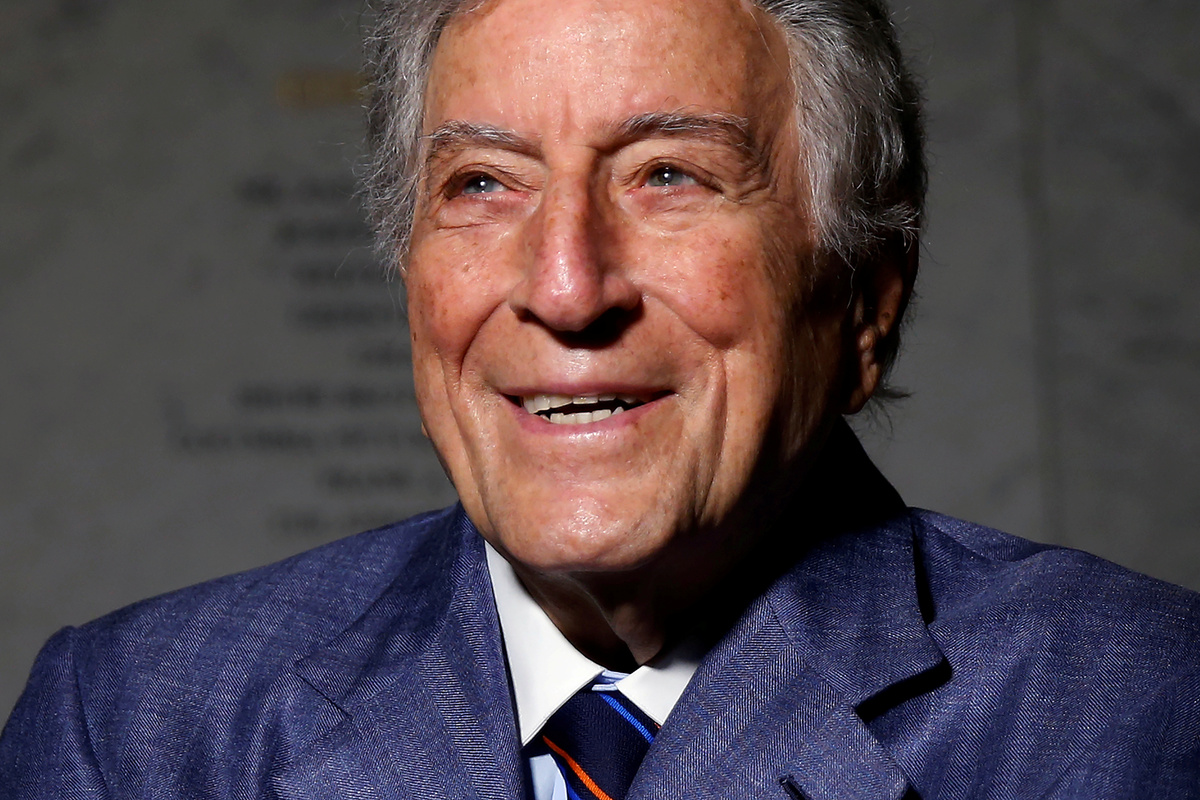
The family of Tony Bennett has revealed that the legendary singer has been suffering from Alzheimer's disease, breaking their silence on his condition four years after he was diagnosed.
His wife, Susan, told AARP Magazine in an interview published on Monday that the 94-year-old singer, best known for the ballad "I Left My Heart in San Francisco," had been losing his ability to make decisions.
Despite the diagnosis in 2016, Bennett recorded a new album with Lady Gaga that is expected to be released later this year, the magazine and Bennett's publicist said.
The album, a follow-up to their 2014 collaboration "Cheek to Cheek," was recorded between 2018 and 2020. AARP magazine said raw documentary footage of the sessions showed Gaga at one point when Bennett, in good voice but at times seeming lost and bewildered, sang the solo passage of a love song.
"Gaga looks on, from behind her mic, her smile breaking into a quiver, her eyes brimming, before she puts her hands over her face and sobs," the magazine said.
Bennett, an 18-time Grammy Award winner who started his career in the 1950s, remains upbeat but his condition is increasingly deteriorating, his wife said.
"He would ask me, 'What is Alzheimer's?' I would explain, but he wouldn't get it," his wife told AARP Magazine.
Gayatri Devi, a neurologist at Lenox Hill Hospital in Manhattan, diagnosed Bennett in 2016.
Devi has strongly encouraged Bennett's family to keep him singing and performing for as long as he can enjoy it.
The fatal disease causes a decline in memory, thinking and reasoning skills, according to the Alzheimer's Association.
Bennett so far has been spared the disorientation that can sometimes prompt patients to wander from home or experience terror, rage or depression, the magazine article said.
"He might never develop these symptoms. But there was little doubt that the disease had progressed. Even his increasingly rare moments of clarity and awareness reveal the depths of his debility," the magazine said.
(Reporting by Barbara Goldberg in New York; Editing by Bernadette Baum and Bill Berkrot)