Of the 187 LDP candidates who won their single-seat constituency in Sunday's House of Representatives election, 34 of them prevailed by margins of less than five percentage points.
This was twice as many as the 17 narrow winners in the 2012 election. In the 2014 election, there were 22, going up to 27 in the previous general election in 2017.
In Sunday's election, there were also 28 opposition party candidates who won with the same narrow margin.
The LDP seemed to have managed to just barely win more one-on-one battles against a candidate backed five-party opposition parties that agreed on a single candidate to field in the bulk of single-seat constituencies.
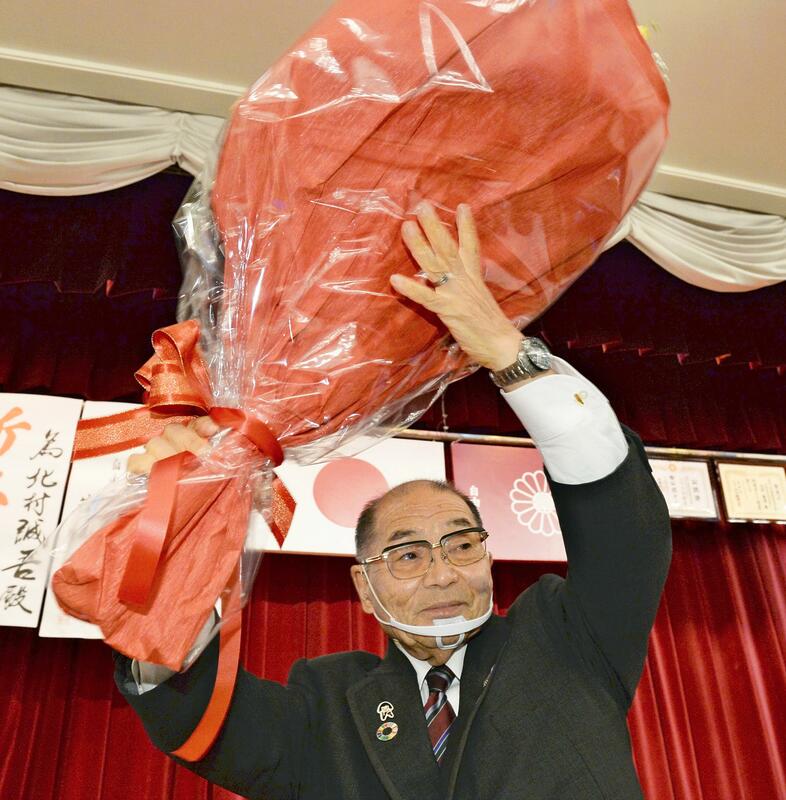
The narrowest victory for the LDP was by 391 votes in Nagasaki Constituency No. 4. Seigo Kitamura, 74, who had once been minister of state for regional revitalization, defeated a never-before-elected Constitutional Democratic Party of Japan candidate by 0.3 percentage points.
"During the campaign, I was anxious and had no idea what was going to happen," Kitamura said early Monday morning after he was declared the victor. "I'm so full of emotion."
Of the 34 narrow LDP victors, 33 were pitted against a candidate fielded by the five opposition parties, leading a senior LDP official to admit that the opposition's strategy had a certain effect.
In the 62 constituencies decided by less than five percentage points, the LDP's record was 34-28. In Hokkaido, where the opposition parties are strong, the CDPJ had a 3-2 record in close battles, and in Tokyo with its many independents, the CDPJ was 5-3. On the other hand, in Aichi Prefecture, where labor unions have strong influence on voting, the LDP had a 4-0 record, and in Nagano Prefecture, where the CDPJ have built a strong base, the LDP was 2-0. Even in Okinawa Prefecture, the LDP was 1-1.
"The figures show that our party used up all its strength to win in close constituencies," said Hiroshige Seko, secretary general for the LDP in the House of Councillors.
Overall, 59 LDP candidates won by a margin of less than 10 percentage points. If they had all lost, the LDP would not have secured a single-party majority of 233 seats.
Since the LDP returned to power in 2012, the number of LDP candidates who won by a margin of more than 10 percentage points has been on the decline, from 188 that year to 128 in Sunday's election.
Public opinion tends to have a strong influence on single-seat constituencies.
"We must manage the government even more seriously than before," a member of Prime Minister Fumio Kishida's Cabinet said.
Read more from The Japan News at https://japannews.yomiuri.co.jp/