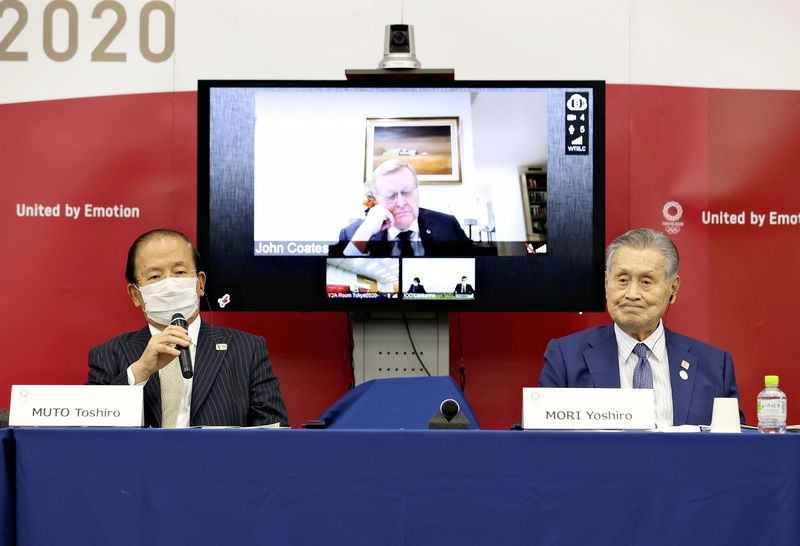
Although the Tokyo Organizing Committee of the Olympic and Paralympic Games has been negotiating with the International Olympic Committee (IOC) over the simplification of the Games since April -- when it was decided the Games would be postponed -- their discussions revealed the difficulty of simplification. Of about 200 proposals made by both sides, only 52 proposals were found to be effective in cost cutting.
During negotiations, the organizing committee was also busy deciding venues and dates due to the postponement of the Games, the first such case in the Games' history.
By the end of last year, costs for the Tokyo Games had been cut by about 470 billion yen (4.45 billion dollars) by promoting the use of existing venues in line with the IOC's policy of cutting costs.
Cutting costs further was like "wringing out a dry rag," according to a senior member of the organizing committee. However, for the latest review, reducing the level of services provided for those involved in the Games, including IOC members, reducing decorations at venues, and other cost-cutting measures that were thought to be difficult for the Games in the past were on the agenda.
Nevertheless, drastic cost-cutting plans were not easy to adopt. There was also talk of holding the opening and closing ceremonies of the Olympics and Paralympics together, in addition to shortening the time for the ceremonies, but these proposals failed to gain the support of the IOC and the broadcasting rights holders.
For the torch relay, delaying the start in order to allow more time to take measures against the coronavirus and shortening the schedule were also on the agenda. However, the number of days (121 days), the route and the number of runners (more than 10,000 runners) will be kept as initially scheduled in consideration of the wishes of prefectures, which worked for a long time to arrange the event.
"It's inappropriate to simply scrap [the plan]," said Toshiro Muto, chief executive officer of the organizing committee.
However, the organizing committee plans to continue its efforts to simplify the Games until its opening, as some costs could be reduced by avoiding extravagant displays in the opening and closing ceremonies and through other measures.
Read more from The Japan News at https://japannews.yomiuri.co.jp/