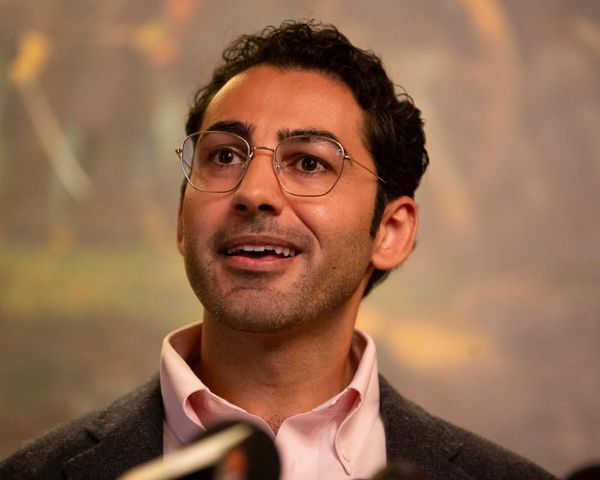
Kerala’s semi-high-speed SilverLine rail project will have a huge negative impact on the coastal environment that is already under tremendous stress, C.P. Rajendran, geoscientist and Adjunct Professor, National Institute of Advanced Studies, Bengaluru, has said.
“The rail track costing a whopping ₹120 crore a km, at the current estimate, cuts through many of the State’s fragile ecosystems, including wetlands, backwater regions, and paddy fields of the coastal Kerala. Such linear infrastructure projects are not suitable for the State, with its high density of population and least availability of land. It will impose additional pressure on the system’s carrying capacity,” he told The Hindu on Wednesday.
Stating that the soil would have to be compacted and excavated to erect embankments during construction, Prof. Rajendran said the sediment eroded from rail embankments will clog the waterways and affect the vegetation.
“The railway will have to be raised over many long stretches of low-lying land requiring numerous underpasses to be constructed, leading to the erosion and siltation of water sources. As the lower reaches of the rivers will be blocked or restricted, the future flood scenarios will be much worse. Further, this project will generate huge demand of stone and sand from the traditional sources in the Western Ghats and rivers, which is likely to spill over to the neighbouring States of Tamil Nadu and Karnataka,” he said.
Referring to Chief Minister Pinarayi Vijayan’s view that those who are against the project are also against the State’s development, Prof. Rajendran said that such arguments would not hold good for Kerala, considering its social and geographical setting.
“Why not work towards tapping the potential in green technology that will need only a minute fraction of the proposed investment on a dated semi-high-speed transportation technology. When pitted against the juggernaut of powerful egos abetted by the State machinery, we have seen how the environmental and social causes get crushed under its wheels, not just in Kerala but elsewhere in the country, despite all the grand standing one has seen in Glasgow,” he said.
.jpg?w=600)