Get all your news in one place.
100’s of premium titles.
One app.
Start reading
Reuters
Reuters
Business
Stephen Nellis

Silicon Valley startup peddles 3D-printed bike

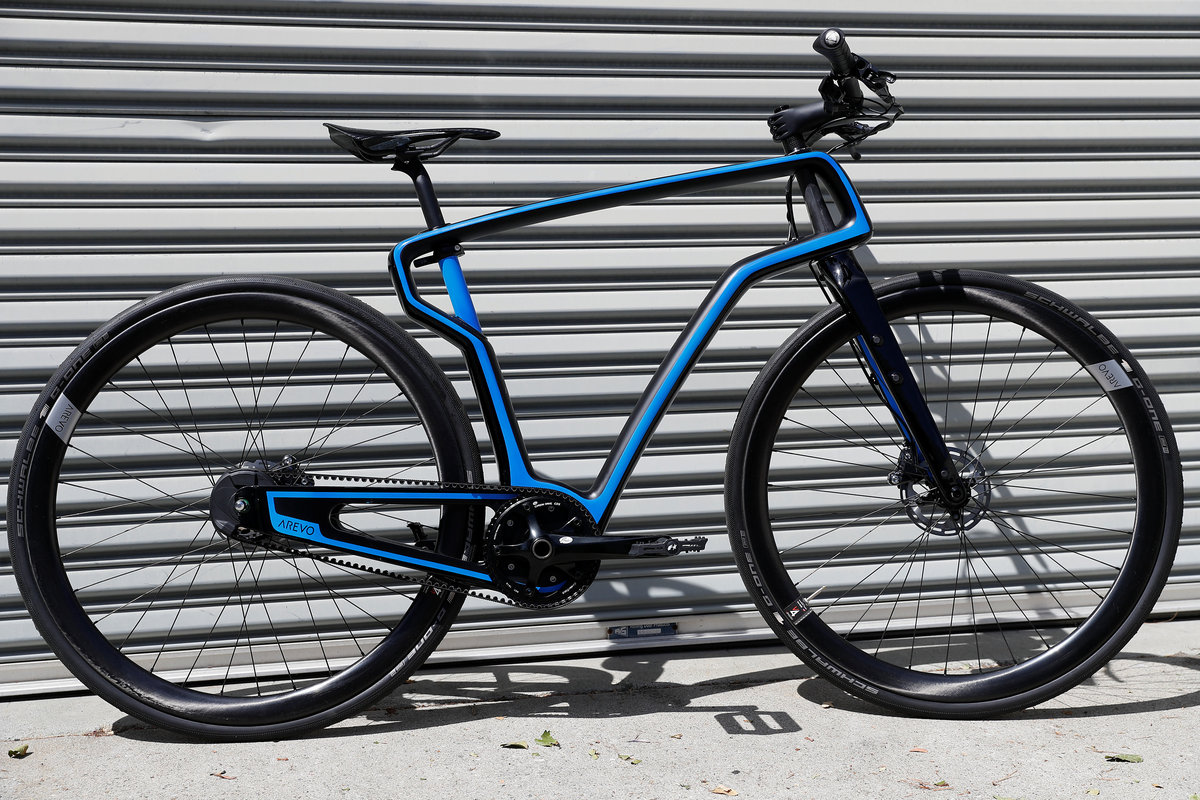
A 3D-printed carbon fiber commuter bicycle by Arevo Labs is seen in Santa Clara, California, May 10, 2018. REUTERS/ Stephen Lam

(Reuters) - After a career that included helping Alphabet Inc's Google build out data centers and speeding packages for Amazon.com Inc to customers, Jim Miller is doing what many Silicon Valley executives do after stints at big companies: finding more time to ride his bike.

But this bike is a little different. Arevo Inc, a startup with backing from the venture capital arm of the Central Intelligence Agency and where Miller recently took the helm, has produced what it says is the world's first carbon fiber bicycle with 3D-printed frame.
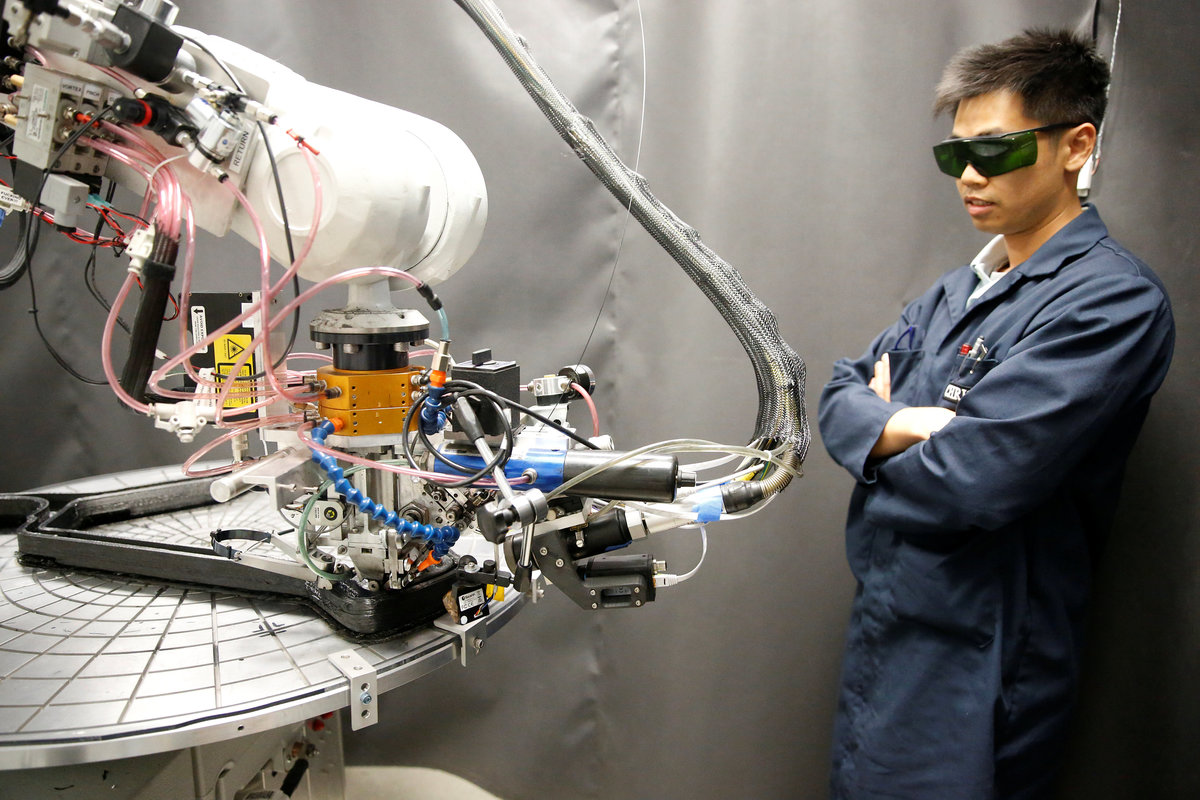
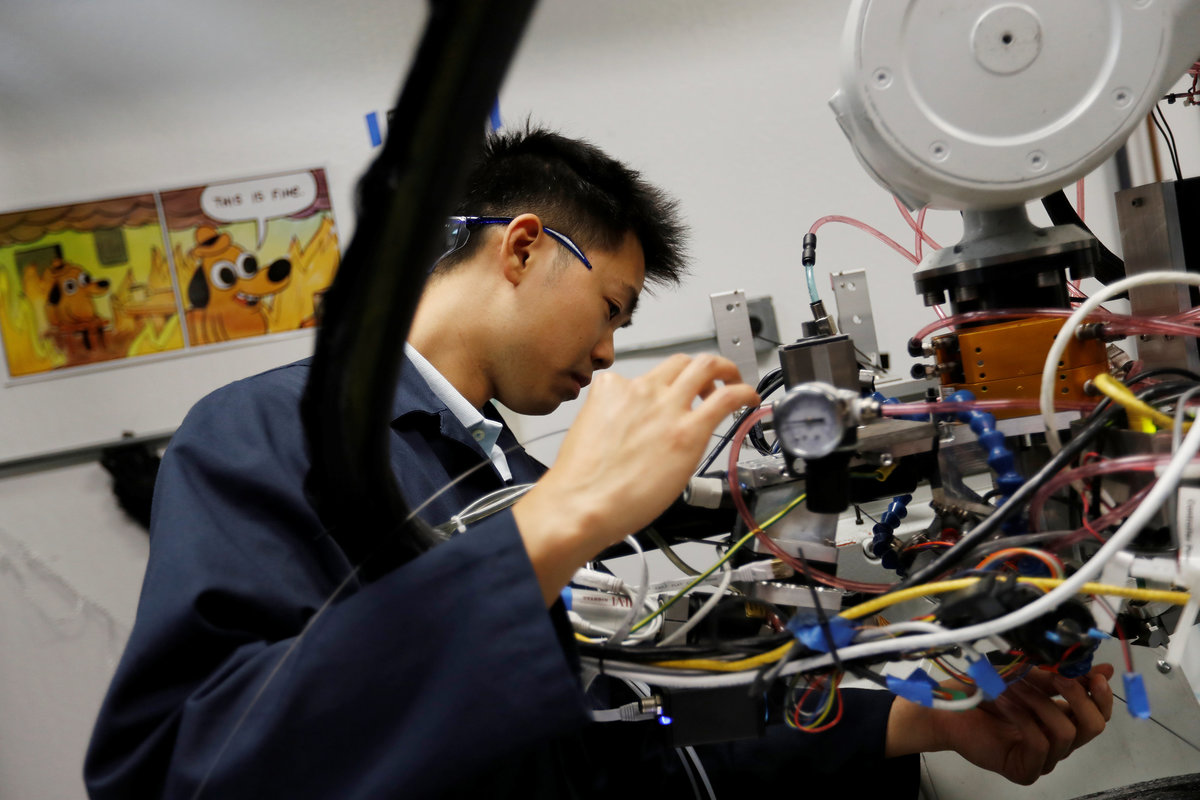
Chris Lee, an engineer at Arevo Labs, watches a 3D-printing robot print a bicycle frame in Santa Clara, California, May 10, 2018. REUTERS/ Stephen Lam

Arevo is using the bike to demonstrate its design software and printing technology, which it hopes to use to produce parts for bicycles, aircraft, space vehicles and other applications where designers prize the strength and lightness of so-called "composite" carbon fiber parts but are put off by the high-cost and labor-intensive process of making them.

Arevo on Thursday raised $12.5 million in venture funding from a unit of Japan's Asahi Glass Co Ltd, Sumitomo Corp's Sumitomo Corp of the Americas and Leslie Ventures. Previously, the company raised $7 million from Khosla Ventures, which also took part in Thursday's funding, and an undisclosed sum from In-Q-Tel, the venture capital fund backed by the CIA.

Traditional carbon fiber bikes are expensive because workers lay individual layers of carbon fiber impregnated with resin around a mold of the frame by hand. The frame then gets baked in an oven to melt the resin and bind the carbon fiber sheets together.
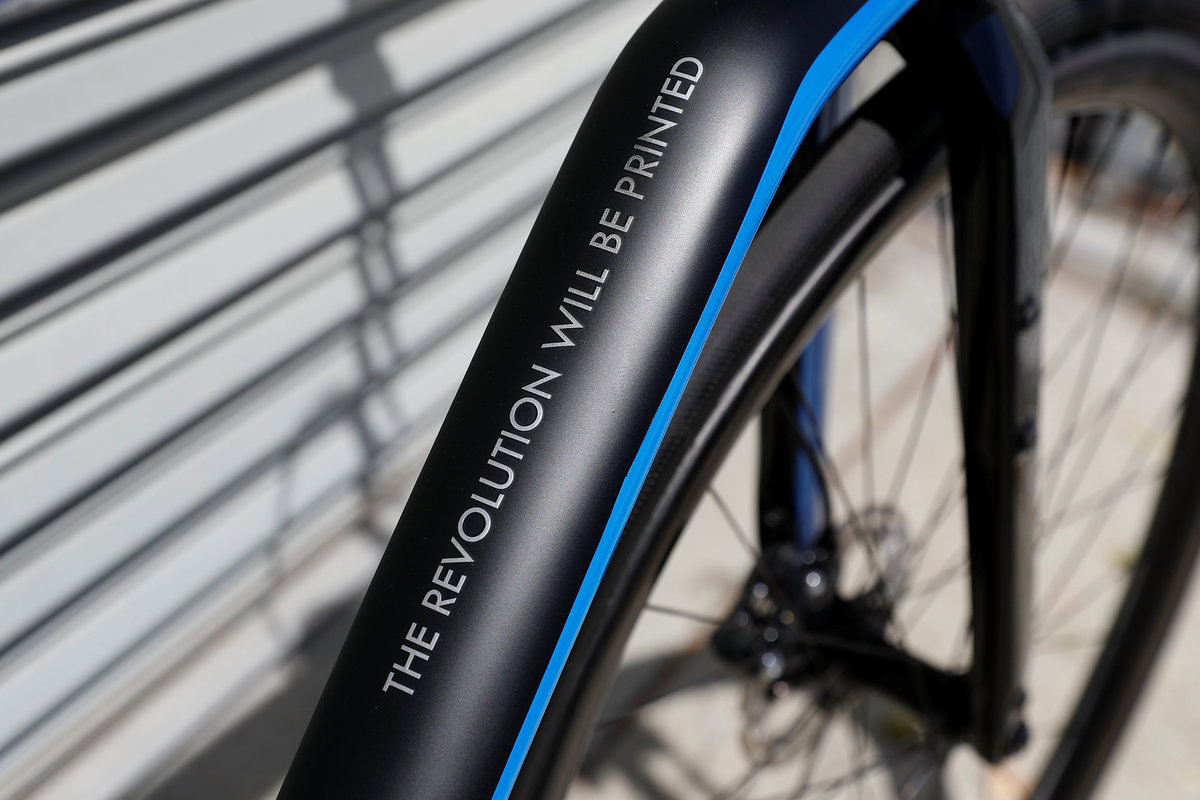
A 3D-printed carbon fiber commuter bicycle by Arevo Labs is seen in Santa Clara, California, May 10, 2018. Picture taken May 10, 2018. REUTERS/ Stephen Lam

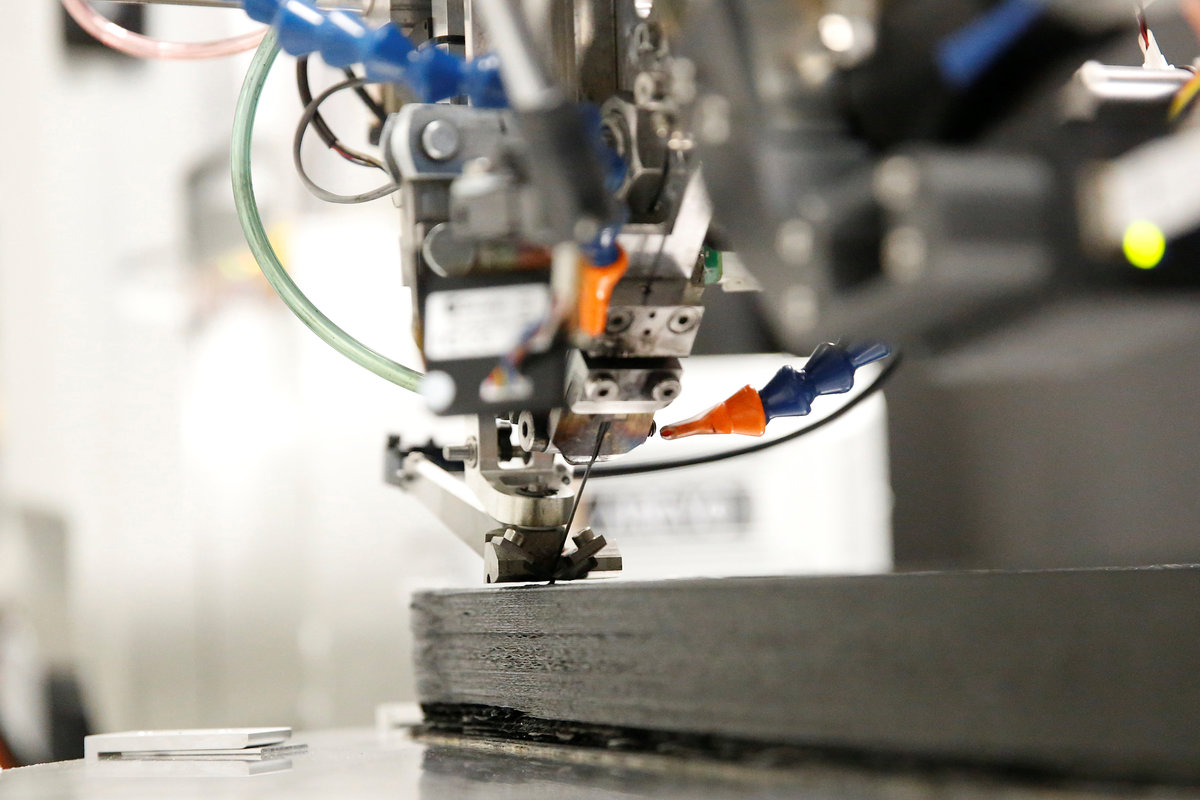
Arevo's technology uses a "deposition head" mounted on a robotic arm to print out the three-dimensional shape of the bicycle frame. The head lays down strands of carbon fiber and melts a thermoplastic material to bind the strands, all in one step.

The process involves almost no human labor, allowing Arevo to build bicycle frames for $300 in costs, even in pricey Silicon Valley.

"We're right in line with what it costs to build a bicycle frame in Asia," Miller said. "Because the labor costs are so much lower, we can re-shore the manufacturing of composites."
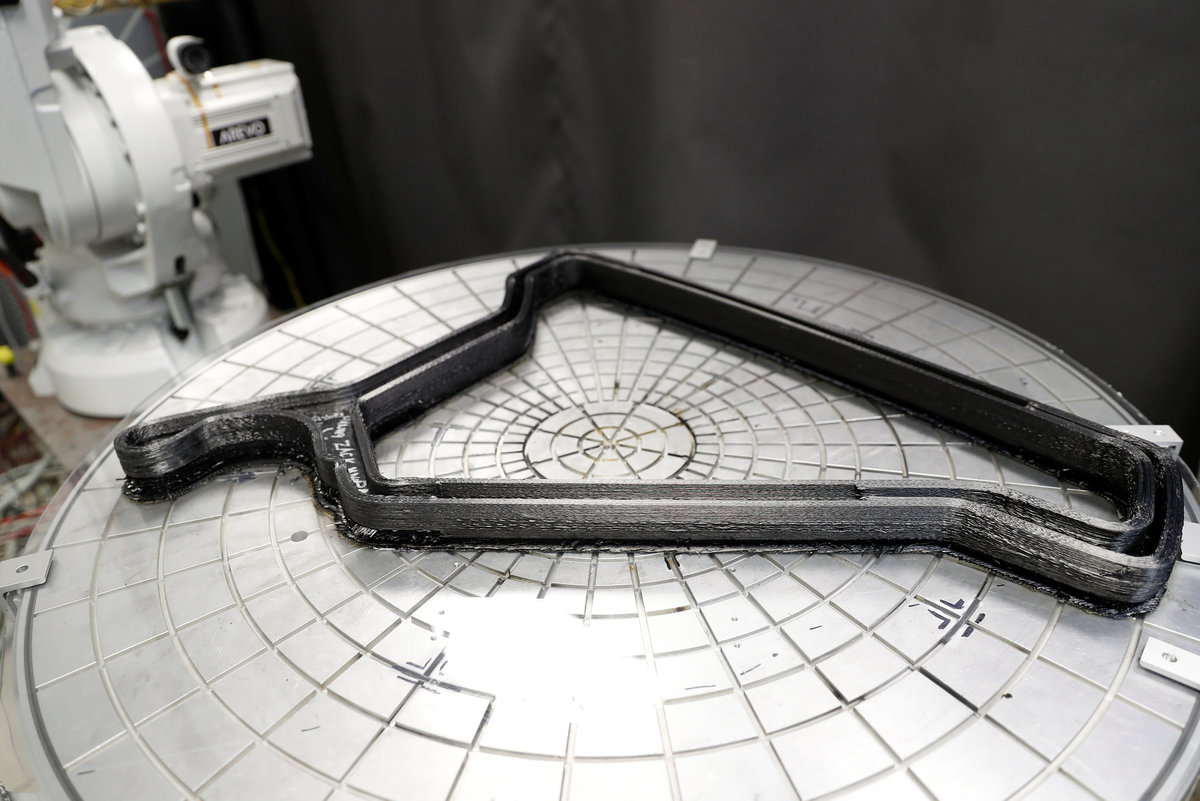
A 3D-printed carbon fiber bicycle frame is seen as it is being printed at Arevo Labs in Santa Clara, California, May 10, 2018. REUTERS/ Stephen Lam

While Miller said Arevo is in talks with several bike manufacturers, the company eventually hopes to supply aerospace parts. Arevo's printing head could run along rails to print larger parts and would avoid the need to build huge ovens to bake them in.

"We can print as big as you want - the fuselage of an aircraft, the wing of an aircraft," Miller said.
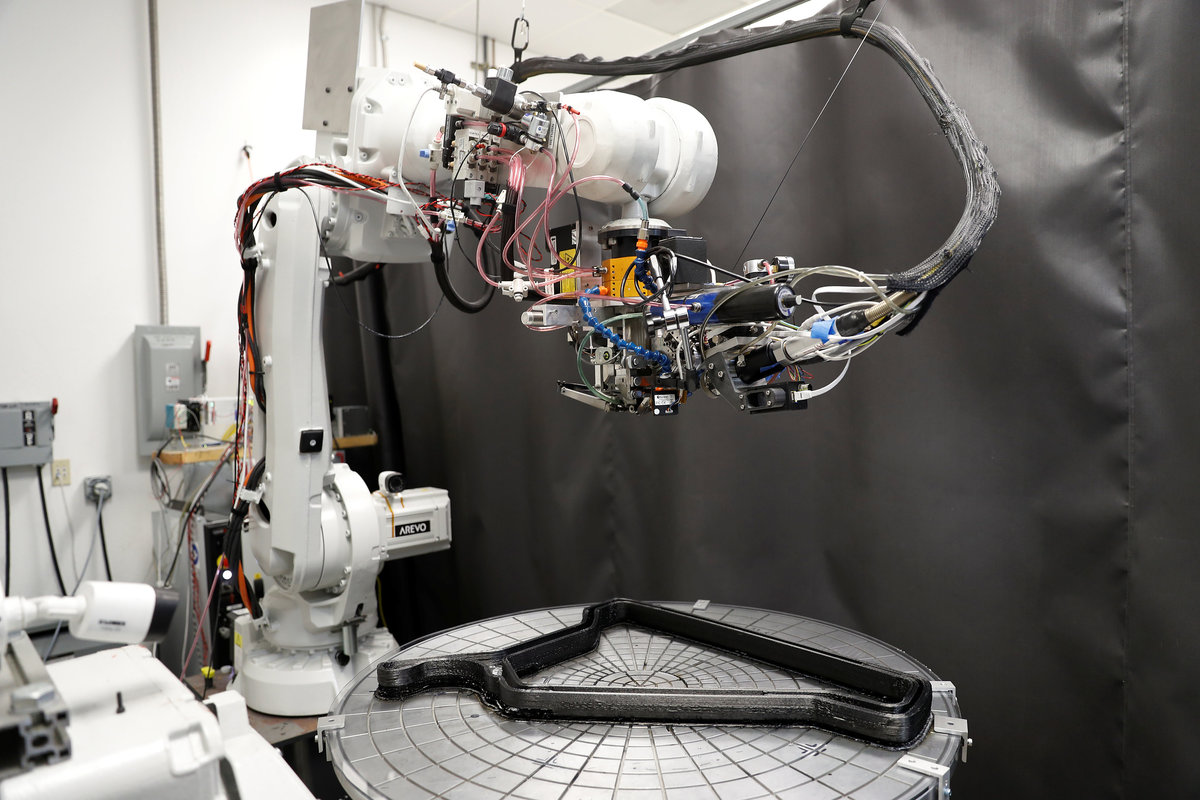
A 3D-printing robot is seen printing a carbon fiber bicycle frame at Arevo Labs in Santa Clara, California, May 10, 2018. REUTERS/ Stephen Lam

(Reporting by Stephen Nellis; Editing by Lisa Shumaker)
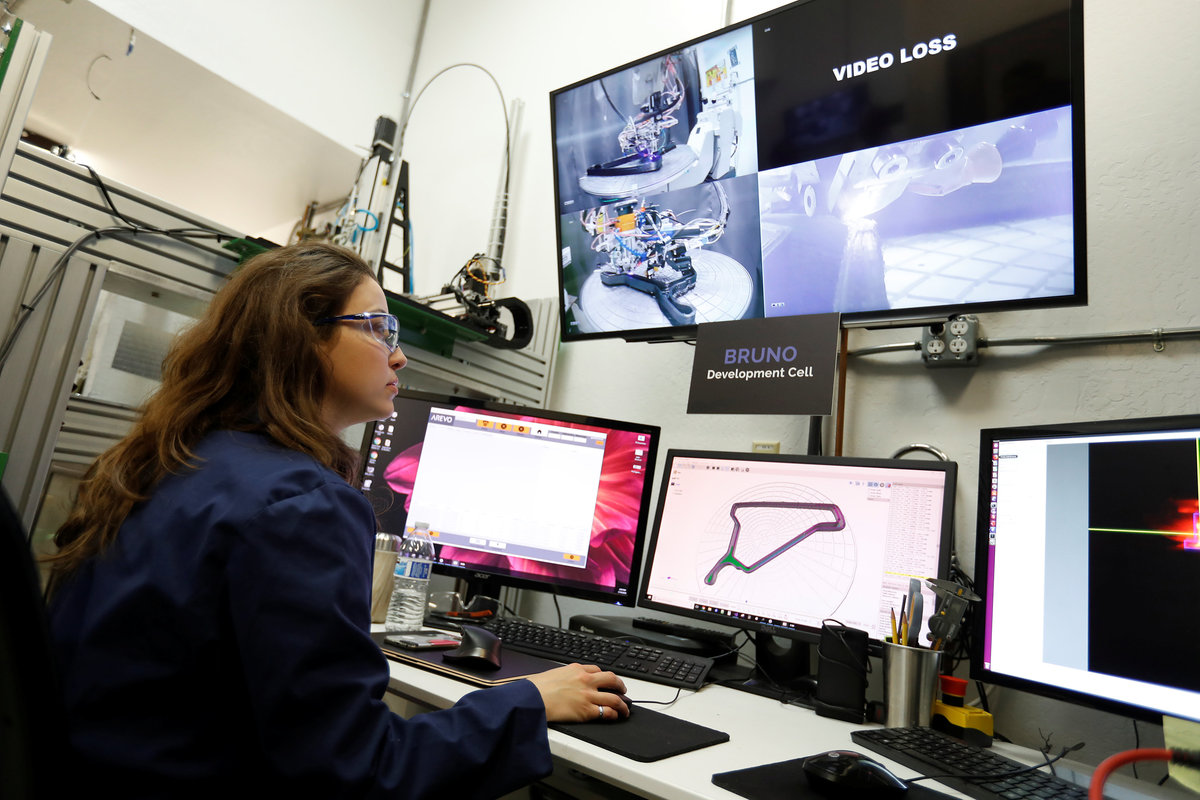
Magda Zydzik, an engineer at Arevo Labs, monitors the progress of a 3D-printing robot as it prints a carbon fiber bicycle frame in Santa Clara, California, May 10, 2018. REUTERS/ Stephen Lam
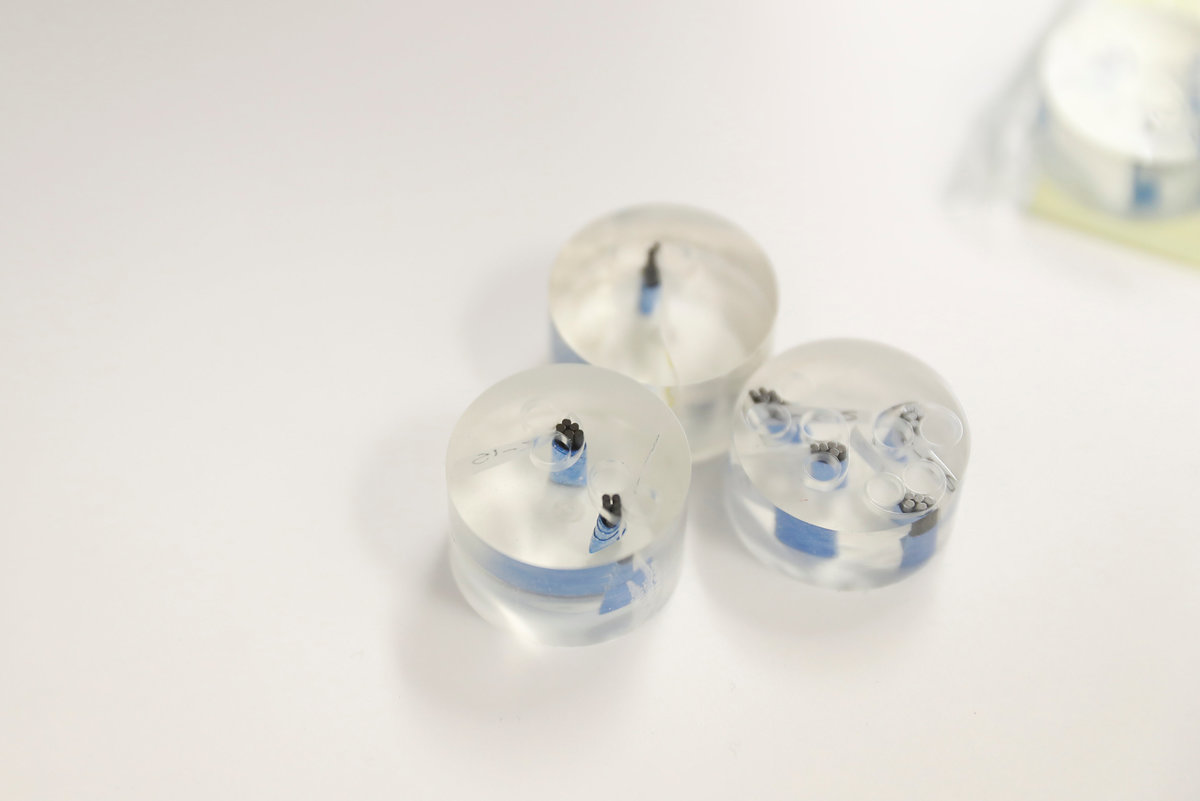
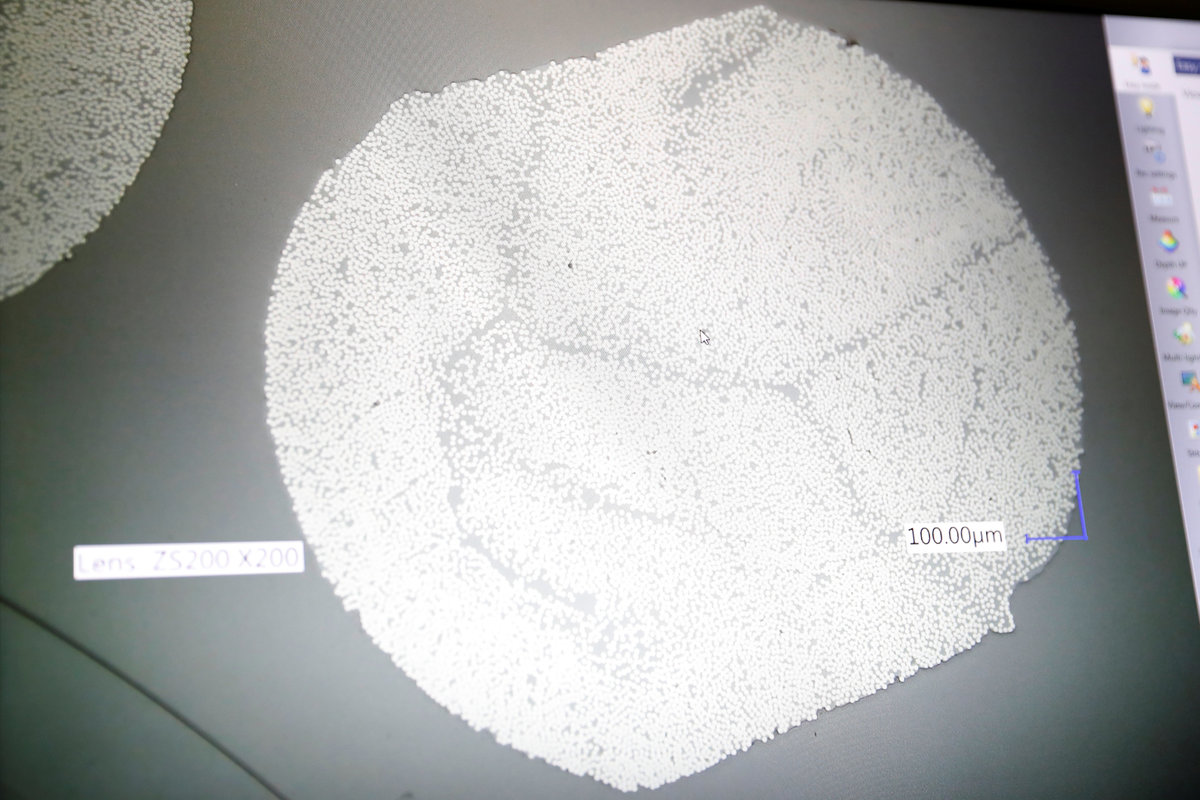
Carbon fiber filaments are seen encased in epoxy for microscopic inspection at Arevo Labs in Santa Clara, California, May 10, 2018. REUTERS/ Stephen Lam
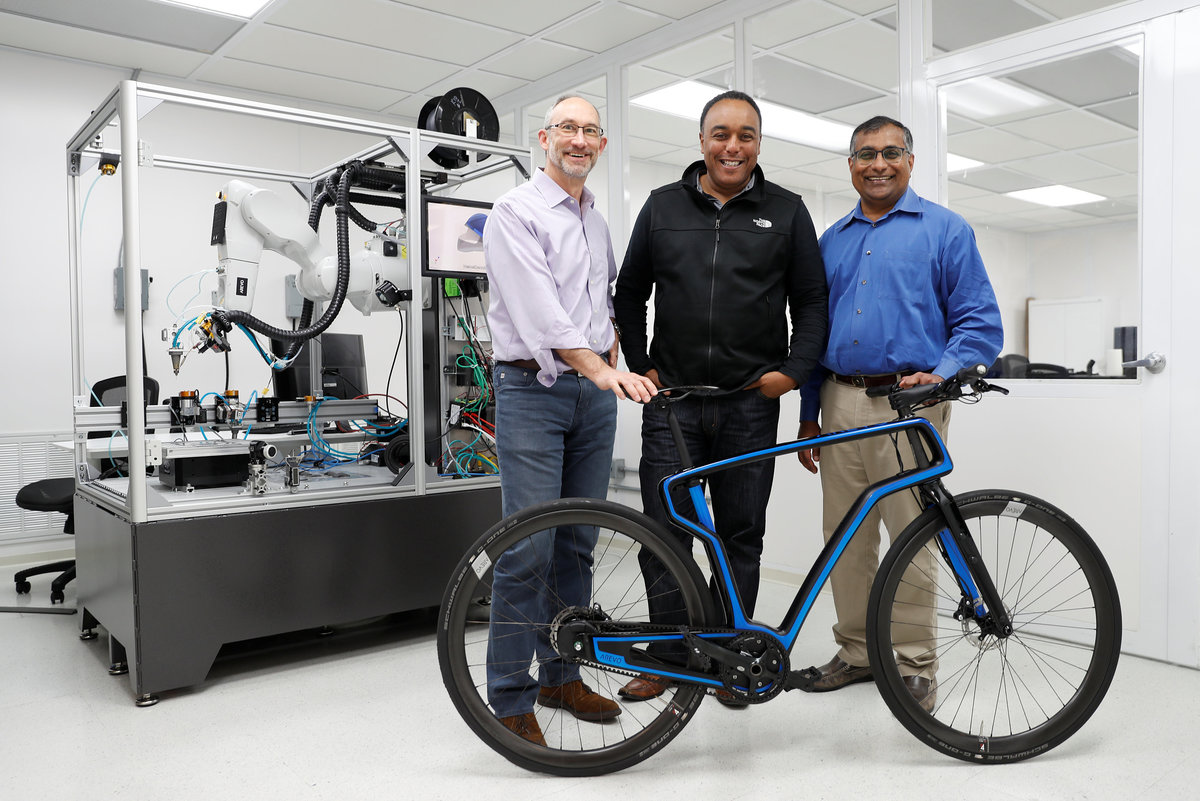
(L-R) Arevo Labs CEO Jim Miller, CTO Wiener Mondesir, and Chairman and Co-Founder Hemant Bheda stand for a photo with the company's 3D-printed carbon fiber commuter bike in Santa Clara, California, May 10, 2018. REUTERS/ Stephen Lam
Chris Lee, an engineer at Arevo Labs, feeds a carbon fiber filament into a 3D-printing robot in Santa Clara, California, May 10, 2018. REUTERS/ Stephen Lam
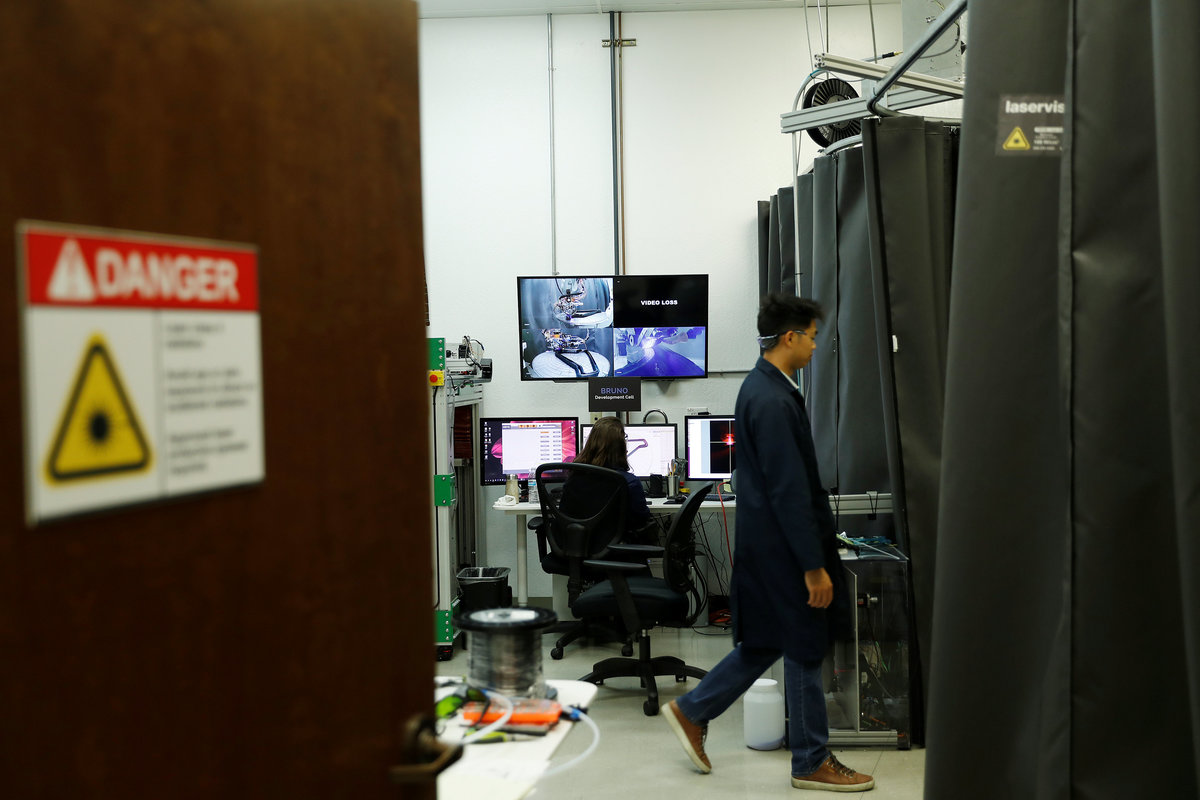
Engineers work inside Arevo Labs in Santa Clara, California, May 10, 2018. Picture taken May 10, 2018. REUTERS/ Stephen Lam
A carbon fiber filament connected to a bicycle frame and a 3D-printing robot is being cut at Arevo Labs in Santa Clara, California, May 10, 2018. REUTERS/ Stephen Lam
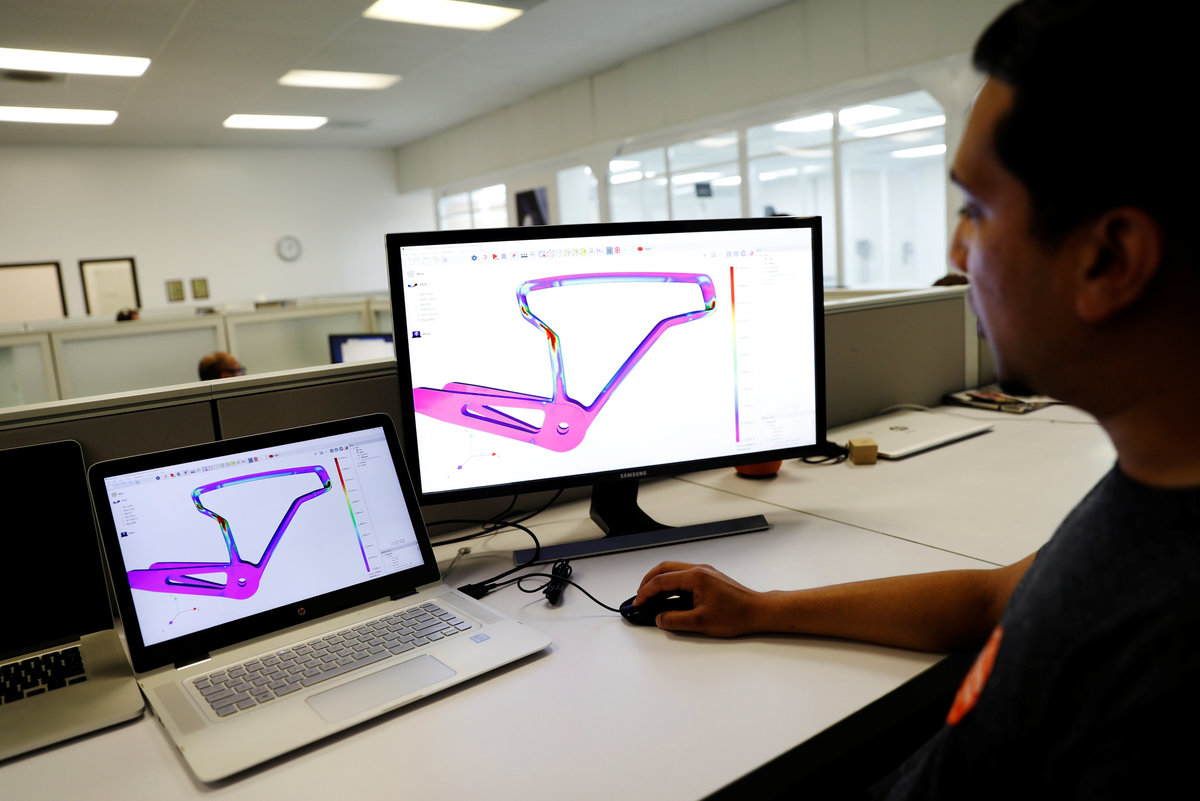
An engineer displays on computer screens a finite element analysis (FEA) of a 3D-printed carbon fiber bicycle frame at Arevo Labs in Santa Clara, California, May 10, 2018. REUTERS/ Stephen Lam
A cross section of a carbon fiber filament is seen under a digital microscope at Arevo Labs in Santa Clara, California, May 10, 2018. REUTERS/ Stephen Lam
Sign up to read this article
Read news from 100’s of titles, curated specifically for you.
Already a member? Sign in here
Related Stories
Top stories on inkl right now
One subscription that gives you access to news from hundreds of sites
Already a member? Sign in here
Our Picks
Fourteen days free
Download the app
One app. One membership.
100+ trusted global sources.