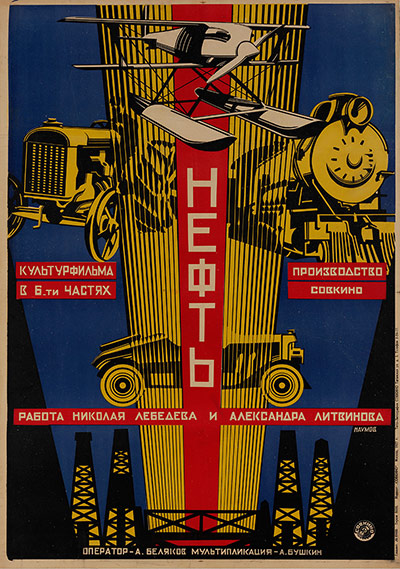
"Like many of his colleagues, Naumov designed books, theatre sets and even interiors, in addition to his work as a poster artist. He died, aged 29, in a drowning accident the year after this poster was created"
Photograph: Courtesy GRAD Gallery for Russian Arts and Design and AntikBar
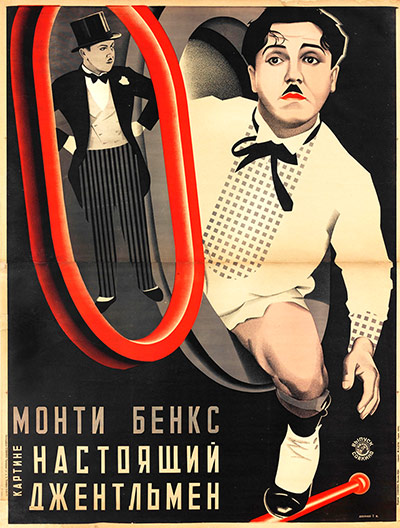
"This film features Monty Banks. American productions were very popular in the Soviet Union in the 1920s and the profits were used to subsidise domestic films" Photograph: Courtesy GRAD Gallery for Russian Arts and Design and AntikBar
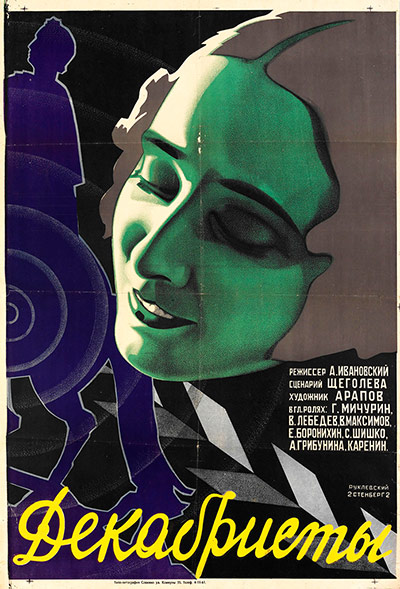
"This Soviet costume drama focuses on a well-known incident in Russian history when a group of aristocrats tried to overthrow the Tsar Nicholas I in December 1825" Photograph: Courtesy GRAD Gallery for Russian Arts and Design and AntikBar
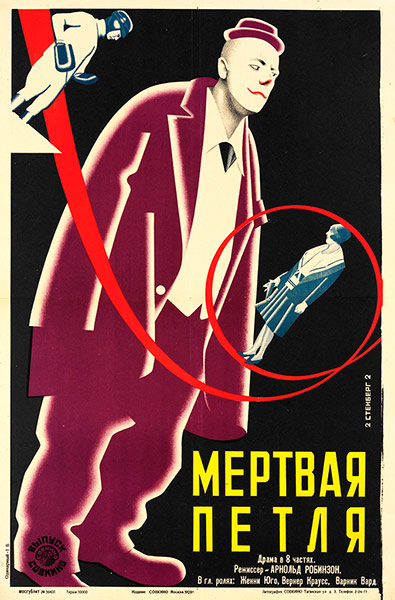
"This poster for a German production about a clown in love with a circus aerialist uses a motif of the titular loop" Photograph: Courtesy GRAD Gallery for Russian Arts and Design and AntikBar
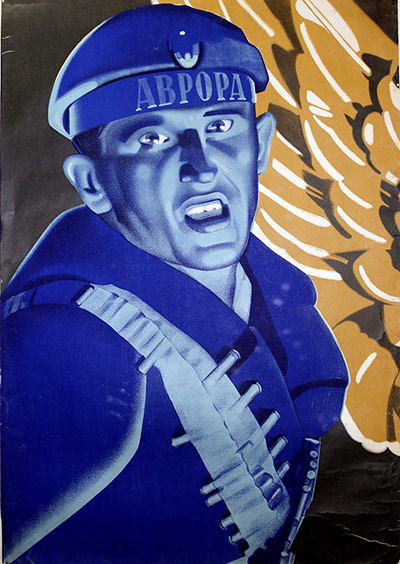
"This is a segment of a nine-part poster for Sergei Eisenstein’s opus, one of the largest film advertisements created during this period. This segment is the only remaining part of the larger work" Photograph: Courtesy GRAD Gallery for Russian Arts and Design and AntikBar
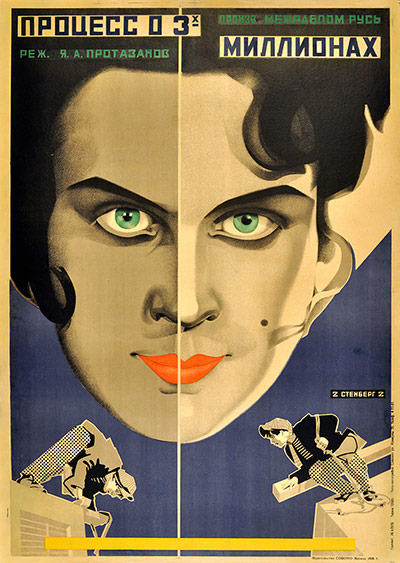
"A screwball comedy about three thieves and a femme fatale, this film was an attempt to create a Soviet production to rival American comedies" Photograph: Courtesy GRAD Gallery for Russian Arts and Design and AntikBar
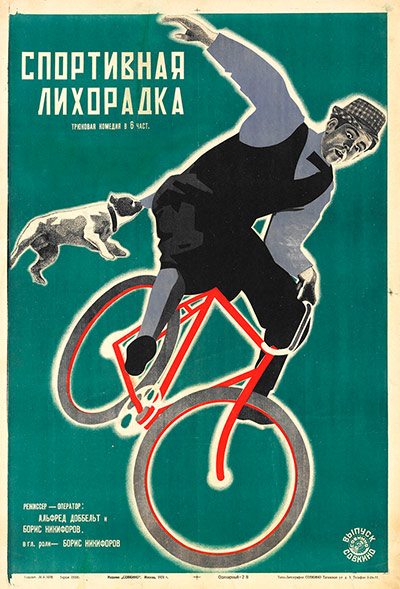
"Bright colours and a disorientating sense of perspective were Stenberg Brothers staples" Photograph: Courtesy GRAD Gallery for Russian Arts and Design and AntikBar
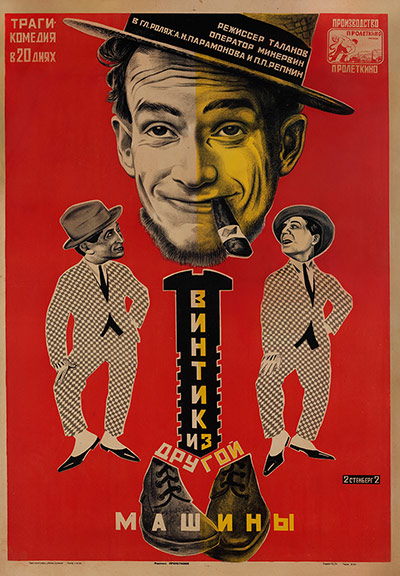
"Another Soviet production, this features Georgii and Vladimir Stenberg’s trademark signature 2 Stenberg 2. The designers were inseparable until Georgii’s tragic death in a road accident in 1933" Photograph: Courtesy GRAD Gallery for Russian Arts and Design and AntikBar
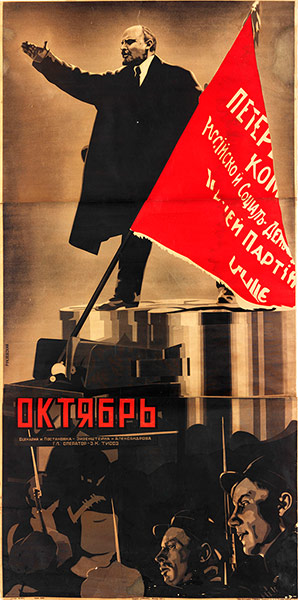
"Ruklevsky, the artist who designed this poster, was the head of Reklam Film, the department that commissioned all film posters" Photograph: Courtesy GRAD Gallery for Russian Arts and Design and AntikBar
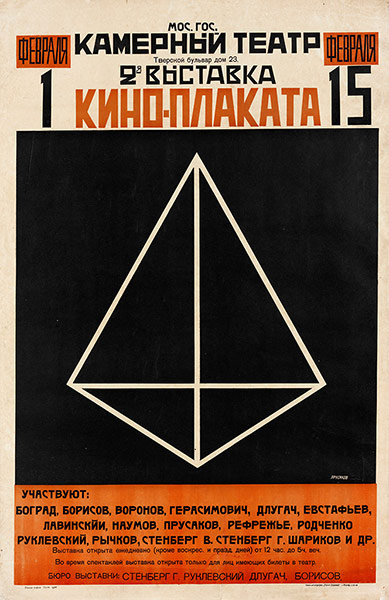
"Prusakov’s highly abstract design advertising the Second Exhibition of Film Posters, which took place in 1926. It is quite special for two reasons: it is not advertising a film, but an exhibition of film posters which included many of the designers we will be showcasing [at GRAD]; and second, the abstract design sets it apart from the other posters. The tetrahedron shape is in fact Prusakov's trademark, which he used to sign his own poster designs - he enlarged it here to create an almost suprematist design"
Photograph: Hugh Kelly/Courtesy GRAD Gallery for Russian Arts and Design and AntikBar