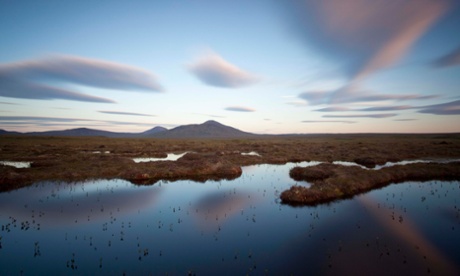
As I walked south from Shurrery Lodge into this classic plain of Flow Country I struggled to define the exact nature of its impact. Yes, it was big, perhaps the biggest British landscape I’ve ever seen. In fact it took a while to work out that the cone-shaped peak looming over all the day’s experiences wasn’t even on the same OS sheet as me. It was Ben Griam Beg, at least 30km away.
It wasn’t just size: it was scale, combined with its levelness and its uniformity of colour. The problem with this assertion is that it suggests something samey or bland, when the place is everything but. The primary note is the brown of heather that is always, depending on sunlight or cloud, edging back and forth out of purple. Into this vast plane of sameness were inserted the silver shards from a hundred dubh lochans, fragmented pools that shimmer at the bog’s surface.
Then, surrounding all the day in a form I have never previously encountered, was its silence. Silence so deep it had a plastic, tangible presence. It filled in behind and around the music of skylarks or curlews or golden plovers, or, at times, simply the breeze, like a membrane. Everything was blanketed in clarity. It was only days later when I went south that I understood how far the white noise of life had been obliterated in that place.
How strange to reflect that at the end of the last century we sought to ruin the Flows. The story makes a strange environmental riddle. Which banana republic would seek to destroy the one rare habitat of which it held the world’s largest portion, in order to give tax breaks to the very wealthy to grow low-grade timber? The answer was the British government of the mid-90s.
International pressure eventually told, but not before Rifkind and Ridley had taken their moiety of revenge. By breaking apart the Nature Conservancy Council they effectively ended the post-war project of state conservation. In the Flows the past is omnipresent. Its silence lets you summon the mist procession and all its clamorous ghosts as if they were yesterday.






.png?w=600)