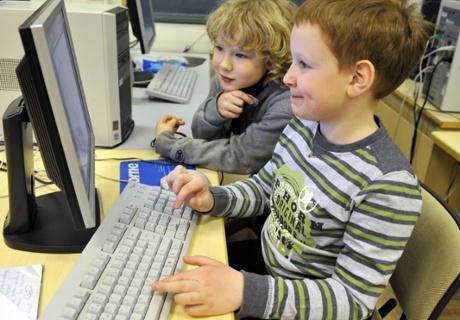
Spidery scrawls across faintly lined paper or the carefully penned love letter will be the stuff of fairytales for many young Finns thanks to a new government policy. Schools in Finland are phasing out cursive handwriting classes in favour of keyboard skills, as officials accept that texting, tapping and tweeting have taken over as the primary means of communication in the modern age.
“We used to do joined-up writing so that we could write faster, but these days kids only start learning it in grade two [aged eight] and have a year to get it right before moving on to concentrating on what they write, rather than simply how they write it,” said Minna Harmanen of Finland’s National Board of Education. “They don’t have time to become fast at cursive writing, so it’s not useful for them.”
Joined-up writing has also become more difficult since Finns introduced new ways of writing their letters in 1986: “We moved from the old Swedish-derived handwriting style to a more modern one and now a few letters look very similar to each other in joined-up writing,” explained Harmanen. “It’s not easy for children to write – or for teachers to read. When they write in print, it’s clearer.” From 2016, pupils will be taught only print handwriting and will spend more time learning keyboard skills – “something we recognise is very important for the job market,” said Harmanen.
Finland is one of the first countries to stop making cursive handwriting classes compulsory, but the change is part of a global move away from handwritten documents towards digital communication. A recent British survey found a third of respondents had not written anything “properly” by hand in the previous six months and in the US, many states have removed cursive writing classes from the curriculum.
While purists mourn the loss of personality and the “human touch”, some neuroscientists stress the importance of cursive handwriting for improving brain development, motor skills, self-control and even dyslexia. French education officials took heed of these findings and reintroduced cursive writing classes in 2000 after a brief hiatus but in Finland, there’s been little response to the proposed scrapping.
“We’ve hardly had any comments about the move from parents,” says Harmanen, “a few of the grandparents were upset, but everyone else seems fine.”
While accepting that Finnish teens will miss out on the romance of a hand-penned love letter (“kids use their smartphones for these nowadays”), Harmanen says the change will help pupils thrive in school and beyond, adding: “The age-old problem of not being able to read a doctor’s handwriting will no longer be an issue in the Finland of the future.”