A “remarkable” number of homeless people were placed in emergency accomodation at the height of the Covid pandemic but only a third of rough sleepers were later moved into long-term housing, a new report states.
The report, released on Thursday by University of New South Wales and the Australian Council of Social Service (Acoss), argues many of those housed in emergency shelters during the pandemic are now homeless again due to a lack of social housing stock.
Drawing on unpublished data from NSW, Victoria, Queensland and South Australia, researchers found that between mid-March and the end of September 2020 emergency accommodation was provided to more than 40,000 people, a figure described as “remarkable”.
Nearly half were former rough sleepers, the report said, and most of those who had been given emergency accomodation by state governments during the pandemic were no longer in those facilities.
Among those who’d previously been rough sleeping, nearly 8,000 had left emergency accommodation by 30 September last year.
“Just under a third (32%) had been assisted into longer-term tenancies,” the report said, noting this outcome was most common in Queensland and less so in NSW and Victoria.
While some of those people would have been returned to specialist homelessness accommodation or transitional housing, the researchers said a “significant proportion” would be homeless once more.
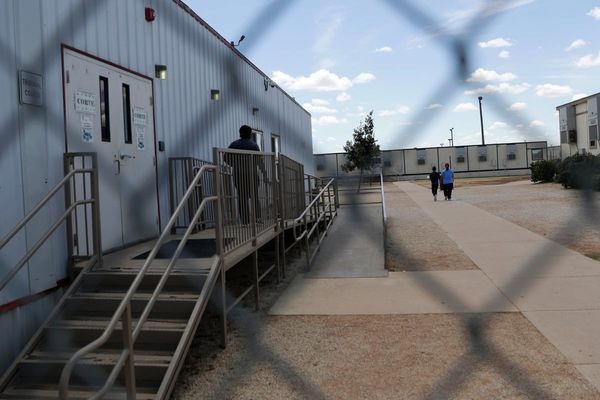
The report said housing rough sleepers in emergency accommodation was “relatively simple to achieve” once governments dedicated extra funding with hotels and other facilities used.
“Helping people into longer-term housing posed a far greater challenge – largely because of the insufficient supply of social housing and the inadequacy of rent assistance in making private rental housing affordable,” it said.
The four states had made “substantial” commitments to address the problem in recent months, the report said, including a boost to social housing stock announced by the Victorian government in last year’s budget, and a new program established in NSW to house rough sleepers.
Guardian Australia has previously reported on fears that those who were housed during the pandemic would be forced back into homelessness when hotel accomodation programs ended.
The UNSW/Acoss report also analysed the experiences of renters at the height of the pandemic, including the effectiveness of state-based eviction moratoriums and rental laws.
Researchers found many tenants were unable to secure rent reductions and instead had rent deferred, leaving them with debt that could expose them to eviction when moratoriums end.
Residential tenancy eviction moratoriums have already concluded in Queensland, Tasmania and South Australia, and are set to end next month in other jurisdictions.
Drawing on a survey of 312 tenants, the report found 30% of people who received a rent variation got a deferral, not a reduction.
Citing Australia Bureau of Statistics data, the researchers estimated that between 75,000 and 175,000 tenants across the country had been left with a rental debt.
“Even at the lower end, this is a numerically large cohort of people who must be considered especially vulnerable to eviction, and possibly homelessness, when eviction moratoriums are lifted,” the report said.
The UNSW’s findings are far more conservative than estimates from another report, by the advocacy group Better Renting, which suggested as many as 324,000 people may now be grappling with a rental debt.
The UNSW also found half of those who had requested a rent variation were met with “refusal or no response” and that 12% “received a counter-offer they could not accept”.
In total, only 16% of those surveyed said they had received what they considered an “acceptable” change to their rent.
UNSW Prof Hal Pawson, the report’s author, said the research also showed at least a quarter of all private renters had lost income during the pandemic, yet as few as 8% got a rent variation from their landlord.
He added that the report had also found housing costs for renters had dropped by only 0.5% on average, compared to a 5% decline for mortgage holders.
For example, while median rents had fallen significantly in parts of Melbourne and Sydney, they had risen by 6% across non-metropolitan Victoria and by 5% in parts of regional NSW.
The Acoss chief executive, Dr Cassandra Goldie, said a planned federal government cut to income support and the end of emergency tenant protections placed Australia at “great risk of a worsening homelessness crisis”.
The report, Covid-19 Rental Housing and Homelessness Impacts: an initial analysis, was also conducted in conjunction with Mission Australia and National Shelter.
National Shelter’s chief executive, Adrian Pisarki, said the report once again revealed Australia’s “intensifying shortage of social and affordable housing”.