In spite of the sunshine, it is cool in the strong breeze that is blowing across the downs. Two combine harvesters are steadily working their way across the pale, bleached barley crops in the valley below. All around, the field margins glow with the shimmering whites, yellows and blues of summer flowers.
I walk uphill, watching the insects, including orange and brown gatekeeper butterflies and bright red soldier beetles on the thistles, daisies and cow parsley that line the bank along the track.
A group of linnets settles on the fence nearby, chirruping and whistling merrily. Most are brown and streaked – females and young birds – but a singing male still has its bright pinkish-red cap and breast. They flutter from post to post away from me as I continue along the path.
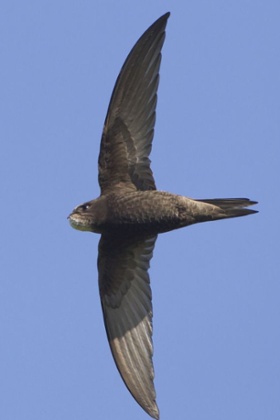
The drone of a small propellor aeroplane makes me look up in time to see a flock of a dozen black, scythe-shaped swifts sweep across the sky. They bank in the thermals – the columns of warm air that rise from the hillside – catching the floating insects.
The birds turn and turn again, vibrating their long, thin wings to generate more lift, then holding them steady as they glide to feed. They climb high, gradually moving towards the south and the sea, until the black dots finally disappear from view.
A kestrel calls from the field next to me. I find the young bird sitting on top of a wrapped, cylindrical hay bale. It shrieks again and again – in alarm or still pleading for food – before launching into the air.
The noise from the aircraft is getting louder, and I can now hear its distinctive engine note more clearly. I look up as the little monoplane flies towards me – it’s not one of the usual planes from the nearby airfields at Pulborough or Shoreham. But it’s only when it banks away, and shows the elliptical shape of its wings, that I realise it’s a Spitfire. The pilot levels, and then banks again, turning the aircraft in a large, graceful circle. It passes overhead again, before it too flies south.