Get all your news in one place.
100’s of premium titles.
One app.
Start reading
The Guardian - UK
The Guardian - UK
World

Sierra Leone's cholera outbreak – in pictures

Sierra Leone: cholera outbreak
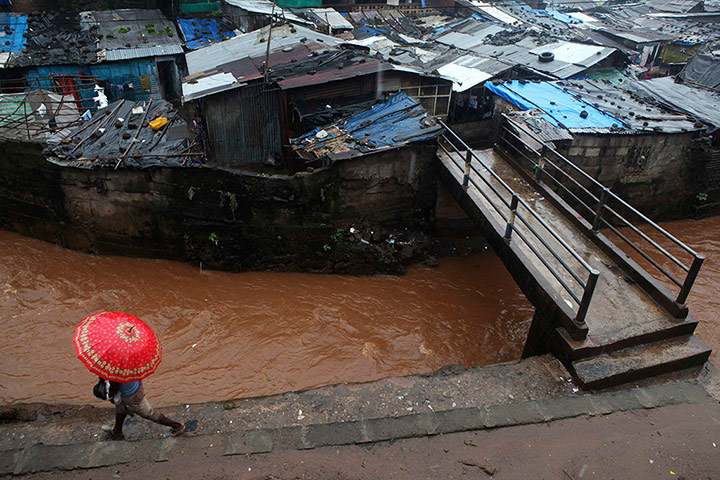
A man shields himself from the rain as he passes the Susan's Bay slum in Freetown, Sierra Leone's capital. Heavy rainfall has accelerated the spread of cholera throughout the country; the government has described the outbreak as a 'national emergency' Photograph: Simon Akam /Reuters
Sierra Leone: cholera outbreak
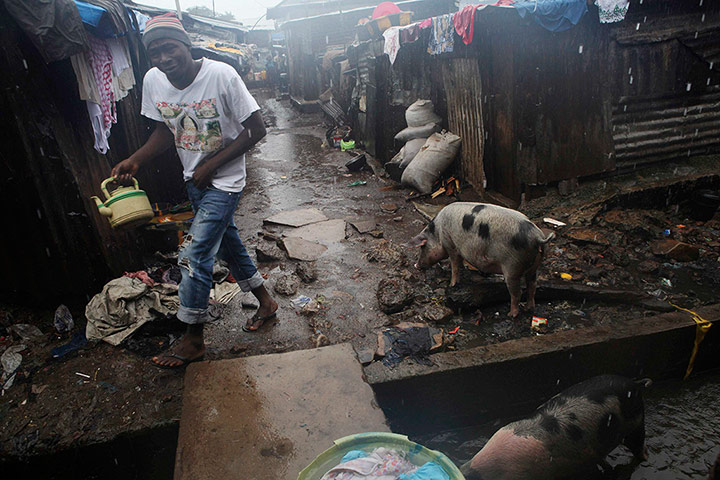
Overpopulated areas with poor water and sanitation facilitate the spread of cholera, a waterborne disease that thrives during the wet season. Conditions inside the Susan's Bay slum, where pigs and people live in close proximity, qualify on all counts Photograph: Simon Akam /Reuters
Sierra Leone: cholera outbreak
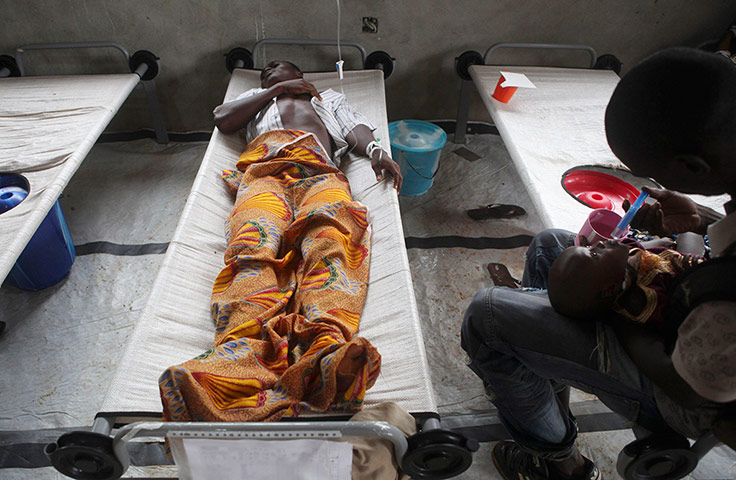
Patients are cared for in a treatment centre run by Médecins Sans Frontières in Macauley Street, Freetown. Nationwide, more than 12,000 people have been infected with cholera during the outbreak, more than 200 of whom have died Photograph: Simon Akam /Reuters
Sierra Leone: cholera outbreak
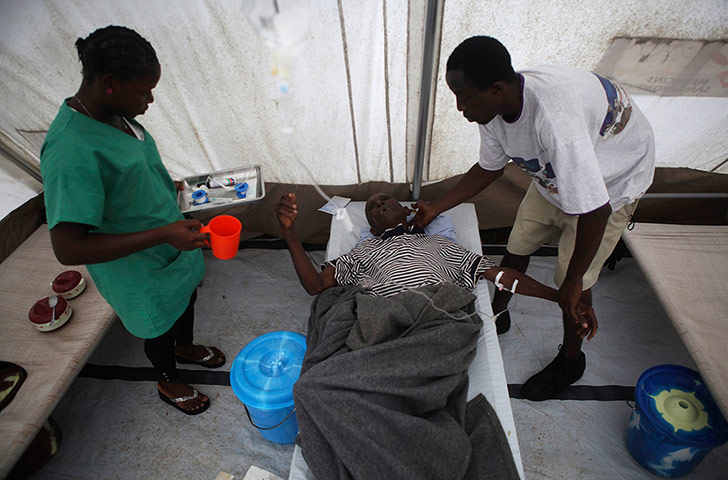
Médecins Sans Frontières staff assist a cholera patient at the treatment unit. Those with a weak immune system, or suffering from malnourishment, are more susceptible to cholera, which is why outbreaks of the disease still occur in developing countries Photograph: Simon Akam /Reuters
Sierra Leone: cholera outbreak
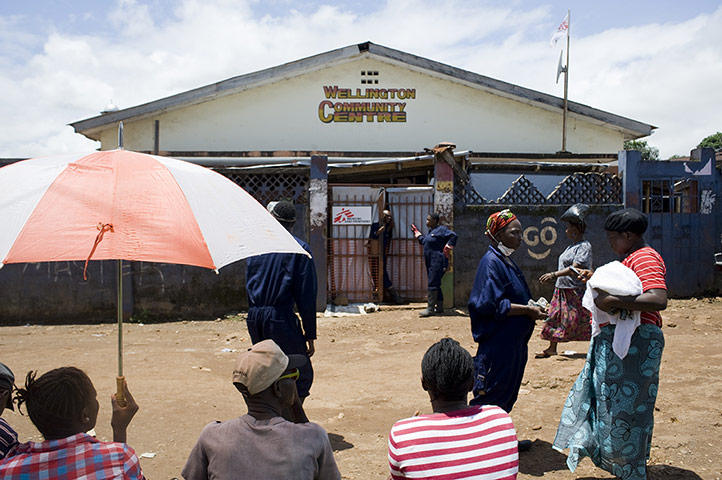
Wellington cholera treatment unit was opened in a Freetown community centre on 31 July in response to the country's worst outbreak of the disease for nearly 15 years. Cases are likely to triple as the rainy season hits its peak over the next few weeks Photograph: Caroline Thomas/AFP/Getty Images
Sierra Leone: cholera outbreak
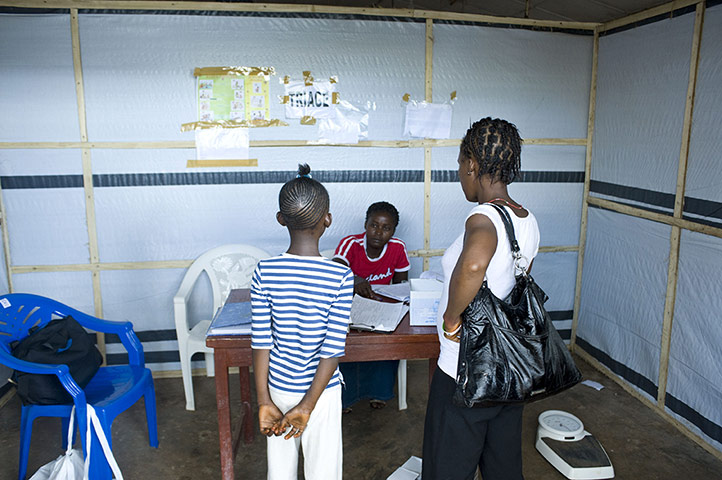
Patients wait to be seen at the Wellington treatment unit. Cholera is an infection of the small bowel; symptoms include acute diarrhoea that can cause severe dehydration and fever as well as nosebleeds, rapid pulse, dry skin, tiredness and vomiting
Photograph: Caroline Thomas/AFP/Getty Images
Sierra Leone: cholera outbreak
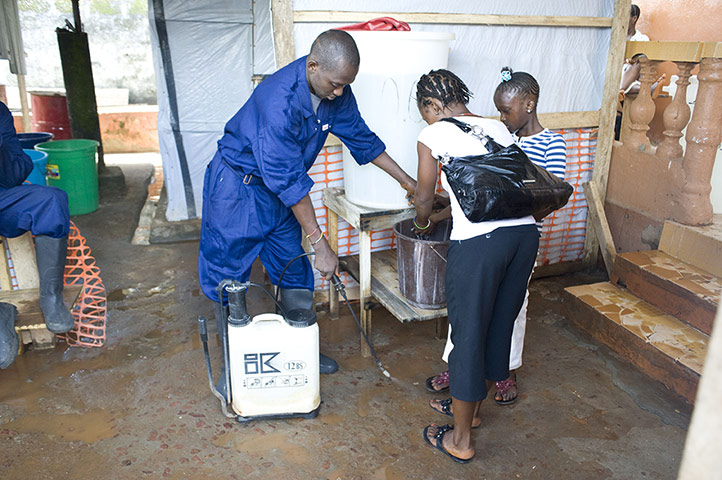
A Wellington unit worker uses a water spray to wash patients' feet in order to prevent contamination. Cholera varies in severity, but symptoms sometimes develop so rapidly that a healthy person can be debilitated within an hour of the first signs appearing
Photograph: Caroline Thomas/AFP/Getty Images
Sierra Leone: cholera outbreak
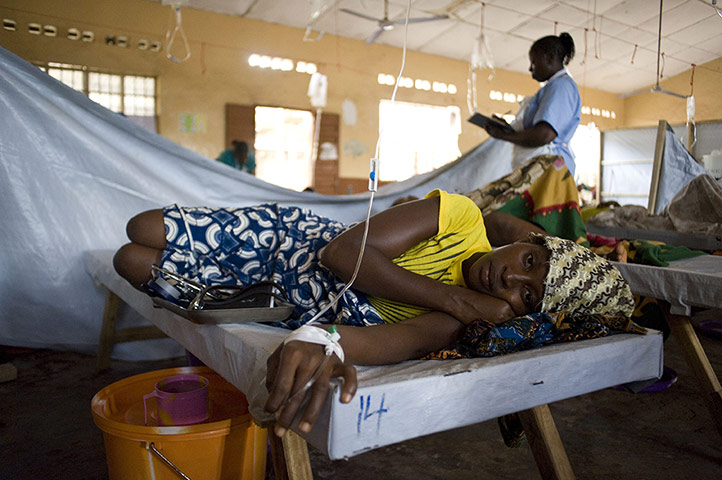
A woman suffering from cholera rests on a bed at the Wellington unit. Fundamental to treatment of the disease is the rapid replacement of fluids lost through diarrhoea. This can be either by drinking or, in extreme cases, through intravenous rehydration
Photograph: Caroline Thomas/AFP/Getty Images
Sierra Leone: cholera outbreak
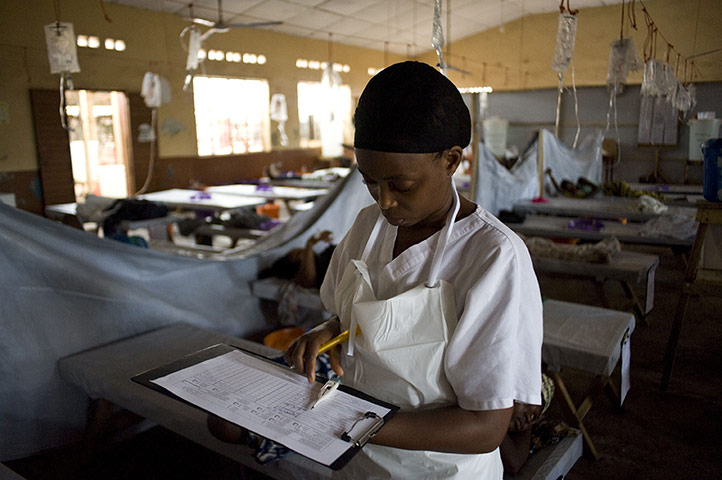
A nurse at the Wellington unit checks patients' medical documents. Recent research suggests susceptibility to cholera is affected by blood type, with those carrying type O the most vulnerable, and people with type AB deemed the most resistant
Photograph: Caroline Thomas/AFP/Getty Images
Sierra Leone: cholera outbreak
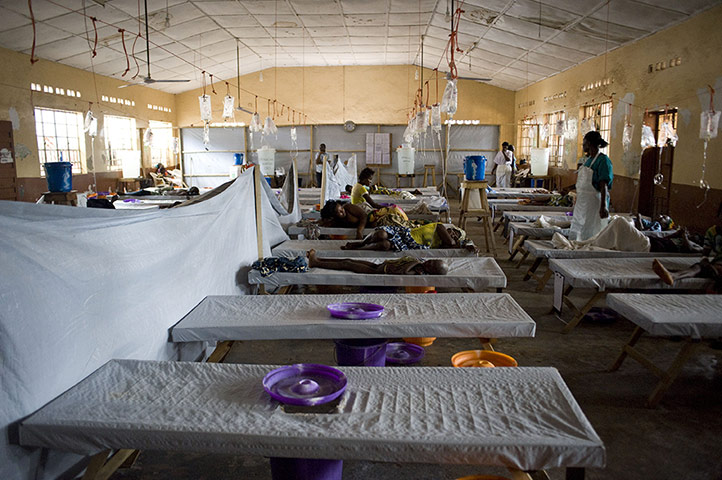
Empty beds may not stay that way for long. Both Sierra Leone's government and the World Health Organisation estimate the number of people affected by cholera will reach 32,000 during September, when the rainy season traditionally continues
Photograph: Caroline Thomas/AFP/Getty Images

Sierra Leone: cholera outbreak
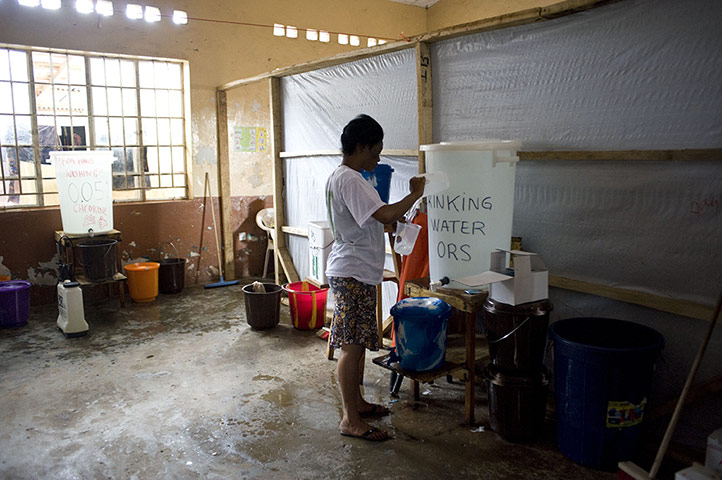
A woman pours clean water at the Wellington unit. Water used for drinking, washing or cooking has to be sterilised, either through boiling or chlorination. There is growing international awareness of the cholera outbreak; the UK has pledged £2m in aid
Photograph: Caroline Thomas/AFP/Getty Images
Sign up to read this article
Read news from 100’s of titles, curated specifically for you.
Already a member? Sign in here
Related Stories
Top stories on inkl right now
One subscription that gives you access to news from hundreds of sites
Already a member? Sign in here
Our Picks
Fourteen days free
Download the app
One app. One membership.
100+ trusted global sources.