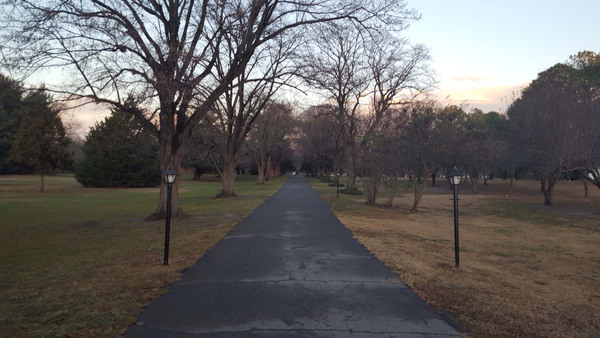
BALTIMORE _ The Obama administration's move to shut down a Russian diplomatic retreat over meddling in the presidential election cast a small patch of light on the normally shadowy job of battling foreign spies on American soil _ all in the seemingly unlikely location of small waterfront community on Maryland's Eastern Shore.
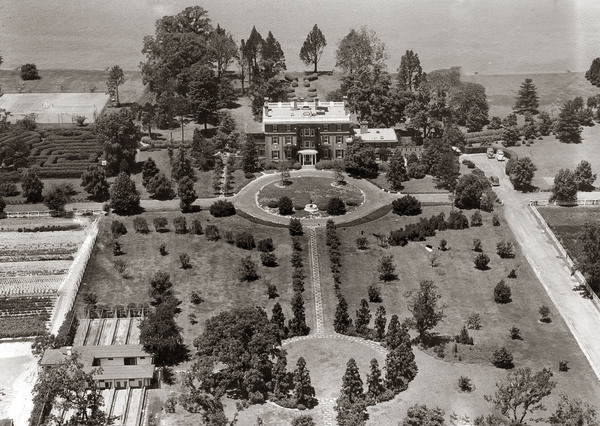
Obama said the Russian estate about 4 miles from Centreville, home to Gilded Age mansion and a cluster of cottages, was being used for intelligence collection and moved to block Russian access to it. On Friday, television cameras captured a convoy of trucks leaving whipping down the road away from the compound.
The compound's existence wasn't a secret. But shuttering it was a dramatic step that raises a question that experts say intelligence operatives face all the time: When do you move against an opponent, risking revealing what you know, and when do you let them keep working quietly keeping them under watch?
While making a big public declaration could send a message to the Russian government, David C. Gomez, a former FBI agent, said it could also make it harder for American counter-intelligence agents to keep tabs on what Russia is doing.
"The knowledge that they use it gives the FBI and gives the government a head start on trying to counter whatever they're doing," Gomez said. "It's a bit like playing a football game and knowing what the opponent's overall game plan is."
It's widely known that Russia spies on the United States _ and that American intelligence officers seek to steal sensitive information in Russia. Some degree of spying is typically tolerated, and the FBI seeks to keep a close eye on which supposed Russian diplomats are actually spies and block their efforts to siphon secrets out of the country.
But in recent years tensions between the two countries have run particularly high.
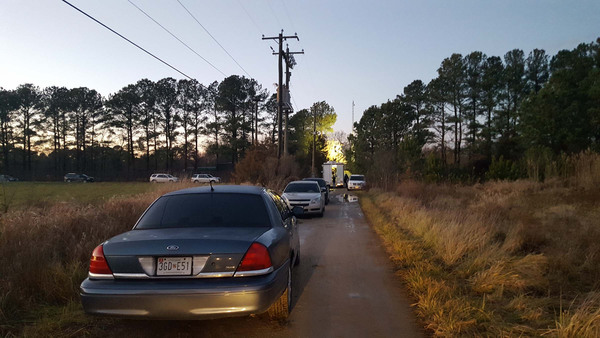
The latest set of moves came in response to what the government says was a hacking and leaking campaign directed at Hillary Clinton's campaign and the Democratic Party. Senior American intelligence officials have said that while hacking into computers in search of information is generally fair game, spreading the information publicly represented a provocative new turn.
On Thursday, the Obama administration imposed sanctions on Russian officials and organizations it said were linked to the hacking. It also ordered 35 suspected Russian intelligence operatives out of the country and shuttered two Russian properties, one on Long Island, N.Y., and the one on the Eastern Shore.
Russian President Vladimir Putin declined to respond in kind to the U.S. actions Friday, instead adopting a magnanimous tone, declining a recommendation by his foreign minister to expel dozens of U.S. diplomats. Instead, he invited the diplomats' children to attend lavish Orthodox Christmas festivities in the Kremlin.
The future of the closed Russian properties is unclear. A State Department spokesman said that from now on entry to the properties would have to be granted by the department and that the department would take responsibility for the facility's security and maintenance.
Officials did not describe the role the properties are suspected of playing in Russian spying. While they might have housed gear for sweeping up American communications, they might also just have served as a place to hold sensitive discussions away from the prying eyes of the FBI. Russian officials have said the facilities were recreational retreats for diplomats.
It's also not clear whether the incoming administration of President-elect Donald J. Trump will keep the estates mothballed. A senior Obama administration official acknowledged that a future president could change course.
"We think it would be inadvisable," said the official, who briefed reporters on the condition that they not be named. "These diplomatic compounds were being used for intelligence purposes. That is a direct challenge to U.S. national security, and I don't think it would make much sense to reopen Russian intelligence compounds."
The Russians appear to have been good neighbors.
When New England developer Peter Sheaffer bought about 1,700 acres of farmland next door in 1980 he didn't give much thought to who he'd be living beside. By then, the Soviet Union had owned the neighboring estate for nearly a decade. Sheaffer said he became friendly with his neighbors and would be invited over to summer parties.
"They're very nice people," said Sheaffer, 84. "What does this accomplish? It just accomplishes more hard feelings. We don't need to be going out and trying to make enemies."
When he was the Soviet ambassador to Washington in the 1980s, Anatoly Dobrynin was often seen bicycling with his bodyguard on the rural roads around the estate, Sheaffer said. He would stop and chat with the diplomat.
"He'd be here almost every weekend," Sheaffer said. "I used to stop and talk with him a lot."
On the opposite side to Sheaffer, the Russian property has a more curious neighbor: a 6,800-square-foot office building owned by the State Department. The department did not immediately respond to questions about the building's function, but former intelligence officials who have been there say it was used for off-site meetings and had rooms to stay overnight.
But they conceded it might also serve another useful function: keeping tabs on comings and goings at the Russian estate.
"If I knew a Russian spy was living in the neighborhood I'd try to buy the house next door," Gomez said.